Found in translation
Tim Curtis has spent more than four decades at the edges, discovering life in God’s word
Photo: Tim Curtis (far left) with an early translation team
Mission partner Tim Curtis has spent an entire generation – 44 years – in translation work among indigenous peoples in the Paraguayan Chaco region. As he retires, we take a look at how God made a way for his Word to come alive in the wilderness.
Many indigenous people groups in the wilderness Chaco region of South America have long been marginalised by the majority society who are of European descent (criollos). Deforestation has all but squeezed out Énxet speakers’ traditional hunter-gatherer lifestyle and they often have limited access to healthcare and education.
There has been a Christian presence in the Chaco region for over 130 years, but even so, speakers of the Énxet languages haven’t always had access to God’s Word. But now that the Bible has been translated into their languages, they know that they are included in God’s plan.
Called back to Latin America
The son of missionaries, Tim was brought up in Chile and sensed God calling him back to Latin America after university in the UK. “A verse that came very clearly to me from Psalm 32 was, ‘I will instruct you and teach you the way you should go. I will counsel you with my eye upon you,’” he remembers. He also had a dream that confirmed that he would be working somewhere quite remote.
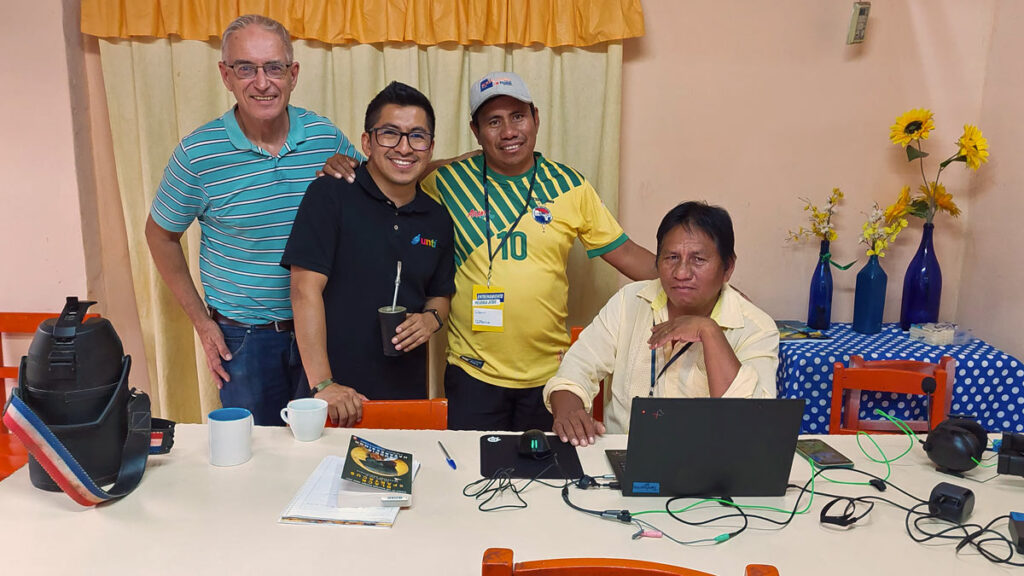
Tim first went to Paraguay in the early 1980s. In 1982, when visiting the La Herencia project in the Chaco, Tim recognised the place he’d seen in his dream. This project was the Anglican Church’s response to a plea for help from its indigenous members amongst the Énxet, Angaité and Sanapana peoples in the Chaco region who had lost their ancestral lands. (By 1985, nearly 45,000 hectares of land had been secured for them.) Tim joined the project and for the next few years, he served several indigenous and government schools, commuting between the more far-flung ones on horseback.
First steps towards Bible translation
Recognising Tim’s love for the local people and aptitude for languages, the project director invited him to prepare for work on the translation of the Southern Énxet New Testament.
Tim became a missionary with the South American Missionary Society (SAMS), which later merged with CMS. He trained as a Bible translator at SIL and prepared for mission at All Nations Christian College before returning to Paraguay to focus on the Southern Énxet language.
From a New Testament to a complete Bible
In the early 1990s, a team of three indigenous translators was ready to begin the translation of the New Testament in partnership with United Bible Societies and the Paraguayan Bible Society. Chaco churches waited eagerly to see God’s Word come alive in their own language.
At the end of 1997, the revised Southern Énxet New Testament was launched and began to be used in homes and churches. In 2003, a new team began work on the Southern Énxet Old Testament at a purpose-built office in Rio Verde (made possible by a donation from one of Tim’s link churches). Over the next 13 years, they meticulously drafted the Old Testament and further revised the New Testament.
Southern Énxet and Northern Enlhet Bible translation timeline
| Year | Translation timeline |
|---|---|
| 1981: | Tim arrives in Paraguay |
| 1986: | Planning for Southern Énxet New Testament |
| 1990: | Southern Énxet translation work begins |
| 1997: | Southern Énxet New Testament launched |
| 2003: | Southern Énxet Old Testament translation begins |
| 2016: | Complete Southern Énxet Bible launched |
| 2018: | Tim joins Northern Enlhet translation team as a consultant |
| 2024: | Jesus Film dubbed into Southern Énxet |
| 2025: | Southern Énxet Old Testament recording completed |
| Late 2020s: | Northern Enlhet Bible due to be completed |
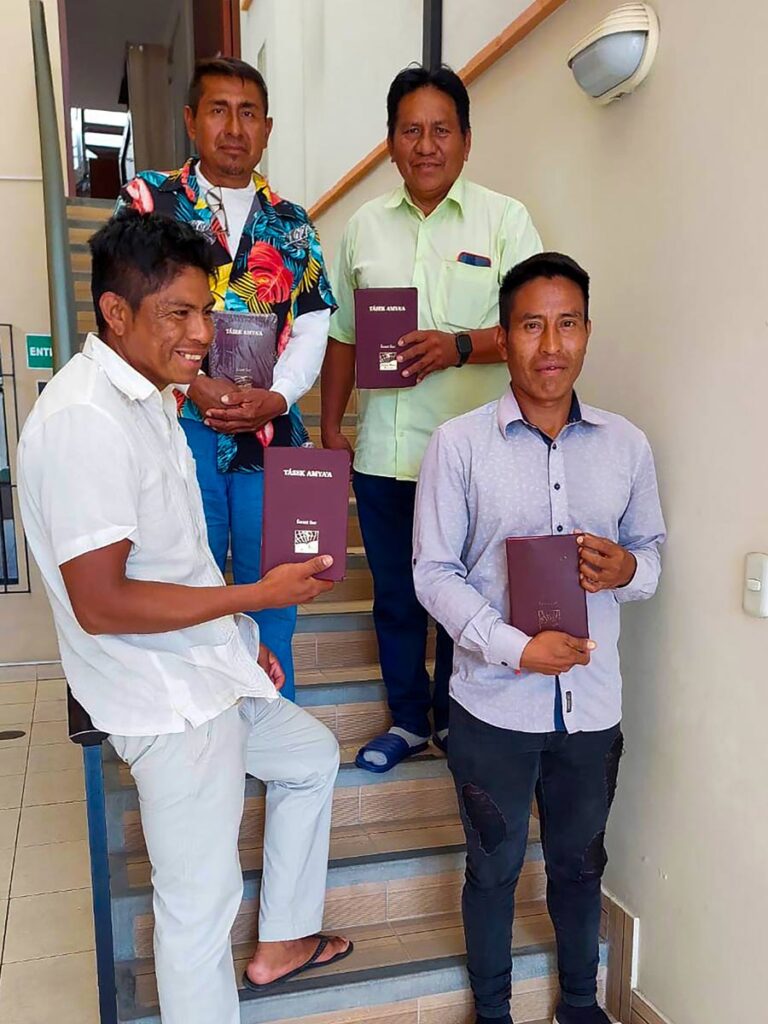
The full Southern Énxet Bible was launched in 2016 with church leaders and visitors from all over the Chaco region and the UK attending a special dedication event.
From start to finish, it was remarkable how people from different organisations, churches and institutions came together for the translation – in Tim’s words, “It was like the Lord was arranging everything.”
Accessible Scriptures for the Southern Énxet
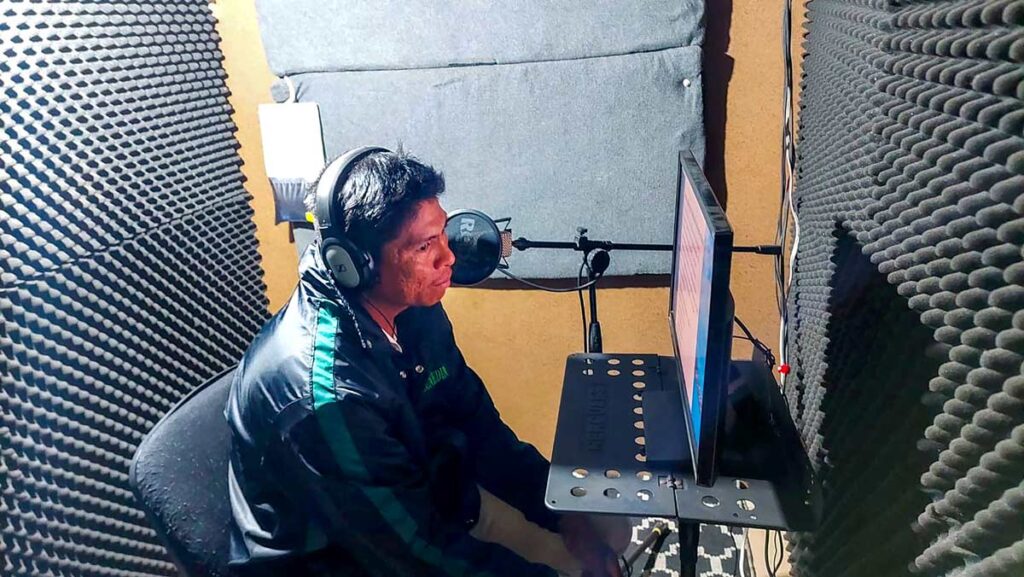
The goal of Bible translation for any language group has traditionally been to get printed Bibles into people’s hands. Today, for many people groups, audio Bibles can make a huge difference to how many speakers engage with God’s Word. In 2016, Tim and the team worked with 25 Southern Énxet readers and Bolivian technicians from Faith Comes by Hearing to record a dramatised version of the New Testament.
The audio New Testament was put on players called Proclaimers, which can be charged using electricity, solar panels or wound up manually. Proclaimers have proved particularly popular among people who don’t have the opportunity to meet with other Christians, or who don’t read.
In 2024, Jesus Film Project technicians from Peru came to help Tim and a group of 22 readers dub the Jesus Film into Southern Énxet at the CMS-supported Anglican Centre at Rio Verde – the two-hour dramatisation of Luke’s Gospel has led millions of people around the world to Jesus.
The technicians also invited a group to Lima to record the Old Testament with Davar Audio Bibles. The full audio Bible is still being finalised, but in the meantime, people are listening to the New Testament, and parts of the Old Testament are being passed around on pen drives – people are eager to engage with God’s Word!
Another Bible translation in the works
In 2018, Tim joined the Northern Enlhet Bible translation team part-time, as a consultant. Several years on, the team have finished drafts of the Old Testament and recently completed the gospels and Romans. They hope to celebrate a complete Bible in the late 2020s.
At the same time, Tim continued providing logistical support for Bible studies in Rio Verde and working with Southern Énxet and other indigenous pastors and church leaders. He is also a member of the CMS-supported indigenous synod which was set up after the indigenous Anglican Congress in Argentina in 2022.
A hunter-gatherer people on smartphones
The Énxet people are traditionally hunter-gatherers , but their culture is changing. These days, some work on remote cattle ranches and farms and others have jobs in the towns. Many Christians listen to the audio Bible on their smartphones, and use WhatsApp to share Bible verses or prayers, and often have two or three verses as their background screen. Having the Scriptures different formats helps them keep growing in their faith and connect with each other.