From pew to pavement
From pew to pavement
Meet South West Hub student Rachel Harrison-French, who shares her learning about participating in the life of God already at work in the world.
by Helen Harwood,
HH: Rachel, where are you based and what you do in your life?
RH-F: I’m based in South Devon and am part of Sherford Community Church, a church serving the growing new town of Sherford on the outskirts of Plymouth. My life sits at the intersection of community work, creativity and church ministry.
Over the past few years, I’ve been involved in several community initiatives focused on food insecurity and community resilience. During the pandemic I worked as a project manager with Feeding Devon, helping coordinate local responses to food poverty and supporting communities to develop sustainable food support projects.
Alongside that, I’ve worked as a teacher and forest school leader. That experience has shaped a lot of how I think about learning, creativity, and how people connect with place and community.
More recently, I’ve been developing my emerging ministry as a worship leader at Sherford Community Church, creating reflective and creative resources that help people engage with Scripture, prayer and worship in ways that are accessible for all ages.
You’ve been on the South West Hub pioneer course. Can you tell me how you got onto the course and what motivated you?
Several strands of my life came together in leading me to the pioneer course.
Through my work as a forest school leader and teacher, I became increasingly interested in how faith connects with everyday life and community spaces. At the same time, my involvement in community food projects opened my eyes to the realities many people were facing locally.
The Pioneer course raised questions that really resonated with me, particularly around rural mission. What does the Missio Dei look like in rural areas? How do we recognise where God is already at work in local traditions, spiritualities, and communities? And how can the church learn from rural communities about issues such as food production, ecology, sustainability, and social justice?
Those questions felt deeply relevant to Devon, and the course provided a space to explore them alongside others who were asking similar questions about mission and church in changing contexts.
Can you cast your mind back to lockdown and your work as a project manager of Feeding Devon? What were some of the highs and lows?
Lockdown was an extraordinary and challenging time for many communities. Through Feeding Devon, we were helping coordinate responses to food insecurity across the region, supporting local groups and connecting organisations working to meet urgent needs.
One of the real highs was seeing how quickly communities mobilised. Volunteers stepped forward, partnerships formed, and churches and community groups found creative ways to support their neighbours. For example, I was involved in engaging local churches with developing food support strategies, including working alongside the lay pioneer Methodist minister in Horrabridge to help develop an affordable Food Hub, which is now also supported by the local Anglican church. We also supported the development of Food Hubs in several other towns and villages, all of which are now operating as independent organisations relying on local volunteers.
At the same time, the scale of need could sometimes feel overwhelming as many households were facing uncertainty and financial hardship. That experience strengthened my sense that the church has an important role to play in listening to communities and responding practically to the needs that emerge.
How did the pioneer course impact your emerging ministry as a worship leader?
The pioneer course has had a significant impact on how I approach worship and ministry.
One of the most memorable pieces of learning came during a module exploring different expressions of church. As part of the assignment, I created a hand-drawn board game called ‘From Pew to Pavement’. The game explored different “zones” of church life – from the traditional parish setting through to community initiatives and more experimental spaces where faith begins to emerge in places that don’t yet resemble church.
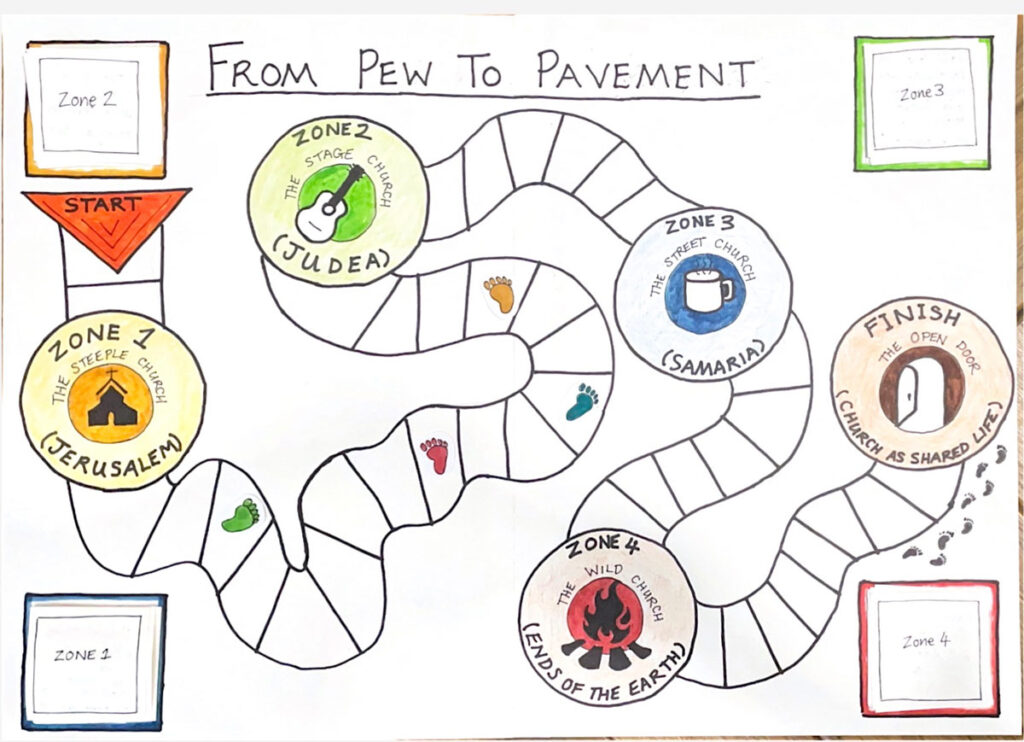
Creating the game helped me see mission less as a programme we run and more as participation in the life of God already at work in the world.
This insight has shaped how I now approach worship at Sherford Community Church. I’ve become more confident in developing creative and participatory forms of worship that engage people of all ages and all the senses. Through the Altogether services at Sherford I’ve had the opportunity to develop ideas collaboratively with our pioneer ministry team, Revs Jon and Tammy Oliver, creating spaces where people can encounter God through storytelling, imagery, reflection, and shared experience.
What does the future hold for you?
Right now, I feel very much in a season of listening and discerning where God might be leading next.
In Sherford, we are continuing to explore how church can respond creatively to the realities of a new and growing community. For example, delays in local facilities meant that access to affordable food became challenging for some families, particularly those working during the day. In response we developed an early evening food club so that households could collect food after work – a small but practical example of adapting to the needs of the local context.
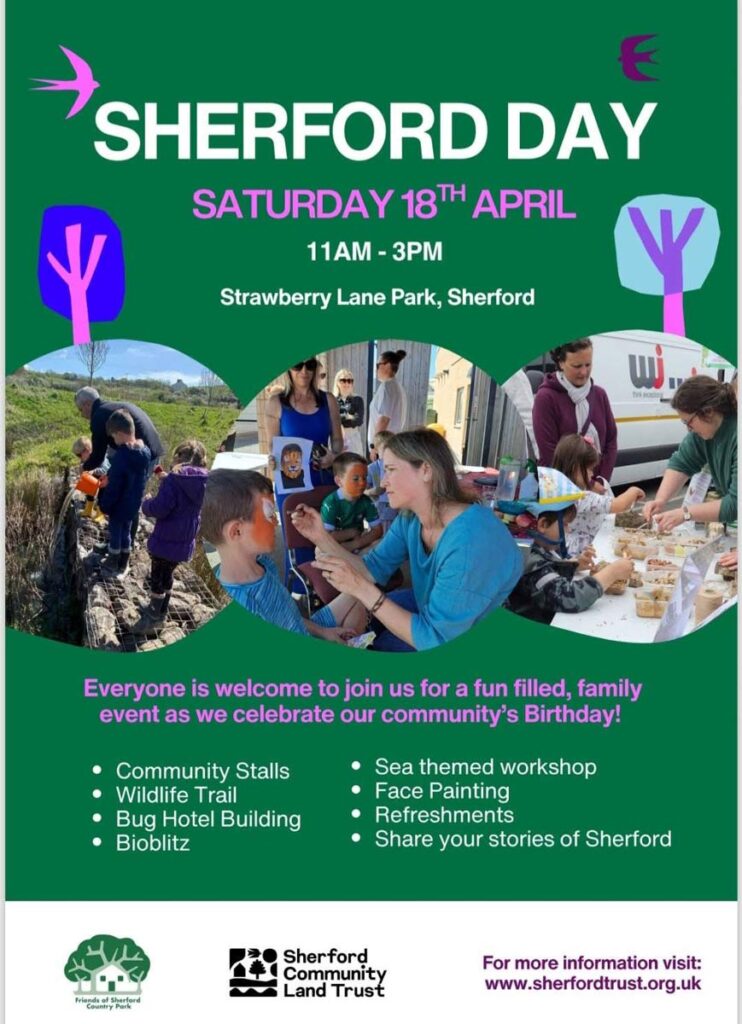
I’m also exploring creative ways that churches can connect with communities through wellbeing, creativity, and outdoor learning. For example, at Sherford Day this year I’ll be offering face painting as a free gift to the community – a simple way of creating relational spaces within a local celebration. Alongside this, I’m currently studying for a Certificate in Therapeutic Skills for Outdoor Leaders. Through this I’m exploring how outdoor learning, emotional wellbeing, and creative practices can support children and young people. My hope is that over time these ideas might develop into accessible resources that churches can use to connect with schools and communities.
At the heart of this work is a simple conviction: creativity, community and the natural environment can become spaces where people encounter God in everyday life.
Finally, how can we pray for you?
Please pray for wisdom and discernment as I continue to explore the next steps in my calling and ministry.
I would also value prayer for churches and communities across Devon as they seek to respond creatively to the needs around them, and for more pioneers to be encouraged and equipped for mission in their local contexts.
More from the blog
FAB Church, FAB course, FAB people!
Meet Clare and Soobie from FAB Church in Birmingham, both have of whom studied with the Newbigin Pioneering Hub.
Need theological foundation for your work?
If you’re busy doing the day to day work of pioneering mission but feel you’d like more theological credibility then Pioneer Mission Training is for you.