Anvil journal of theology and mission
Aspen: a new community
by Cathy Ross
The incubation
Why a new community and how do you go about setting it up? These were questions in my mind as I participated in the beginnings of this new thing. Jonny Baker was the initiator as he had been incubating the idea of a dispersed ecclesial community for several years. However, he is wise enough to know that ideas are best incubated and developed in community and through relationships. I watched and learned as Jonny took this forward. Here is my perspective on the story of Aspen.
The beginnings
Jonny had been talking about this idea for a while. We knew that many of our students were sad to leave studying with us and really wanted to remain connected in some way. Often, when they go to or remain in their various contexts, as pioneers, they feel alone or misunderstood by the church. They craved companionship, support and other people to share ideas, try out new things, be brave. Jonny was acutely aware that many pioneers around the country, and even globally, were feeling like this and he was keen to help them connect together. So, the idea of a community of dispersed pioneers was born.
Getting started
At our annual gathering, The Assembly 2024, we presented this idea to those present to ask if people wanted this and there was an overwhelming yes to designing it and bringing it back to the group the following year. We put out a call for any who were interested to be on a kind of founding group. About a dozen people committed to this and we started with online conversations to discuss together: purpose and charism (our particular gifting), what does it mean to be a sodality or dispersed community, what might its rhythm look like and finally how to function in practice. I experienced the art of asking a good question as these were vital to catalyse this process and to get us going. It is amazing what can emerge when people are together sharing in reading the Bible, praying, attentive listening, throwing out all sorts of ideas. The Miro boards were soon full of great suggestions that were distilled for further reflection and percolation time. Membership, organising, structure and governance, capacity, offering a library of gifts, hopes and fears were discussed in these early conversations. These ideas were then sent to a wider group of people for feedback and input. There was a lot to think about but amazingly it did not seem overwhelming as we were planning this together.
We got into these discussions in different ways. For example, we tried to imagine who might like to join Aspen, what would be appealing and helpful, what level of belonging they might want and what they would not want. We had great fun dreaming up all sorts of avatars but quite quickly we could see certain values emerging such as hospitality, prayer, diversity, a place to call home. We were all certain that we wanted belonging to be ‘light touch’ and for the community to be life-giving and enriching, not another burden to add to busy lives.
Already the magic was present – there was certainly something delightful about these online conversations – ideas were flowing, laughter was plentiful, hope was present – something new was emerging. Our next step was to try to pull it together in a two-day residential.
Pulling it together
Several of the founding group met at a former student’s lovely property that she kindly allowed us to use. One cooked superb meals for us and this certainly helped the creative process! I think that food and friendship were two of the magic ingredients for getting this community started, as well as down time for walks, swims and chats.
It could have felt overwhelming – there was a lot to sort out! We brought with us all our ideas from the three conversations and the resulting feedback as well, and we knew that by the end of these two days we needed a road map and a name for this new community. It happened. Looking back, it is hard to say exactly how but, without sounding super spiritual, I think God’s Spirit was in it and helped us to redeem the time. By the time we left, we had a name, a purpose, a charism, values, a rhythm and a plan for differing levels of belonging or membership.
We then shared it with a wider group to gain people’s reactions and insights and suggestions for change. The response was overwhelmingly positive such that very little got changed from our original design. This felt very graced.
You can read all of this in our founding Aspen document which is included in this issue of ANVIL. We left with more work to do – to start a group that can animate the community, think more about governance and safeguarding, determine our relationship with CMS, prepare for the launch, which took place in Glasgow in November 2025 at our annual Assembly gathering. I left feeling energised, excited and hopeful. Here was a community who was called to pioneering mission, determined to keep that front and centre in our lives, committed to a strong relationship with Jesus as the pioneer of our faith.
It also struck me that this community was birthed in creativity – thanks in large part to Jonny’s initiative and way of leading us into things. This resulted in our having more fun, more relational exchanges and more ideas than when we sit around a table in a more formal fashion. I guess there is a place for those kinds of meetings, but after so many years of experiencing this kind of ‘Dreaming Space’ at CMS, I seriously wonder why we do not allow more room for fun, play, creativity and imagination in these planning spaces. One of our mantras in pioneer training is “Everyone has a piece of the wisdom”1 and this was at play here. We could all bring who we are to the conversation and it was heard and celebrated. I believe that as this was birthed in creativity, with the help of God’s creative and life-giving Spirit, so Aspen will continue to flourish and develop in creative ways and not get stuck.
What’s in a name?
Lots of people ask me, why Aspen? Good question and it did seem to come as a surprise. We played around exploring various names and Aspen emerged as the favourite among us. When we did further research into this name, we discovered how entirely suitable it is for our community. The Aspen tree is a pioneer species and its resilient, shimmering leaves could symbolise a kind of link between heaven and earth with a strong relational underground network. Loads of resonances here! This confirmed our choice of name.
Who we are: charism and values
You can read the Aspen document at your leisure but let me highlight a few important aspects here. The purpose is clearly linked to our charism and values.
Our shared purpose is to connect and accompany changemakers, pioneers, fringe dwellers, and midwives of the new to join in God’s unfolding movement to heal and renew all things. This would be an excellent definition of mission. It also points to a few things such as newness and change so as not to become mired in what can sometimes seem to be the stuckness of the church. It is a call to healing, renewal, mending.
Our purpose is linked to our charism of newness, context (we say context is everything at CMS – well, nearly everything), freedom and diversity. These are all equally important but I do want to highlight diversity here. Diversity and global perspectives are essential for us and close to our hearts. Our colleague Harvey Kwiyani reminds us that “diversity is the new normal”2 and in our charism we picked up the phrase, “a fellowship of the unlike” from former CMS General Secretary, Simon Barrington Ward. Although slightly quaint language, I love this concept. It comes from the story he told of Ibribina and the community she had envisaged. Ibribina was a prophetic woman leader and trader, who lived at the end of the 19th century in Niger. She had been filled with the Holy Spirit in a mission church. Subsequently she learned how to read from the local CMS missionary so that she could read, translate and interpret the Gospels. Barrington Ward wrote,
She saw in ‘Jesu’ Krisi’ a new love, a new all-pervasive Spirit power, the possibility of a new people, a fellowship of the unlike, bonding together all tribes, all ethnic groups, both black and white, into a new society. Here the rich would care for the poor and the strong for the weak in what was to be a new heaven and a new earth.3
This would be my dream for Aspen, where there is a fellowship of the unlike and all are cared for equally. This resonates with CMS’s vision of being involved in mission at the edges, something that many pioneers are called to. Indeed, CMS’s purpose is to make disciples of Jesus at the edges. Another former General Secretary of CMS, John Taylor, was a fan of the edges. He wrote, “If you are concerned with movement and growth in a Church or in a society, look to the fringes. Watch the things that are pushing out on the edge.”4 We believe that Aspen will flourish best on the edges.
Our values are linked to our charism and are ubuntu, generosity, attentiveness and creativity. Again, you can read about these more fully in the Aspen document but let me just comment briefly on the African value of ubuntu, “I am because we are.” We are not who we are meant to be without one another. Belonging is made real and relational through mutual participation and we are diminished if others are excluded. Archbishop Desmond Tutu wrote evocatively on ubuntu as follows, “We belong in a bundle of life. We say ‘a person is a person through other people.’ It is not ‘I think therefore I am.’ It says rather; ‘I am human because I belong. I participate. I share.’”5 This is a powerful vision for the Aspen community.
It is worth noting how the Aspen document explores how we will know if we are exhibiting these values. For each value, there is a series of suggestions that will provide evidence of whether we are practising our values. For example, we will know if we are practising ubuntu if we welcome both friend and stranger and help everyone to feel at home. We will know if we are not practising ubuntu if people feel ignored, rejected or invisible. I find this approach very helpful and practical.
Rhythm
Our rhythm is intended to be light touch and manageable. There is a helpful review document if you wish to use that to discern, with a companion or group, how you might want to learn and grow. We offer a monthly prayer, micro-liturgy and reflection on the first Monday of every month, online for 45 minutes, led by Aspen members. There is a monthly newsletter welcoming new members, giving info on various events and other opportunities to connect. Members are encouraged to be part of a murmuration – a small group you connect with. We have a directory where you can see where other members are in the world so you can connect with them if you would like to. There will be an annual, in-person gathering for those who wish to attend. Nothing is required, all is possible. We encourage you to self-organise.
What next?
I am excited to see how Aspen will develop. There are still things to put in place and we are learning as we go along. Much will be determined by you, the members, and we are excited to see what happens as we grow. Let me conclude with how one person described what they were longing for in the design phase of Aspen, “A sodal community that awakens your life in order to free the wild possibilities within you.”
Growing slowly
We have been advised by others who are wiser and more experienced than us in these kinds of communities that we need to take our time, to grow slowly. There is not yet a website or any public space for Aspen but I am sure that will come in due course. We’re just taking one step at a time. If you’d like to know more, do get in touch via aspen@churchmissionsociety.org or download the Aspen Community Document.
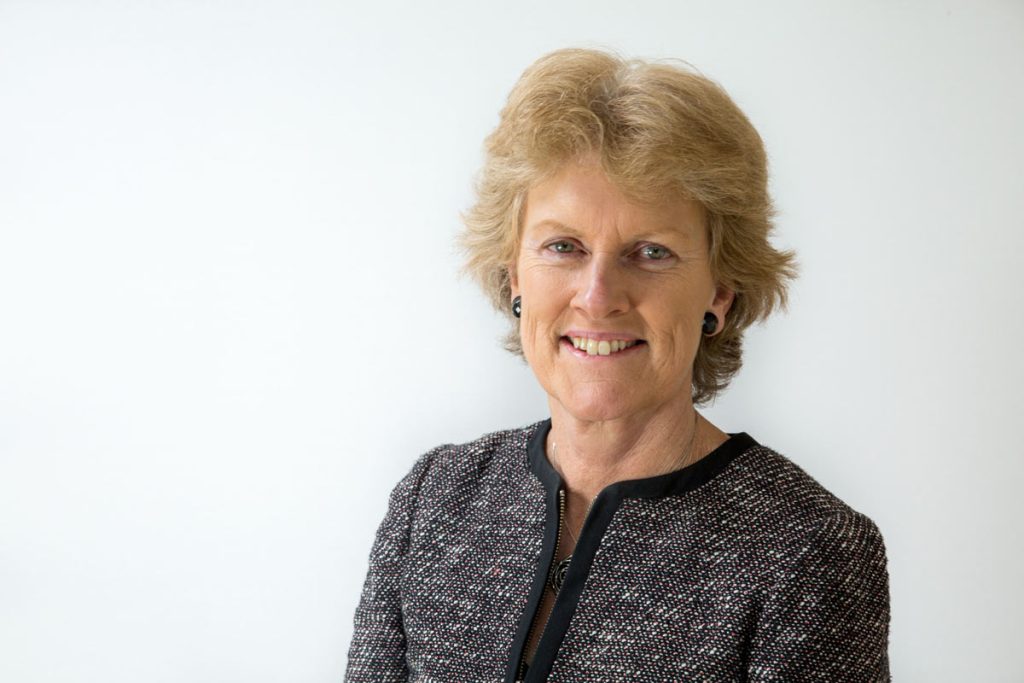
About the author
Dr Cathy Ross is a lecturer on the MA Programme at CMS. Her research interests are in the areas of hospitality, feminist theologies and missional practice.
More from this issue
Notes
- Mary Benet McKinney, Sharing Wisdom: A process for Group Decision Making, (Allen, TX: Tabor Publishing, 1987), 13. ↩︎
- Harvey Kwiyani, Multicultural Kingdom, Ethnic Diversity, Mission and the church, (London: SCM, 2020), 11. ↩︎
- Simon Barrington-Ward, “My Pilgrimage in Mission”, International Bulletin of Missionary Research, April 1999, 61. ↩︎
- John V Taylor, CMS Newsletter, No. 285, September 1965. ↩︎
- Desmond Tutu, No Future without Forgiveness, (London: Ebury Press, 1999), 34. ↩︎
