Anvil journal of theology and mission
Here I am: prayerful presence
by Ian Adams
Take a moment. Turn aside. Breathe deep.

As pioneers we have a natural inclination and capacity to move quickly and boldly, to do what we dream, to make things happen, to bring change. This, of course, is all potentially very good. What a gift. What a task. What a privilege!
But to enable such action to be truly good and holy, perhaps the most important first step we can make as changemakers, pioneers, fringe dwellers and midwives of the new is to commit ourselves to a stance of ever-deepening prayerful presence; to being humbly attentive to God and to the people with whom we are living and working.
If we are to join in God’s unfolding movement to heal and renew all things, that unfolding, healing and renewal must first begin to take shape in us.
Prayerful presence as a stance – indeed as a way of being – cannot be achieved quickly. Nor can it be completed once and for all. It is a daily task, and a lifetime’s work. But thankfully that task and work is not just down to us.
Land, sea and sky-scapes open up slowly.
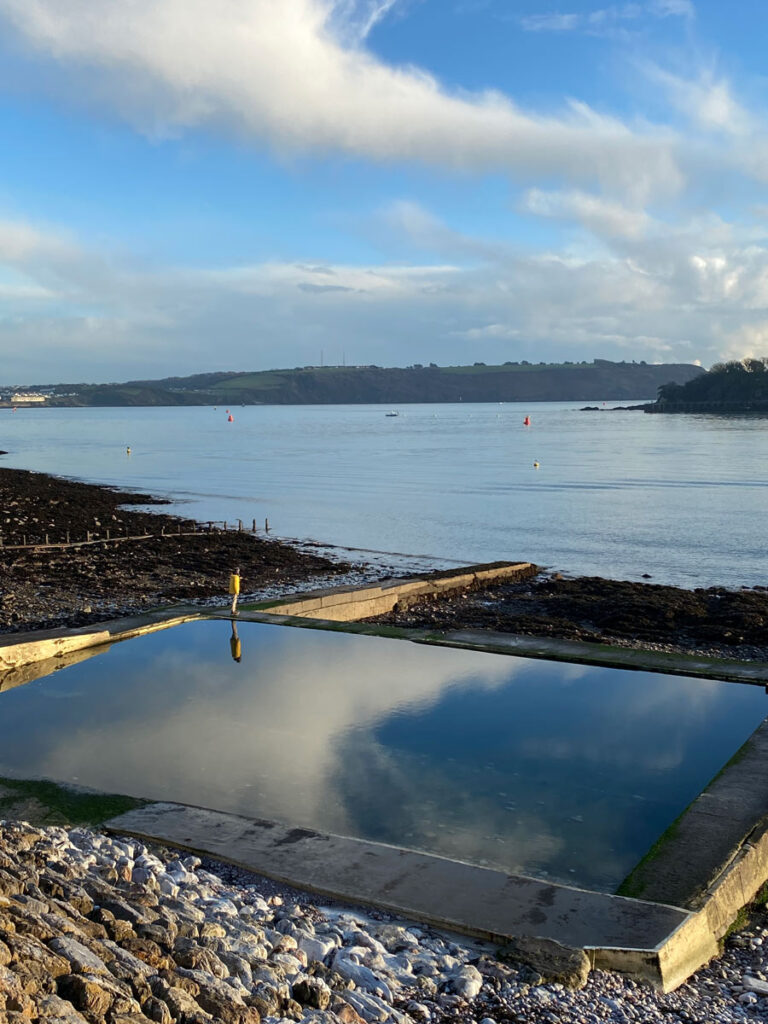
We need to settle into a place with humility and curiosity, to begin to see what truly is. The attention required takes time, persistence and, I suggest, love.
This realisation came to me a few years ago when, for the first time in my life, I lived in a rural setting. Repeatedly walking the same paths in woods, through fields, by the estuary, at either end of the working day, in all seasons, I gradually began to notice what I had not seen before, and to sense my belonging there.
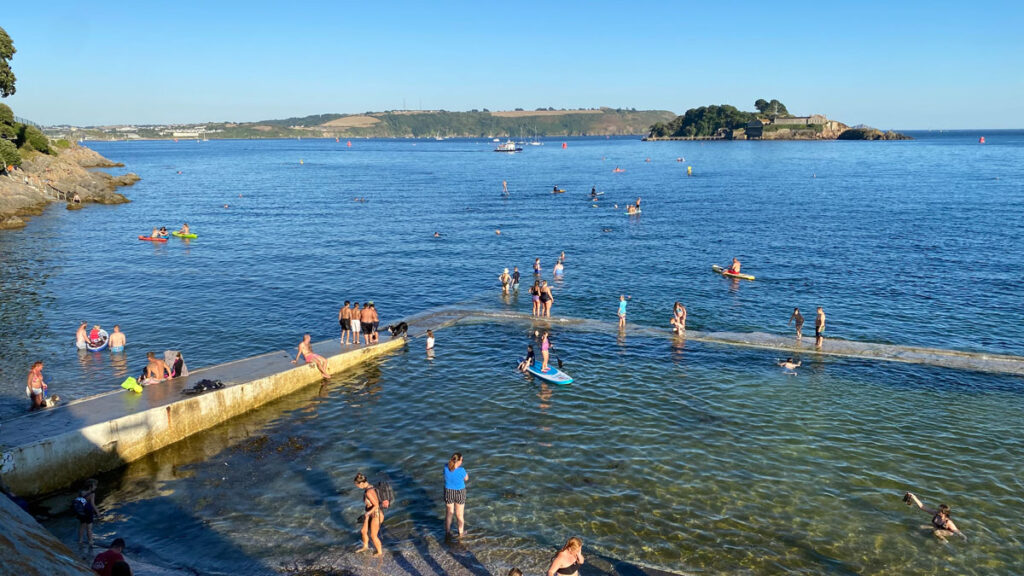
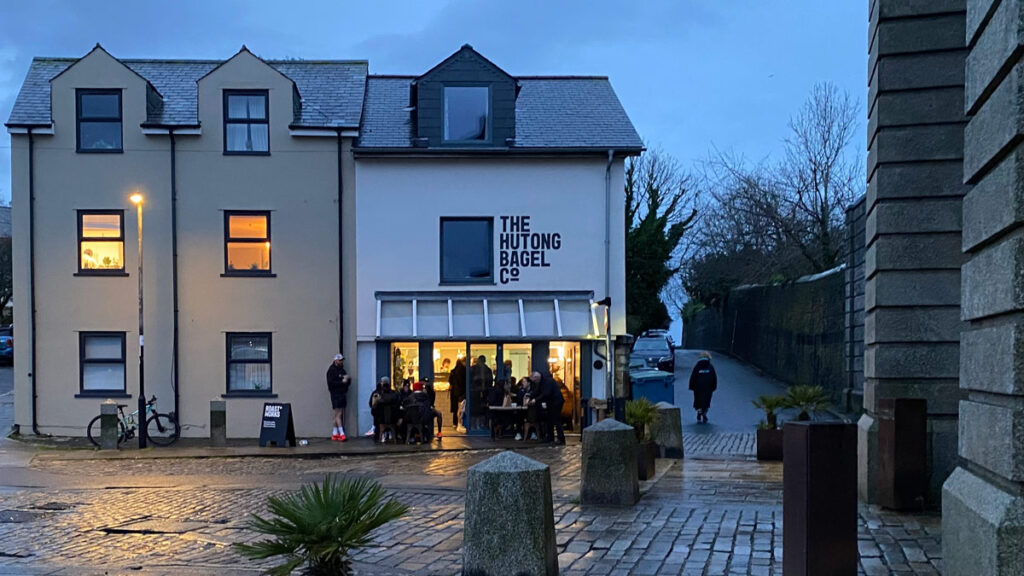
I’ve since learned that the same pattern is true of urban contexts. The photographs for this article were all taken in and around Firestone Bay in Plymouth Sound. Most days when I am here, I will come to the bay. I’ll get a coffee, greet people I am getting to know, walk, sit and take photos. Like any city it has a gritty quality, but also great beauty.
And it has become for me a great teacher. Drawing me into slowing down, into noticing, into enjoying the place, into thanking the Creator God, and into celebrating the people who gather there. It has become for me a place of prayerful presence, encouraging me to continue to nurture that stance wherever I am.
How might we make prayerful presence our way of being?
Here is one possible pattern, drawing on a resource recently created for the CMS movement, addressing the possibility of prayerful presence: Pray in the Holy Spirit: Five Principles for a Mission Spirituality.
Prayerful presence
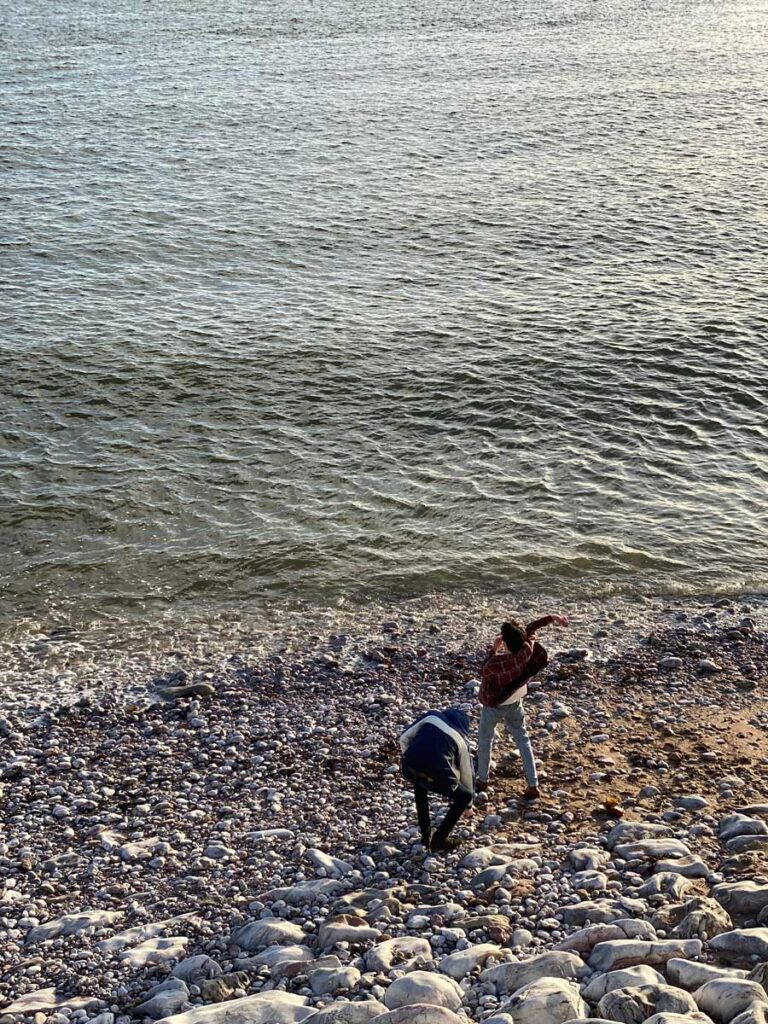
Usually and understandably, prayer begins with our words. Our own experience needs to be brought to God in prayer. Words of sorrow and regret, words of anger and disappointment, words of yearning and praise. All belong. And they are vital. We need to articulate and voice our experience to God who loves us. This is the beginning of prayer.
But a vital new possibility will emerge if, having spoken our words, we can allow ourselves then to become faithfully silent. To let go of our words. To step, fall or let go into prayerful presence, seeking to become present to God who is always present to us. To embody that repeating biblical stance “Here I am”, with open hearts and open hands.
Prayerful presence is the vital starting point for the nurturing of mission and community, a stance to which, I suggest, we must continually return. This takes practice and persistence.
Reflection: How might I begin or deepen a practice of prayerful presence? What might that look like?
God’s work, our assent
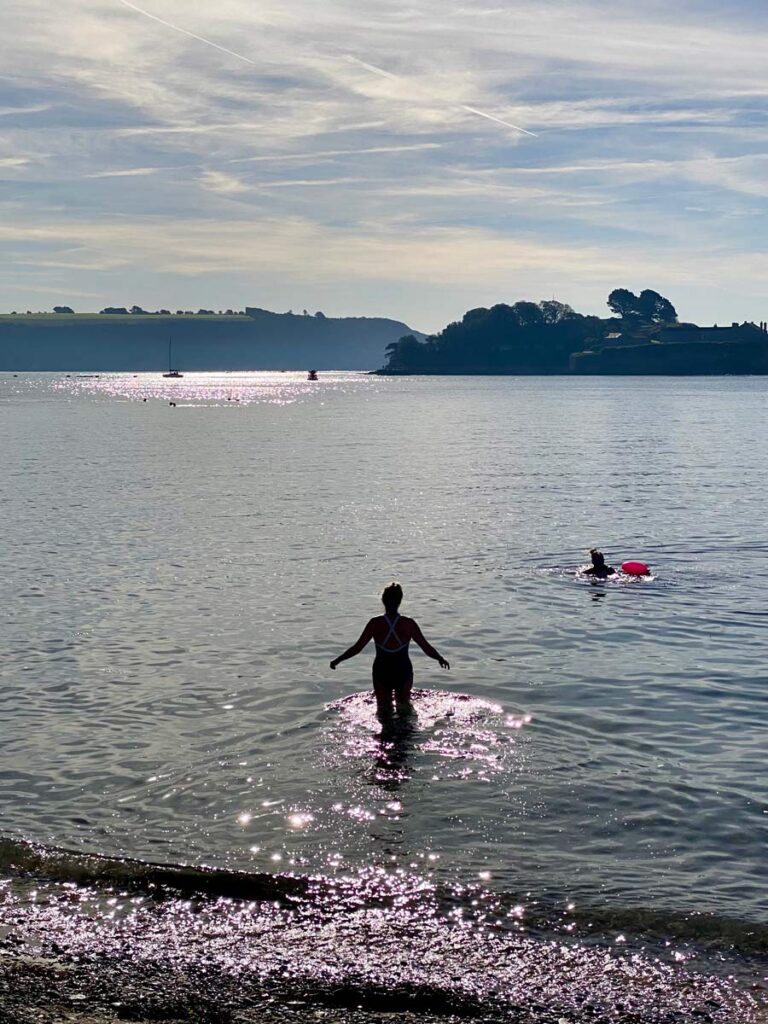
As the pattern of voicing words and then letting them go becomes more familiar to us, we may encounter a growing realisation that the work of prayer is actually, primarily, the movement of the Holy Spirit within us. It’s not just down to us.
Recall what it’s like to swim in the sea. Our hesitant entrance into the water, the cold hitting us, our gasped words, our attempts just to breathe, and then to stay afloat.
But gradually we may realise that the sea – both vast and intimate – is doing the real work, not us. And if we can allow that to be so, we float, held in water, bathed in shimmering light.
If we explore this as a motif for the spiritual life, imagine with me an invitation to enter into the deep ocean of God’s love. Each step from shore into sea requires our assent and commitment.
But through that assent, in God’s grace, change happens. A gradual deepening of love for God and for the people with whom we are working. This change is being accomplished in us by God.
Reflection: What might be the changes, however apparently small, that God is bringing about in me at this time? How might I step deeper “from shore into sea”?
Prayerful guides
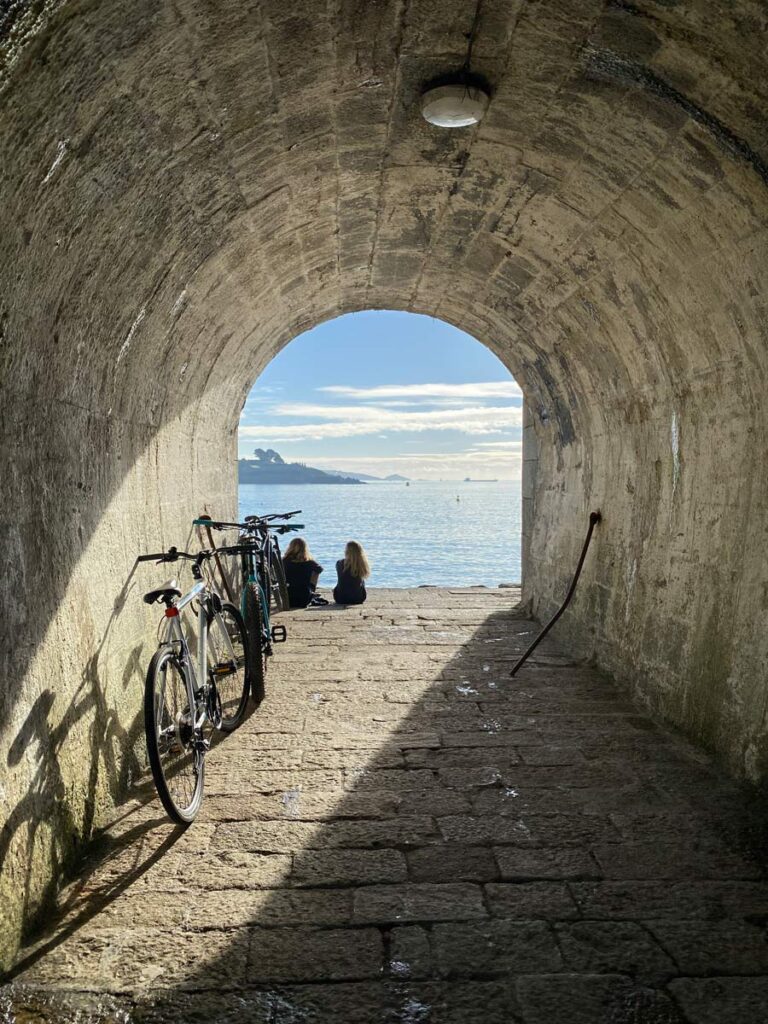
Slowly, over a long period of time, the sense may grow that, in the grace of God, we are undergoing some quiet and profound transformation, becoming closer to the likeness of Jesus Christ, both in our prayer and in our action.
On this journey towards transformation, we all benefit from the help of prayerful and wise guides. The experience, prayer and company of fellow pilgrims, past and present, can be amazing gifts to us as we seek to deepen in love for God and for people.
The Aspen community is already proving to be a rich source of encouragement in our sharing of experiences and in our prayers for each other.
The CMS Presence project is similarly inciting deeper faith, hope and love, with a particular emphasis on nurturing the life of prayerful presence.
And the practice of spiritual direction and other means of personal accompaniment are particularly valuable, enabling us to draw on the wisdom of prayerful guides, and a means by which our true guide, the Holy Spirit, may work within us.
Reflection: Who are my pilgrim guides? Might it be good for me to explore spiritual direction or similar accompaniment?
Intercession
From a place of prayerful presence our engagement with our contexts will be more profound, shaping our actions – and our prayers.
Intercessory prayer has a vital role to play in our mission spirituality, helping us to discern God’s presence and activity in our world, giving a vital outward momentum to our prayerful journey.
As pioneers of prayerful presence I suggest that it is important that we commit to pray with and for the edges on and around which we live and work.
It is important too to recognise that our shared prayers, inspired by the Holy Spirit, are a vital element in the earthly-heavenly struggle for righteousness and the coming of God’s kingdom. Every prayer is part of that struggle.
One of my pilgrim guides – the 14th-century English mystic Julian of Norwich – gives us this powerful insight regarding intercessory prayer:
“God’s love is so great that he regards us as partners in his good work; and so he moves us to pray for what it pleases him to do.”
Let us pray for what it pleases God to do where we are!
Reflection: How might understanding prayer as partnering in God’s good work be a gift? How might I pray with and for the people and places in which I live and work?
Kind and Curious
In the CMS Presence project we have learned that as Christians we share many common experiences in the nature of encounter with God in prayer. We have also learned that the prayer experiences of other Christians may differ from our own.
Thankfully, the Holy Spirit is not confined by our preferences or limitations. Jesus Christ always meets us where we are, but always draws us on. Our journeys will bear similarities with others’, but each of us has a unique story, through which the Christ of the Emmaus Road seeks to engage with us.
‘Jesus himself came near and went with them.’ Luke 24:15
This recognition encourages us to nurture great love and respect for the prayer traditions of the Church over the centuries. It calls also for kindness and curiosity, generosity and humility from us when we encounter something not familiar from our own tradition, as we seek to encourage each other in prayerful presence.
Reflection: What have been my most helpful experiences in the practice of prayer? Is there another great prayer tradition of the Church that I might explore?
Here I am

A powerful story from Exodus may be a particular gift at this time.
Moses was keeping the flock of his father-in-law Jethro, the priest of Midian; he led his flock beyond the wilderness, and came to Horeb, the mountain of God. There the angel of the LORD appeared to him in a flame of fire out of a bush; he looked, and the bush was blazing, yet it was not consumed. Then Moses said, “I must turn aside and look at this great sight, and see why the bush is not burned up.” When the LORD saw that he had turned aside to see, God called to him out of the bush, “Moses, Moses!” And he said, “Here I am.” (Exodus. 3:1–4)
Much of our life and work seems to call us to the fringes of society and culture, even to be “beyond the wilderness”. With Moses, and in the grace of God, may we have the courage to live with prayerful presence, to turn aside to the bushes of God’s presence that are blazing all around us, and to embody the prayer “Here I am.”
About the author
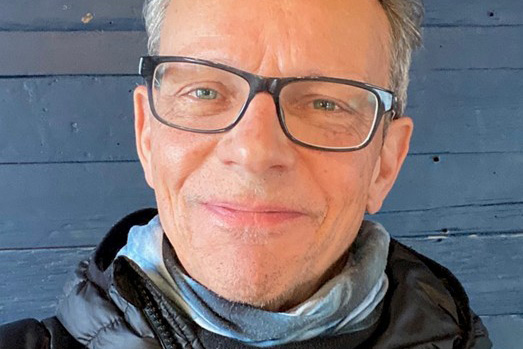
Ian Adams is mission spirituality lead at CMS. He is a spiritual director, and with Gail Adams leads retreats. Ian shares his photography and writing at Still the Light Shines on Instagram and Substack, and his books are published by Canterbury Press. Contact Ian at ian.adams@churchmissionsociety.org
