Anvil journal of theology and mission
A conversation between Nuam Hatzaw and Harvey Kwiyani
This conversation between two CMS lecturers, Nuam Hatzaw and Harvey Kwiyani, took place at The Assembly in Glasgow in November 2025. Harvey describes how he came to write his book, Decolonising Mission (see the book review section) and offers reflections on mission and empire. He tries to imagine mission being done without power and money, but rather reliant on the hospitality of others, rooted in relationship and motivated by love.
1. Motivation for the book
N: Harvey, can you tell me what motivated you to write this book? I know you have a long career in mission organisations.
H: Two things, really. First, I’m trying to process what happened in my own story – my village, my people, my family. My great-great-grandfather, Mtimawanzako Nacho, was one of the first converts of Scottish missionaries working at Blantyre Mission in Malawi at around 10 years old in the early 1880s (after escaping from the hands of slave raiders who took his parents away). The missionaries later brought him to Stewart’s Melville College in Edinburgh where he attended from 1885 to 1887. After returning to Malawi, he worked closely with the missionaries and eventually became the first Malawian to be entrusted with running a mission station independently.
He served Chiradzulu Mission faithfully from the 1890s into the 1920s. But later in life, he became entangled in conflict with Alexander Livingstone Bruce who owned the Bruce Estates at Magomero (where I was born) as part of the British settler farmers during the colonial era. That conflict escalated to the point that, in his 70s, after a lifetime of Christian leadership, he took his own life in 1945. So for me, this is not abstract. It’s deeply personal. I’m trying to make sense of how mission, faith and colonialism became so entangled that it produced that kind of outcome for someone like him.
Second, I am convinced that much of our missiology today remains shaped – often unconsciously – by the colonial assumptions that have shaped much of mission in the past 500 years. There lingers a defensive posture, as though Christendom is perpetually under threat, as if Constantinople might fall again. That anxiety continues to frame mission as the protection of the faith against external others.
Yet, when we turn to the Gospels, we see something quite different. Jesus is not defending an empire; he is announcing and enacting a kingdom that unsettles and subverts it. His mission does not secure power: he wants to give it away to those oppressed by the empire so they can live their lives to the full.
As long as mission remains tied to empire or to the cultural frameworks of Western civilisation, Christians from the rest of the world cannot participate as equal agents. At best, they are incorporated; at worst, they are managed. But we now inhabit a different moment, the era of world Christianity. Christians from every part of the world are already on the move, bearing witness to the gospel in ways that are not dependent on traditional sending structures.
Mission is no longer the preserve of one region or tradition; it is a shared calling of the global church.
2. Empire and reference points
N: That’s really helpful. The gospel spread in the context of empire, but not through empire. In colonial theory, there’s always a “centre” that defines everything. In Jesus’ time, Rome was that centre. Who is the centre today?
H: The British empire is no longer what it once was, but it still carries immense influence. The American empire certainly does. And when we look at global evangelicalism, those centres still shape much of what we call mission. But it’s not just Britain and America: European empires more broadly continue to shape global Christianity. These are the powers we are still negotiating as we serve Christ today. I am also aware of conversations that suggest that Silicon Valley and many other technological hubs are centres in the economics of empires.
N: And there’s also a kind of Christianity that functions like an empire, a very narrow definition of what it means to be the church or to do mission.
H: Exactly. Empires shape how people think. They produce theologies that serve their own interests. I argue in the book that what we call evangelicalism today can sometimes function as a kind of “religion of empire”, spreading a form of Christianity that serves imperial structures rather than subverting them.
3. Power, empire and the Spirit
N: Let me push back a bit: can God not use centres of power? Think of Cyrus in the Bible.
H: God can use anyone. But the issue is this: even when we are within empire, the gospel of the kingdom subverts the logic of empire. The danger comes when we mix the gospel of Christ with the logic of empire. That’s where we lose clarity.
Empires organise the world around centres and peripheries. Historically, to be ‘Christian’ was to be located near the centre – the city – while those beyond it were dismissed as ‘pagans’ or ‘heathens’. Jesus disrupts this geography even before it emerges. He forms his disciples in Galilee, far from the recognised centres of power, and sends them out from Jerusalem – not Rome or Alexandria, but from a marginal, contested centre within a colony, one that would itself be destroyed within a generation.
Mission, in this sense, does not proceed from imperial strength. It begins at the margins and moves outward – without the backing, validation or resources of empire. And crucially, he tells them to wait – not for political power, but for the power of the Spirit. So, if we are serious about decolonising mission, we must ask: are we relying on the power of empire – money, influence, institutions – or on the power of the Spirit?
4. Money and mission
N: That leads us to money. Mission requires funding, but money is also tied to power. How do we think about that?
H: In Luke 10, Jesus tells his disciples not to carry a purse – just go. They are to live as people without power, dependent on the hospitality of those who receive them. Mission, in that sense, is not resourced by wealth but sustained through relationships. Today, however, mission is often restricted to those with access to financial resources. Yet, when Christ says, “Go,” he is addressing everyone, rich and poor alike. If participation in mission depends primarily on access to money, we need to ask what kind of mission we have constructed.
This is especially important today when millions of Christians are already on the move. A Pew Research Center report (2024) suggests that around 47 per cent of international migrants are Christians.1 They move for work, education and trade, but they also carry the gospel with them. We rarely recognise them as missionaries because they have not been formally “sent”. Perhaps decolonising mission requires a shift in perspective. Instead of asking, “Who can we send?” we might begin by asking, “Where is God already at work through people on the move – and how can we join them?”
5. Rethinking success in mission
N: What does this mean practically, especially in areas like funding, reporting and evaluation?
H: In Western systems, we often measure success through numbers: how many people were converted, how many decisions were made. That drives funding. But what if success looks different?
What about the missionary who spends years building relationships, showing the love of Christ, but sees no immediate conversions? That witness may bear fruit in the next generation.
Mission is relational. It is about presence, faithfulness and witness – not just measurable outcomes. If we change how we define success, we will change how we practise mission.
6. The complexity of mission history
N: How do we deal with the complicated legacy of mission, both its positive and negative aspects?
H: It is complex. Take David Livingstone, for example. In Malawi, he is remembered as a hero. But historically, he also contributed to arguments that enabled colonisation. His work led, almost directly, to the colonisation of the Congo by Leopold II of Belgium, to the Berlin Conference of 1884, and to the Scramble for Africa that followed.
And then there are stories like that of Nacho, my great-great-grandfather, a local mission leader whose contributions are largely absent from the official record. I had to come to the Edinburgh archives to learn his story. It is not preserved in Malawi.
So, the issue is not that every missionary was bad. The issue is the system. The system was entangled with empire. We need to acknowledge that honestly – lament it, repent of it – and then imagine new ways of participating in God’s mission that are not shaped by those same structures.
7. Imagining mission without empire
N: Finally, what might mission without empire look like?
H: We need to ask some fundamental questions. Can we imagine mission without conquest? The word missio has military origins: it is about the sending of soldiers. But the New Testament idea of sending (apostolos) is relational. It is people sending people, not empires sending agents.
So what would mission look like if it were:
- driven by love rather than fear?
- shaped by vulnerability rather than power?
- rooted in relationship rather than conquest?
- empowered by the Spirit and not empires?
Can we imagine mission that is not backed by military or economic power, but by compassion? If we are to rethink mission today, these are the questions we must take seriously.

About the authors
Nuam Hatzaw is MA lecturer in Asian Christianity at CMS; her research and teaching focuses on migration, Asian theology and world Christianity.
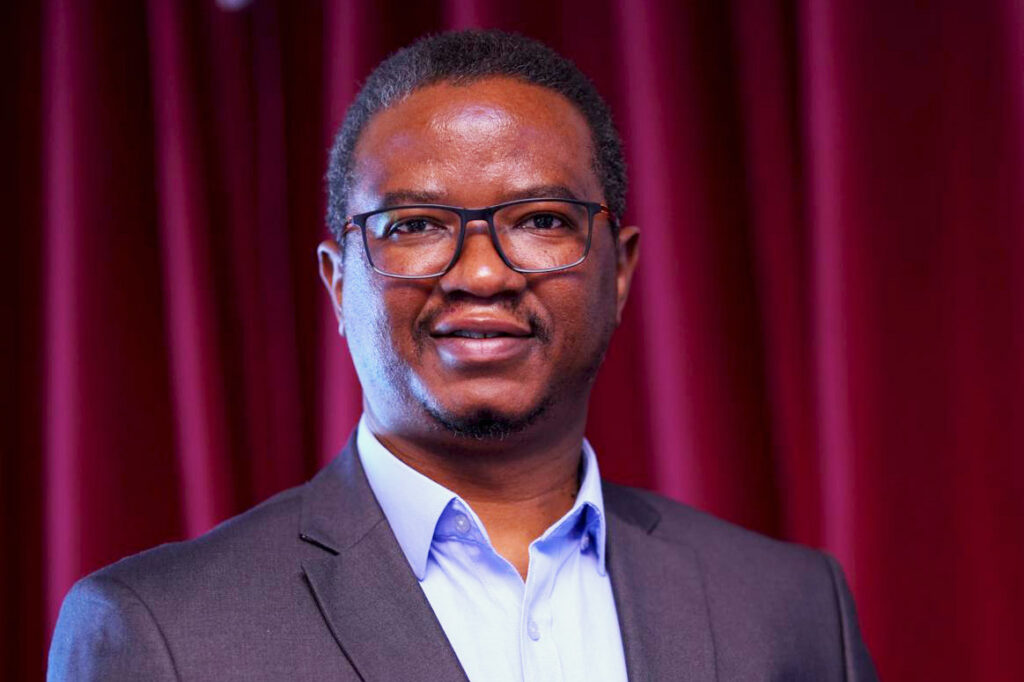
Dr Harvey Kwiyani is a team leader at CMS where he leads the Acts 11 project on mission and migration and leads the African Christianity route through the MA. He is a theologian and missiologist specialising in African Christianity, diaspora mission and intercultural leadership, working at the intersection of theology, migration and the global church. He is the author of Decolonizing Mission, which advances a vision of Christian witness beyond imperial frameworks toward a more Spirit-empowered, polycentric and relational global church.
More from this issue
Notes
- Pew Research Center, The Religious Composition of the World’s Migrants (Pew Research Center, 2024), https://www.pewresearch.org/wp-content/uploads/sites/20/2024/08/PR_2024.08.19_religious-composition-migrants_report.pdf ↩︎
