Between gratitude and grief
A close-up look at mission on the edge in Lebanon
In a devastated Lebanon, our partners are reaching out to people who have no idea what tomorrow will bring.
In a school courtyard in Beirut, now serving as a temporary shelter, a staff member with Church Mission Society’s local partner, Together Network, was distributing freshly prepared meals to families who had recently arrived with nothing. Samia noticed an older woman sitting quietly with her children, having fled the heavy bombardments in the south of Lebanon just days earlier. When Samia handed her a simple sandwich, the woman’s face broke into an expression of such intense, tearful relief that it stayed with the team long after the crowds had thinned.
Reflecting on that encounter, Samia said: “I never expected to see someone so excited to receive a sandwich.”
That moment illustrates the daily reality across Lebanon today, where the basic certainties of human dignity – a safe room, a hot meal, a moment of security – have become rare treasures. Yet, in the middle of widespread devastation, local Christians are putting their faith into action. Though many have suffered great losses themselves, they are choosing to stand on the frontlines of relief, offering practical comfort and a steady, reassuring presence. Their efforts are leading many people to curiosity about Jesus.
Crisis upon crisis
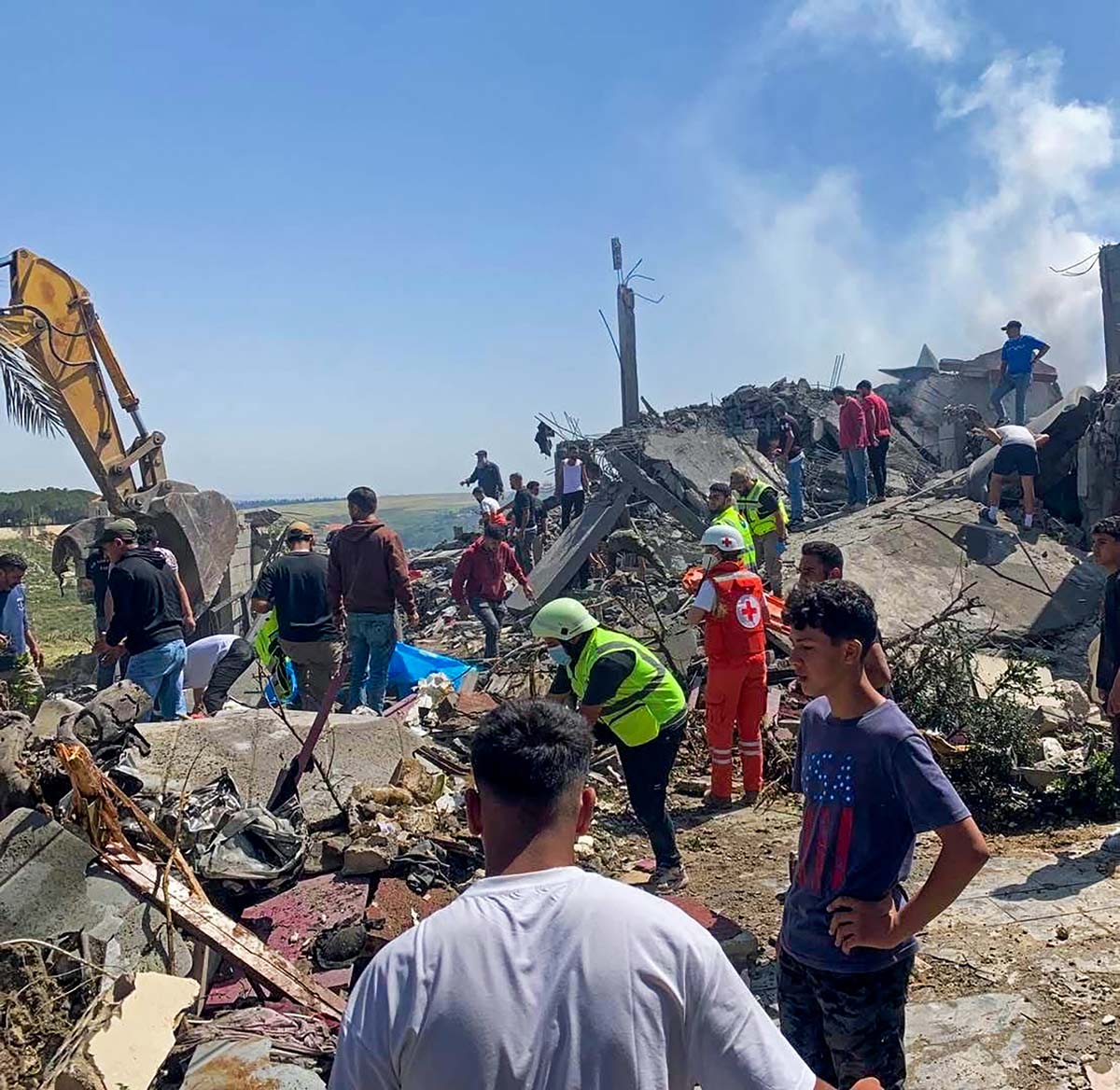
The violence that erupted between Israel and the militant group Hezbollah in late February 2026 has shattered what little stability remained in the country. Intense airstrikes and sudden military operations have forced more than 1.4 million people – over a fifth of Lebanon’s population – to run for relative safety. Families are seeking shelter wherever space can be found: in overcrowded classrooms, church basements, temporary community centres; some have even been sleeping under highway bridges.
“This kind of crisis pushed us to depend on God, to go out to the streets and share with the people, eye to eye.”
To understand the true weight of this moment, it is necessary to realise that this conflict did not hit a stable society. It collided with a nation already exhausted by a severe, ongoing economic collapse that began in 2019, which had already wiped out life savings, destroyed local livelihoods and left public infrastructure threadbare. Combined with the lingering trauma of the 2020 Beirut port explosion, ordinary families possessed little safety net left when the first bombs fell this spring.
Now, those who have been displaced face total uncertainty. Even during fragile, temporary ceasefires, the relief has been short-lived; many who attempt to return to check on their villages find only fields of rubble where their neighbourhoods used to be. The sense of loss is consuming, leaving people to live day by day. “We have no idea what tomorrow will bring,” people have said to CMS partners.
Between gratitude and grief
“We are living between gratitude and grief,” shared a member of the Together Network team, describing the collective psychological landscape. “Grateful to be alive, but grief because of the deep loss all around us.”
The psychological pressure on ordinary citizens has been relentless. The constant, ominous buzz of surveillance drones and the sudden wail of sirens have kept families in a state of perpetual anxiety. Ceasefires have at times reduced some of the immediate outward danger, but done little to ease the deep trauma carried inside.
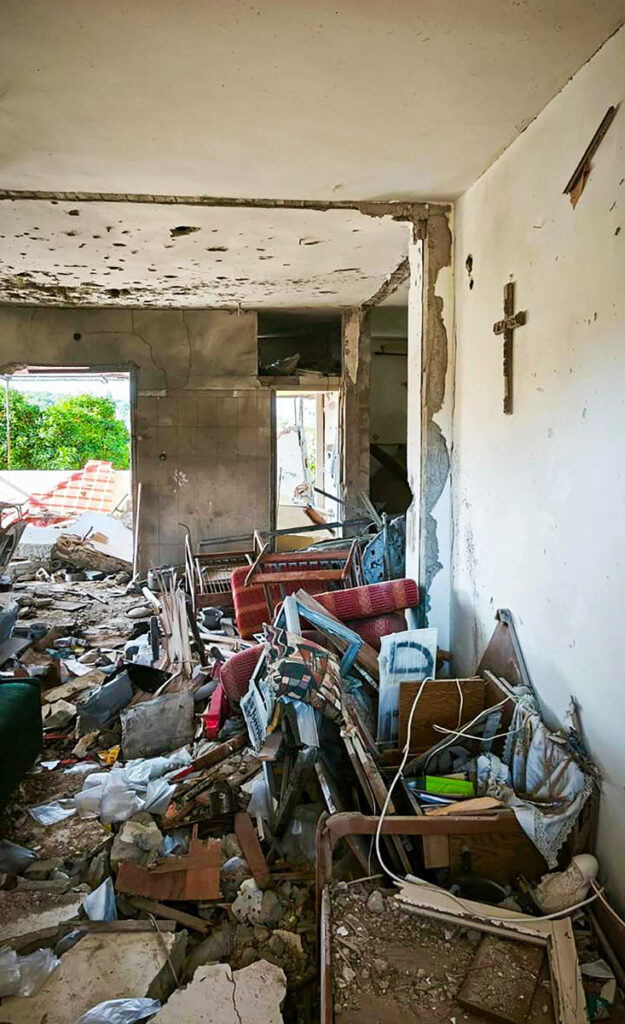
Many of the Together Network team in Lebanon – who are believers from Muslim backgrounds and refugees who fled Syria – have lost their homes or loved ones too.
Yet, rather than paralysing their efforts, this heartbreak has focused the team’s sense of mission. They are working with an acute awareness of the uncertainty of tomorrow.
“The local Christian community has modelled a deliberate choice to serve all people”
Knowing that any conversation could be their last opportunity to offer comfort, team members have become entirely dedicated to sharing the full message of God’s love and hope with those around them, refusing to let fear silence their witness.
This faithfulness was vivid in an account shared by team member Alia. She recently spent time sitting with a woman who had survived what locals call “Black Wednesday” – an intense Israeli airstrike that killed 20 of her immediate neighbours in a single instant.
The trauma and guilt of being the one left alive was a crushing weight. Instead of offering easy, superficial platitudes, Alia listened to her grief and gently shared the love and hope of Jesus.
A radical presence in a divided land
In Lebanon, though Christians are technically a minority (making up roughly 32–35 per cent of the population), Christianity is not a hidden faith. It is an integral part of the nation’s history, culture and infrastructure: Lebanon is home to numerous visible churches, schools and universities. Christians’ steady, loving witness is manifesting in remarkable ways across a complex and fractured social landscape.
The volume of displaced people has strained Lebanon’s delicate sectarian lines. In some areas, local communities and hotels have felt compelled to restrict who can enter temporary shelters, driven by security concerns that hosting certain groups might make civilian buildings a military target. At the same time, vulnerable populations, such as Syrian refugees, frequently face prejudice and isolation as they look for safety.
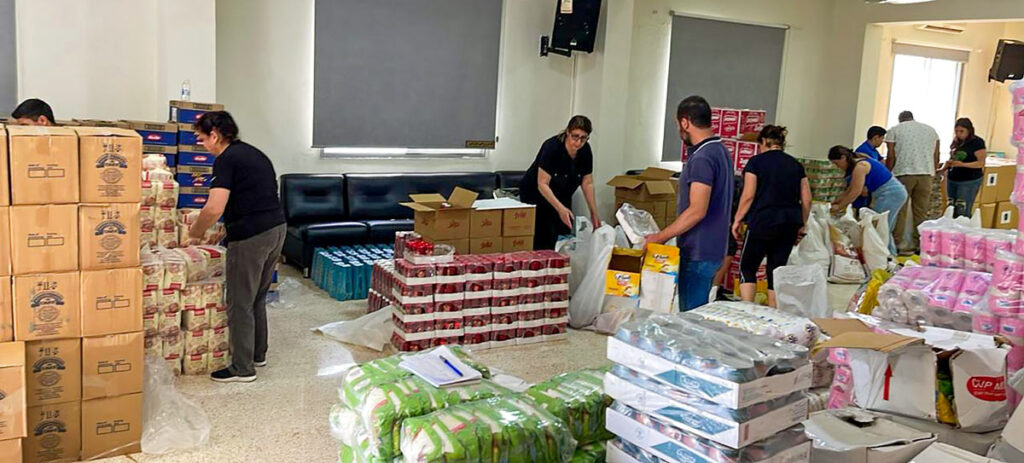
In stark contrast to these divisions, the local Christian community has modelled a deliberate choice to serve all people, regardless of their background, with radical compassion. Local churches and Christian institutions have opened their doors to host dozens of displaced families, providing warm rooms, safety and hot meals every day.
Pastor S, a local partner working with Syrian refugees, described how this crisis has deepened their ministry focus: “This kind of crisis pushed us to depend on God, to go out to the streets and share with the people, eye to eye.”
Long-term lifelines
To sustain this critical work, CMS has launched a Summer Appeal. The immediate goal is to provide vital practical relief to 1,000 displaced families, approximately 4,000 to 5,000 vulnerable individuals who have lost their homes or loved ones. This will take the form of:
- Food assistance parcels: essential staples such as rice, sugar, beans, pasta, cooking oil and milk, ensuring a displaced family has enough to eat for an entire month.
- Hygiene kits: daily necessities, blankets, soap, shampoo, toothbrushes, toothpaste and essential sanitary items to help maintain health and dignity in crowded environments.
- Children’s support boxes: designed for the youngest victims of the conflict, these boxes contain nutritious snacks, crayons, colouring books, simple educational materials and small toys to provide a small patch of joy and normality, which is hugely important in times like this.
- Trauma and emotional support: supporting trained local volunteers and church teams as they organise children’s activities, parental support groups and trauma conversations, offering spiritual encouragement to families contending with deep emotional scars.
Sharing in prayer
As local believers navigate this fragile reality, they are anchoring themselves in Scripture. Churches and discipleship groups across the country are finding comfort in Isaiah 41:10: “So do not fear, for I am with you; do not be dismayed, for I am your God. I will strengthen you and help you; I will uphold you with my righteous right hand.”
The road to recovery and rebuilding in Lebanon will be long and difficult. Lebanese brothers and sisters are asking the body of Christ to pray for peace, justice and for more people to trust in Jesus amid destruction and devastation.
“The things people once trusted in have proved to be so fragile,” said one local partner. “But Jesus never leaves us. This is the message we want to share in word and action right now.”