DR Congo: Planting churches in the shadows of war
Photo: Rev Innocent distributes communion at a newly-planted church
God is using the church in DR Congo to bring healing, reconciliation and lasting transformation to wounded communities.
For over three decades, the district of Kibumba in the eastern DR Congo has been severely affected by armed conflict, forced displacement and deep trauma. Yet amid the shadows of war, a movement of spiritual restoration and practical aid is proving that fear will not have the final word. At the heart of this renewal is Rev Innocent Kwitonda and the ministry of St John’s Church, Buvira, where he is vicar.
Conversion and calling
Rev Innocent’s commitment to the people of the Kibumba district comes from an intimate understanding of their pain. When he was just two years old, his father – a church pastor – was kidnapped during an outbreak of local violence. His family never recovered the body, and looters stripped their home of almost everything they owned.
By age nine, Innocent faced another crisis when he was sent home from school because his family could not afford the school fees.
“When I arrived home my mother was sick, I went into her room and I found an old Bible that my father used in his ministry,” Innocent recalls. “There and then, I made a personal oath with God: ‘Lord Jesus Christ… help me to study and when I grow up I will serve you faithfully and proclaim you in all nations.'”
The next day, God performed a miracle and a woman provided the money for his school fees. That answer to prayer sparked a lifelong calling. Innocent rose through Sunday school volunteering and leadership to graduate with distinction from the Lake Kivu Christian Centre. Since then, he has trained nearly 2,000 lay pastors across North Kivu, led 25 Portable Bible Schools and helped to plant six new churches.
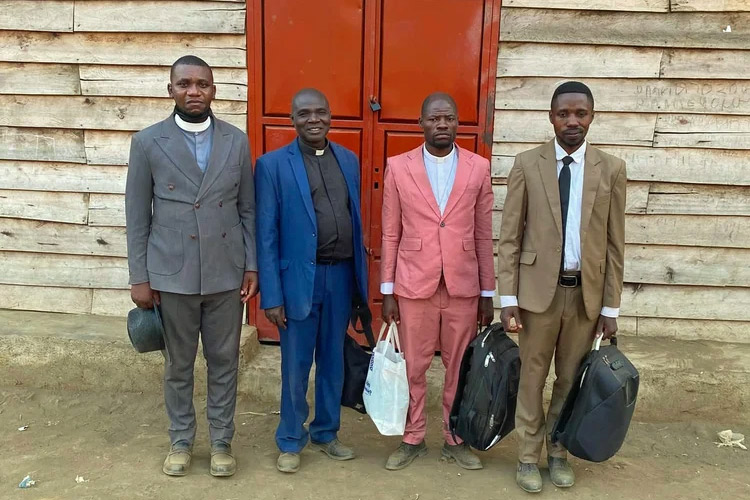
A church for others
For more than 30 years the population of the Kibumba region, north of DR Congo’s capital city Goma, have lived in a state of displacement, seeking refuge in Internally Displaced People (IDP) camps around Goma. “I was born in this area, and my life story is closely connected to the suffering and resilience of its people,” says Innocent.
In response to this prolonged humanitarian crisis, St John’s Buvira chose to embody a church that walks alongside the suffering people. As thousands fled their homes, St John’s transformed into a sanctuary, welcoming war-displaced households and providing clean water, temporary shelter and essential supplies.
For Innocent, practical aid and the gospel are inseparable. The parish did not just offer physical relief; it offered spiritual hope to families who had lost everything. He quotes the teachings of Dietrich Bonhoeffer who describes a ‘Church for others,’ insisting that “the Church is only the Church when it exists for others.”
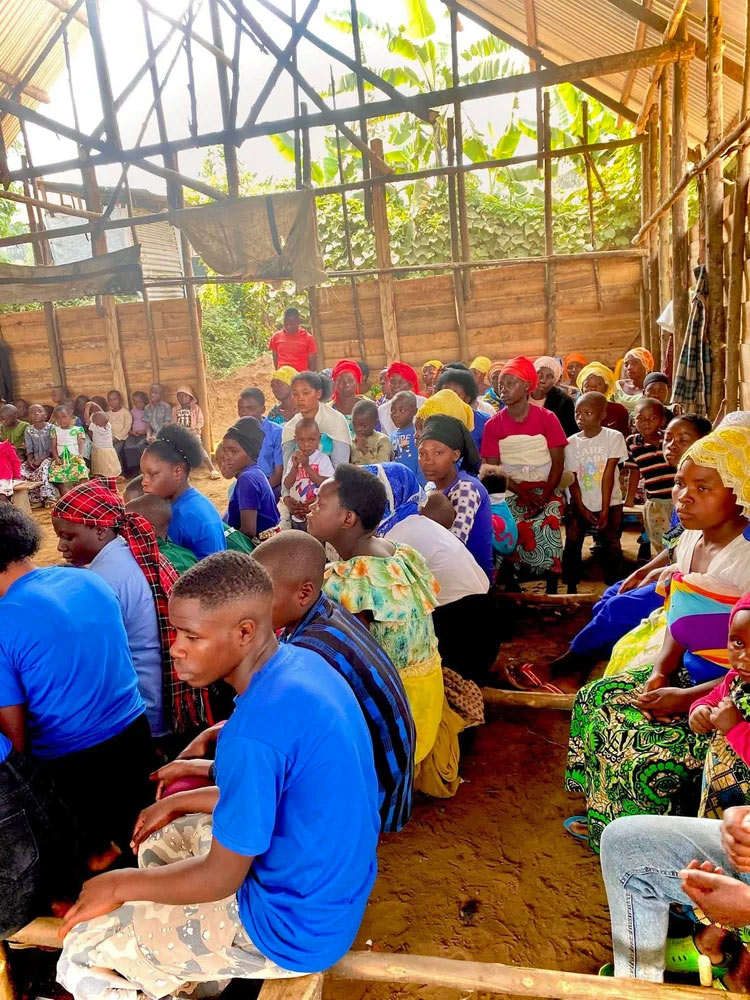
Three new churches
After the M23 had taken Goma, a period of comparative peace allowed displaced families to return home and the community of Kibumba issued a plea to the parish of Buvira. Acknowledging how the church had stood by them during their suffering, residents asked for a permanent church presence to help them rebuild their lives, teach resilience and heal from war.
Since 2025, St John’s has planted three new churches in Kibumba that are growing steadily in both spiritual depth and community impact. These churches emphasise resilience, love, reconciliation and holistic ministry through their work in the communities around them.
Women who suffered sexual violence and harassment are gradually rediscovering hope and dignity through biblical teaching, pastoral care and supportive fellowship. Children, who are especially vulnerable to the psychological effects of war, participate in trauma-healing sessions, educational activities and structured play that contribute to their emotional restoration.
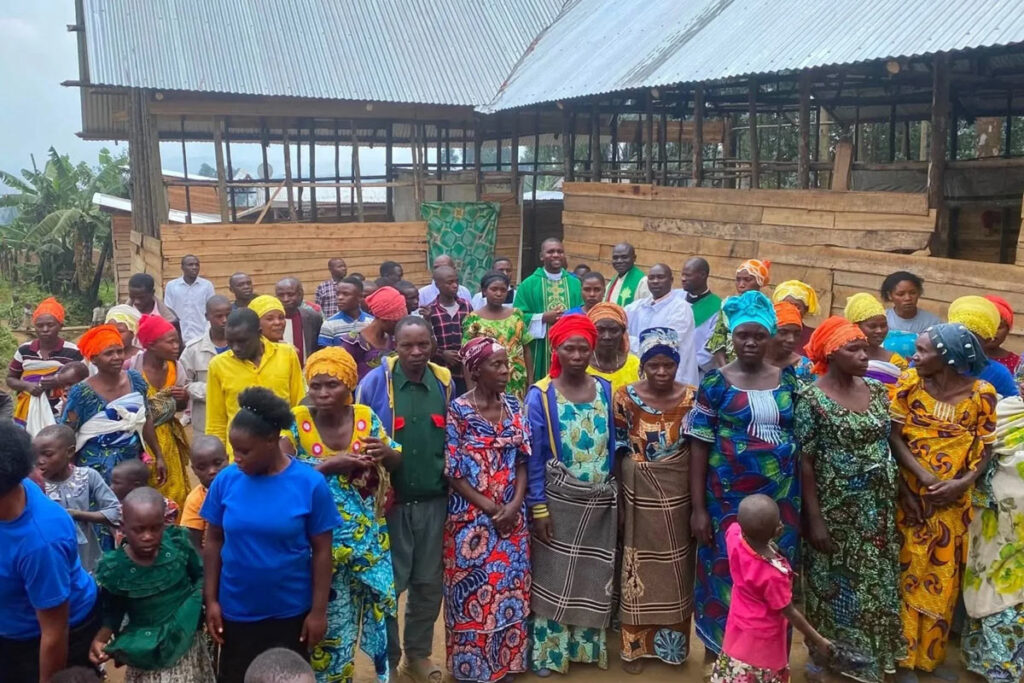
Now studying for an MA in African Christianity with CMS while serving as the vicar of St John’s, Rev Innocent remains grounded in his core mission.
“Through all these experiences, we firmly believe that the Lord alone is the healer of broken souls,” says Innocent. “He heals the broken-hearted, and binds up their wounds (Psalm 147:3) and the Church remains his chosen instrument to bring healing, reconciliation and lasting transformation to wounded communities.”