Following Jesus, the Great Disturber
Andy Roberts reflects on his first year as CEO of Church Mission Society
Photo: Andy meets with the SAFI Tanzania team and CMS-Africa
A year into leading Church Mission Society, I keep coming back to one description of Jesus: the Great Disturber.
Jesus has a habit of unsettling settled people, settled institutions and settled assumptions. He calls fishermen out of their boats, challenges religious insiders, crosses boundaries others avoid and keeps turning up among people everyone else has pushed to the edges.
I increasingly think the world mission movement needs to allow Jesus to disturb us too.
Not because mission matters less than it once did. Quite the opposite.
Our world still desperately needs the good news of Jesus. It needs people whose lives are being deeply reshaped by him. It needs Christian communities bringing hope, justice, reconciliation and transformation. And it still needs people willing to cross cultures and boundaries to share life and faith with others.
But the shape of world mission is changing.
For a long time, the dominant picture was fairly straightforward: Christians in Britain and other Western countries raised money, trained missionaries and sent them overseas.
God used that movement in extraordinary ways. CMS is part of that story and we should not be embarrassed by the sacrifice and faith of so many who went before us.
But that cannot be our controlling picture of mission in the 21st century.

Sometimes I still catch myself talking as though Britain is the place missionaries come from and everywhere else is where they go.
It simply isn’t true any more.
Mission today comes from everywhere and goes to everywhere.
I learnt something about that personally in Brazil.
A holy disturbance
More than 20 years ago, my wife Rose and I became involved in the lives of three sisters who had experienced terrible abuse. We hadn’t gone to Brazil with a plan to start an organisation working with vulnerable girls. But sometimes the call of God arrives as a holy disturbance.
That disturbance eventually became ReVive International.
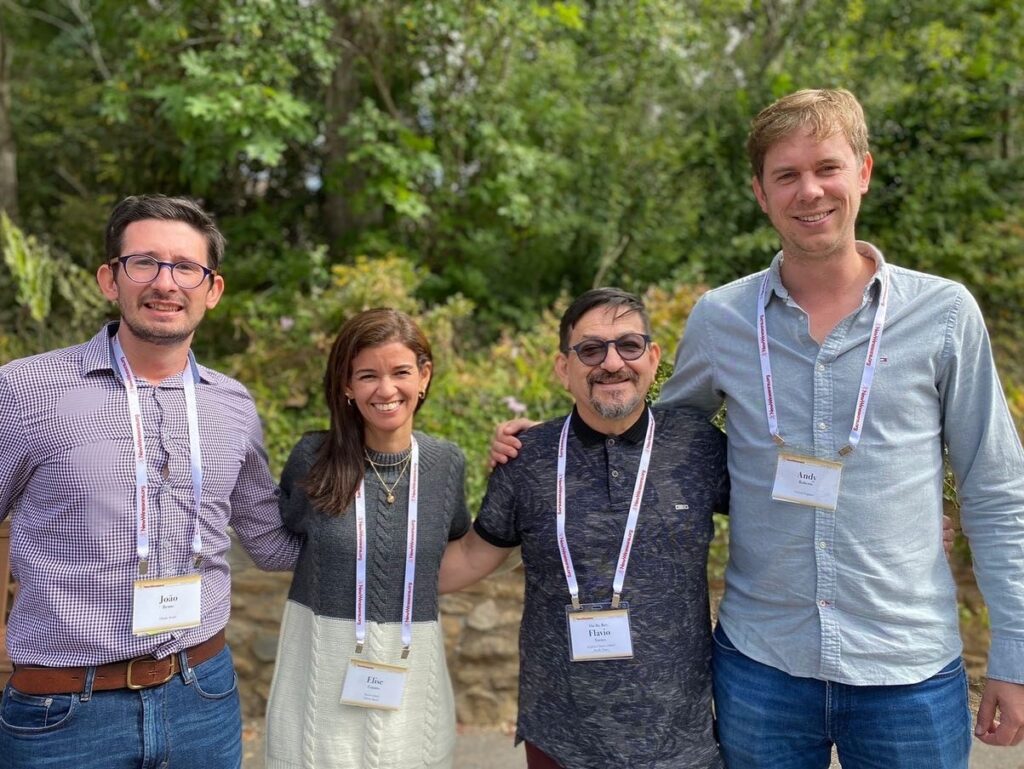
One of the people there almost from the beginning was a Brazilian woman called Elise. She had translated for me when I first came to Brazil as a young man. Later she joined our little prayer meetings, became ReVive’s first employee and eventually became part of the leadership team.
When Rose and I eventually returned to the UK, we faced the obvious question: who should lead ReVive next?
Some people assumed another foreign missionary would arrive and take over.
To be fair, that was probably the sort of thing I might once have assumed too.
But we said no. Elise and the Brazilian team should lead it.
They burst into tears.
That moment has stayed with me because it exposed something important. Foreign missionaries can assume they need to lead. But communities can also become so used to outsiders leading that they struggle to imagine themselves doing it.
Mission has to break that cycle.
Shifting the power balance
I saw something of that again recently when leaders from across the CMS family and our global hubs gathered together.
Twenty years ago, a gathering like that might easily have been dominated by people from Britain talking about what we were going to do elsewhere.
This one felt different.
Leaders from Africa, Asia, Latin America and the Middle East were sharing what they were seeing, learning from one another and shaping the work together. My role was much less about giving answers and much more about listening, connecting people and asking how CMS could help.
I found myself thinking: this is what we have been talking about. Not a British mission agency with international projects attached to it. Something much more global.
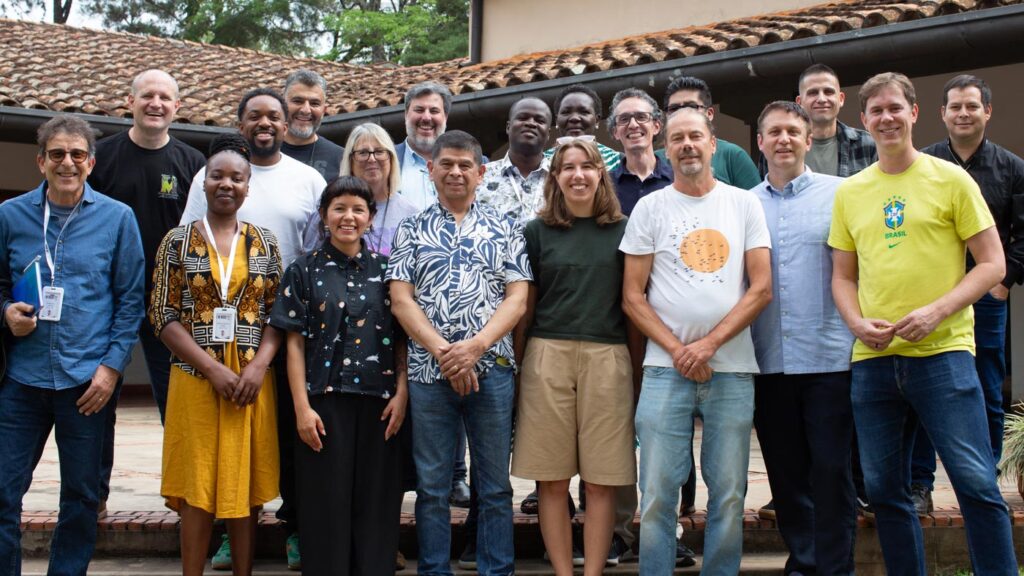
Local leaders collaborating. Ideas emerging from different parts of the world. People who know their communities best setting direction. Others coming alongside them.
We haven’t got this all sorted. Far from it.
In fact, some of the conversations we’re having within CMS at the moment are quite uncomfortable.
We are asking hard questions about the way we have traditionally sent and funded mission partners. The old model – recruiting somebody in Britain, asking them to raise support and sending them overseas for many years – still has value. We should not simply throw it away.
But it cannot be our only imagination for mission.
A new mission map
Today a missionary might be an African serving in Europe, a Middle Eastern Christian reaching fellow Arabic speakers in Britain, an Asian Christian following migration networks across continents, or a Latin American pioneer helping Christians somewhere else rethink what church could look like.
Migration itself is changing the mission map.
The distinction between “home mission” and “overseas mission” makes less and less sense when people, churches and Christian movements are constantly crossing borders and the gospel is shared through ordinary people on the move who are carrying the love of Jesus with them.
Britain is not simply a sending country any more. We are also receiving the gifts, faith and missionary energy of the global church. And if that’s true, organisations like CMS need to change too.
Radical realignment
Over the last year I have used the phrase radical realignment quite a lot.
I don’t mean change for change’s sake. I mean trying to keep realigning ourselves around what God is actually doing rather than preserving a model because it is what we know.
We want CMS to become more globally rooted and less UK-centred, at least in terms of power and control. We want to put relationships, resources and decision-making closer to local leaders. We want to become lighter so that something larger can flourish around it.
Even the way we ask people to give needs to catch up.
For generations, mission fundraising has often sounded like: “Here is our person, doing our work over there. Please support them.”
There is something good and personal about that. But increasingly we want to invite people into something broader: come and invest in what God is doing through a whole network of people at the edges.
Because the edges still matter enormously.
The edge of discipleship
At CMS we talk about the edges not because they sound adventurous, but because they are so often under-resourced and overlooked.
The edges might be communities affected by conflict. Indigenous peoples whose voices have been ignored. People from Muslim backgrounds exploring Jesus. Migrants reshaping churches in Britain. Pioneers creating Christian community in places where the traditional church has little connection.
Again and again, these are the places where I see surprising signs of life.
And that is perhaps the most important thing.
Mission organisations can spend a lot of time talking about models, structures, funding and strategy. I certainly seem to spend quite a lot of my life doing that now.
But none of those things is the point.
Jesus told us to make disciples.
We have a discipleship problem in much of the world, including here in Britain. Christianity can easily become an identity, a Sunday activity or a vague set of values without actually changing the way we live.
Deep discipleship is different.
It changes how we use money, how we exercise power, how we treat people who are different from us, how we respond to injustice and what we are willing to give our lives to.
And when people genuinely learn to follow Jesus, mission starts multiplying almost naturally.
- New disciples emerge.
- Communities change.
- Other people are drawn in.
Moving away from the centre
Perhaps the Western mission movement’s challenge now is not to stop sending, stop speaking or stop contributing.
It is to stop assuming we are at the centre.
That sounds obvious when you write it down. In practice, it is much harder. It means sharing power. It means sometimes funding something you don’t control. It means recognising that the best idea in the room may not come from Britain. It means listening before deciding.
And it means being willing to ask whether some of our most cherished mission structures still serve the people and places they were created to serve.
A year into this role, I think that is the challenge for me and for CMS.
To hold on fiercely to the call to make disciples and go to the edges, while holding much more lightly our assumptions about who leads, who sends and what a mission organisation is supposed to look like.
Jesus has always been rather good at disturbing those assumptions.
I suspect he isn’t finished with ours yet.