Deep community rootedness
Deep community rootedness
Photo: Lucy with colleague Rev Ben Williams promoting a local Christmas event
Lucy Barbour trained for ordained pioneer ministry with CMS a few years back. We caught up with her to see what has happened since.
by Helen Harwood,
Helen Harwood: You studied with us a few years ago and came back recently to speak online to some of our ordinand students. Can you tell us about how you got into pioneering?
Lucy Barbour: In many ways, I was pioneering long before I even knew the word existed. As an older teenager, I started going along to church with friends and loved exploring spirituality and big life questions, but without necessarily carrying a faith of my own yet. Once I did become a Christian, that background gave me a real heart and desire to support others who were in a similar place.
I found myself continually looking for ways to engage people with faith outside the traditional understanding of church. During university, for example, I ran a fairtrade stall in the student union, supported World AIDS Day, and fundraised for charities working around issues of justice, peace, and reconciliation.
Later on, in my early 20s, I was working for a city centre management company in Coventry and was involved in organising a Halloween market. I wanted to respond in a Christian way and engage people in that setting, so – with the full backing of my employers – we ran a Christian stall right in the middle of it. Instead of trick-or-treating, we invited people to “learn a trick for a treat,” bringing in magicians and performing artists. It gave us an open door to talk about issues of faith amidst the Halloween festivities.
Looking back, all of those initiatives were reflections of wanting to share faith with people in their ordinary, everyday lives and within the realities of life, rather than expecting them to step into church traditions. When I eventually felt called to ordination, it quickly became apparent that my natural approach to ministry was pioneering – and that was the first time I actually had the language to describe what it was.
That’s interesting that Halloween provided some outreach opportunities, I also know that Covid provided some other opportunities, can you say more about that, please, Lucy?
COVID really opened up fresh freedom and unexpected opportunities for pioneering. At the time, we were already running a wellness series exploring the connections between mind, body, and spirit. When restrictions hit, it prompted us to explore faith in entirely different ways.
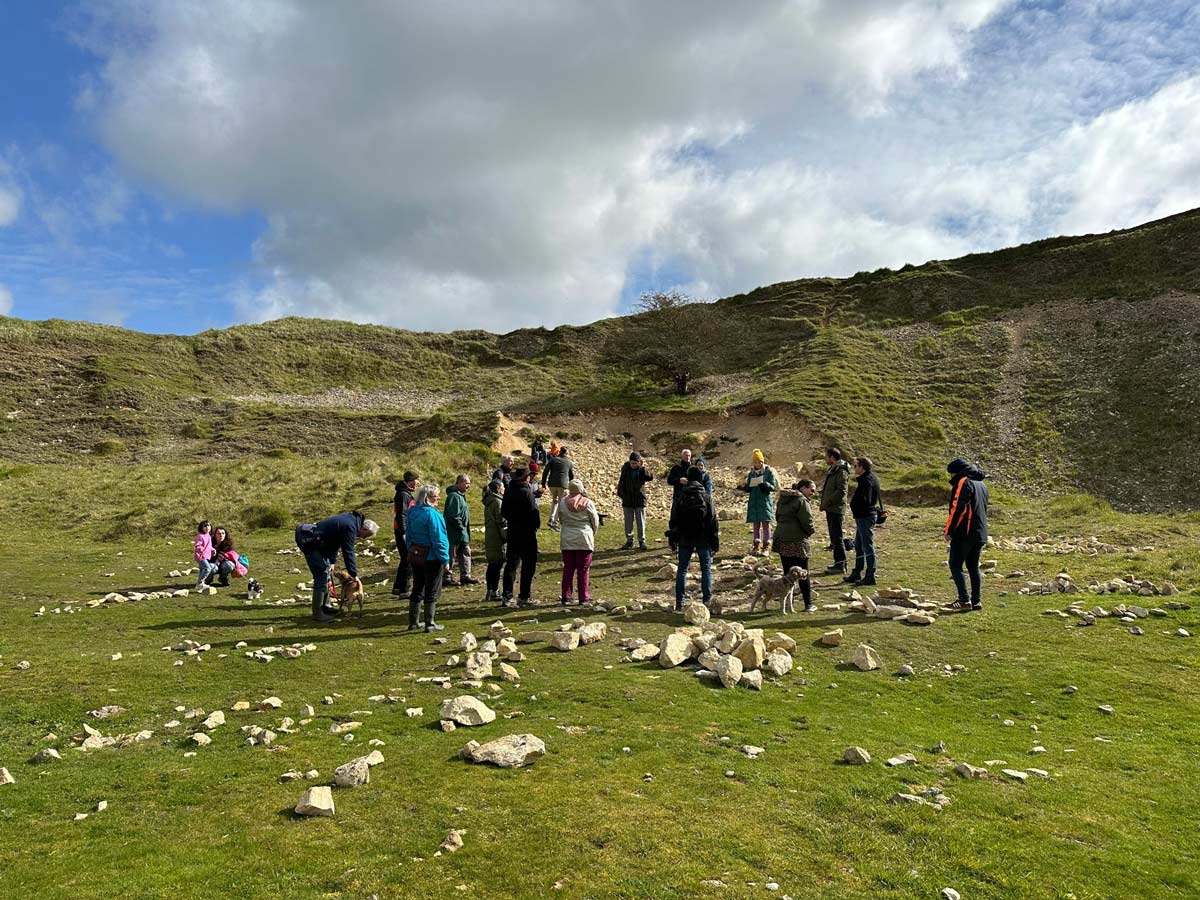
One of the things we established was Church on the Hill, an outdoor, walking expression of church. It gave people a safe, approachable space to gather when they were hesitant about being indoors, while taking full advantage of the beautiful hills surrounding where we live in Bishop’s Cleeve, near Cheltenham.
Originally, it was just intended as a temporary summer activity running once a month. But when we reached the end of that first summer in September, everyone wanted it to keep going! It has now been running for five years – we just celebrated its fifth birthday this past summer.
You were a ‘designated pioneer’ in your ordinand training. Can you tell us how you were called into being ordained?
In many ways, ordination had been on the cards for a long time, though it was something I had locked away for a while. I first felt a sense that God might be calling me to ordained ministry back in my student days when I was serving as a student chaplain. However, I quickly realised that wasn’t the right time for me, so I put it aside for a number of years.
After spending time working for charities, working in community development, and serving in the UK for an overseas charity in Delhi, India, the desire to dedicate my life to God in a new way resurfaced. I had a very clear and strong sense that this calling belonged within ordained ministry. At the same time, I knew straight away that my ministry wouldn’t look like the traditional vicars I saw around me – which is why I was so thankful to embark on the pioneering journey.
What made you choose to study at CMS, and what are you doing now?
I actually chose to study at CMS before I was even officially designated as a pioneer. My diocese pointed me toward CMS and the training offered there, for which I’m ever grateful. From the moment I arrived for an open day and began speaking with people, I realised immediately that this was my language. Here was a community that shared the exact approach to mission and ministry that I had carried for years. Realising I could actually train in that way was deeply exciting, and it was a significant reason why I went forward to the pioneer panel and became a designated pioneer throughout the journey.
As for what I’m doing now, I have taken on a role as a school chaplain at our local secondary school – a large, mainstream comprehensive of nearly 2,000 pupils. The diocese provided funding for “chaplaincy connectors” across Gloucestershire, and the role is split so that I spend 60 per cent of my time inside the school and 40 per cent connecting the school with the local church and the wider community. Alongside that, I continue to lead Church on the Hill.
Are you still pushing boundaries in your work?
Definitely. The school chaplaincy role is very much about pushing boundaries and stepping into new territory. It’s a community school rather than a faith school, and they have never had a chaplain before, so together we are discovering and shaping what chaplaincy can look like in this specific context.
A large part of the work involves mentoring students, supporting the Christian Union and the ethics department, taking part in assemblies, and exploring school values. Crucially, it’s also about exploring how the church can genuinely support local parents and families, bridging the gap between school life, church life, and the wider locality. Having been rooted in this village for a decade has been a massive asset – I already know so many of the young people and their families, which gives us a great foundation of trust and understanding to build upon.
Sounds brilliant! What else have you been doing since you left CMS and have you managed to keep in touch with any of your fellow students?
A huge theme of my ministry has been deep community rootedness. I’ve now lived in this village for 10 years, ministering formally within the local church for six years (and a couple of years informally before that). It’s fairly unusual in the Church of England to live, train, and serve a curacy all in the very same place, but it has been a tremendous blessing. Those relationships have grown and deepened, and we’ve seen early pioneering seeds flourish into lasting initiatives.
For example, back in 2018, before my ordination training began, I set up a village Living Advent Calendar – a creative countdown where a different house reveals a decorated Christmas window each night from 1 December through to Christmas Eve. That project is now heading into its eighth year! Community work in the village where I live and have ministered for eight years has now matured to the point where my colleagues and I have been able to run activities such as seasonal community extravaganzas for Harvest, Christmas and Easter, the village toddler group and Halloween hospitality from the vicarage driveway. It’s been a great blessing having a wider team to develop these ideas with and is a joy to watch them flourish.
As for keeping in touch with CMS peers, absolutely! A group of us stay in close contact through a couple of WhatsApp groups, where we bounce ideas around and support one another in prayer. It’s an invaluable network. I also caught up with a number of fellow students at the Greenbelt Festival this year, which was a real joy. I love remaining connected to the CMS community.
Thank you Lucy, how can we pray for you?
Please pray for God’s wisdom as we continue to shape and grow the chaplaincy work in the school, including how we build bridges with the wider community and support local families.
Please also pray for Church on the Hill. It provides a gentle, accessible, nature-oriented space for people to engage with faith, and I’d love prayer for clear discernment and guidance as we continue that work into the future.