Why we are reading novels together
A good novel has the power to help us explore the inner lives of others in a safe way
As the close of the year comes near, immigration continues to infiltrate our social consciousness and dominate the headlines. What might be a creative and helpful response?
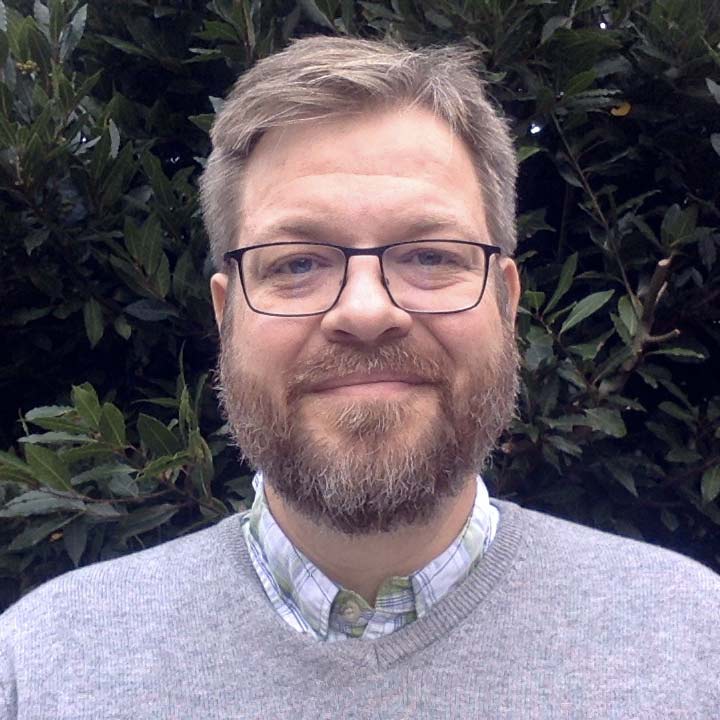
by Tyler Horton
In just the single day before writing this, BBC news posted about Canada’s population drop due to caps on immigration, arrests by immigration officers at a factory in Swindon, an interview with a French politician about immigration control, and a BBC Verify story checking if the government is keeping up to its immigration and asylum pledges.
Understandably, many people are feeling uncertain about what ought to be done and worn down by the enduring confusion and pain that so many have to live with. At the Acts 11 Project, we are posturing ourselves to help the church meet these realities and recognise the opportunities for mission that arise within them.
In our December newsletter, Joseph Ola prompted us to remember the role of migration in the Christmas story.
And now, at Christmas, we are reminded that the story of our Saviour begins with migration – with God-with-us arriving into a world marked by displacement, political tension, and fragile hope. Christmas is the story of a God who moves toward us, and of a holy family that becomes, quite literally, a migrant family.
The world that Jesus entered through the incarnation was marked by uncertainties and tensions very similar to our own. If that did not prevent the flow of grace from reaching the corners where it was needed then, there is no reason to think that it will now.
The question is, what can we do? What lies at hand that we can take up toward meeting the needs of the hour in which we live? We think one thing that will help us is to read together. That is why we are launching the Acts 11 Project Book Club in the New Year. We are inviting you to read some of the great ‘migration’ novels along with us.
Sitting down and reading a book might seem like a move in the wrong direction. Shouldn’t we get out into the real world rather than retreating to a fictional one? There is truth to that of course. We fall far short of our calling if we never move from reading about it to actually doing it. All I am suggesting is that reading these novels together will help us all to face the real-world realities of migration and mission on surer ground.
There is good science to back this up. Research published in Science (a publication of the American Association for the Advancement of Science) suggests that reading literary fiction deepens our ability to recognize and engage with the situations and states that we encounter in other people. Reading novels expands our knowledge of the lives and others and by doing so, helps us recognise our similarity to them. It opens our eyes to a world beyond our own experience.
But reading great literature not only changes what we think about others, it also seems to change how we think about others. These researchers used a set of experiments which distinguished ‘literary’ from ‘popular’ novels and found that the former category had a much greater effect. These works bring us up against the unexpected and draw us toward the inner lives of others. They invite us to recognise that these inner lives deserve exploration, but they do so without simply handing that content to us. Crucially, novels allow us to work at this in a less risky setting, but these skills then become available for real-life situations.
Great novels give us something that lies beyond the reach of a textbook. While they are, of course, fictional, they are often more true to humanity than the non-fiction history books which cover events and movements from a suitably academic distance. Migration literature gives us an opportunity to see more, and it provides a powerful means of reducing the ‘strangeness’ of others.
Our first book will be a classic of American migration literature: Willa Cather’s My Antonia. We invite you to come and read with us! Not because reading a novel makes the world a better place for migrants, but because reading a novel together will make us people who are better equipped to be a means of grace for those living at the intersection of mission and migration.

