Anvil journal of theology and mission
Common Grace Aotearoa: equipping the church for structural change
by Alex Johnston
Great social movements of the past have often been shaped and led by people of faith: think of Dr King and the civil rights movement; Wilberforce and the Clapham Sect’s long campaign to end slavery. Here in Aotearoa New Zealand, the spiritual leaders Te Whiti and Tohu coordinated mass non-violent resistance to colonisation at Parihaka that later influenced Gandhi and King.1 The Christian Women’s Temperance Union led the suffragette movement that made New Zealand the first country to grant women the right to vote in 1893. In more recent memory, theology students at St John’s Theological College coordinated flotillas that resisted nuclear warships entering Auckland Harbour and famously carried a cross onto the rugby pitch during an All Blacks match to protest the Springbok tour during apartheid-era South Africa.
Common Grace Aotearoa seeks to build on this Christian heritage to equip and organise the church in New Zealand today – supporting those whom God is calling to step up into the mission field of transforming unjust structures. We were established in early 2023 to train, organise and mentor groups of people eager to learn why and how to transform unjust structures from a Christian perspective. As they learn by doing – in prayerful teams with supportive mentors – they develop the skills to organise and train their own communities, building the capacity of the wider church to participate in social movements for the common good.
We started Common Grace Aotearoa out of a discipleship gap – one we recognised in our own experience and believe is present in many parts of the post-Christendom West. Most mainline denominations would have a stated missional tradition of ‘faith in the public sphere’. Missional commitments to ‘transforming unjust structures’ are enshrined in frameworks such as the Anglican Five Marks of Mission2 and the Presbyterian Five Faces of Mission.3 But in practice, we would suggest, many have far less confidence and competence in forming Christians to do this.
Church goers would be deeply familiar (if not always confident) with proclaiming the gospel, and churches are old hands at providing spaces for teaching and nurturing people in faith. Many, too, respond to human needs through local initiatives such as food banks, playgroups and homeless shelters. All crucial ways of outworking mission. But what of the call to transform unjust structures? Some churches may have set aside a sermon or two a year on social justice, or donate to missional organisations that work in international development or poverty alleviation. Perhaps historically a denomination might have had a social justice role or committee that could write policy submissions, and denominational leaders might put out statements into the ether and hope they make an impact.
Worthy as these are, these expressions feel increasingly insufficient in a world that is increasingly unstable. They don’t equip the everyday church goer to address the structural causes of poverty, the industrial roots of environmental degradation, or the entanglement of land and law that has embedded colonial systems in lands such as Aotearoa New Zealand.
So the problem, as we see it, is that there are very few missional ‘containers’ for Christians to transform unjust structures as an expression of everyday faith, and even fewer spaces to be discipled into doing so. The church is therefore not meeting its potential to alleviate injustice, make holistic disciples, or serve as a witness to the world. Common Grace Aotearoa seeks to step into this gap with a threefold mission: to achieve tangible change in Aotearoa’s social and environmental injustices through strategic advocacy campaigns in the areas of climate change, inequality and indigenous rights; to equip local churches to be a gracious and compassionate voice in the public sphere; and to develop a generation of Christian leaders with a commitment to faith-driven advocacy and action.
Prophetic responses: speaking truth to power
One way we’ve sought to build the church’s capacity in systemic action is to act as a bridge between grassroots social movements and the slower-moving church institutions – drawing on trusted relationships with church leaders and the established networks of denominations to activate the church’s voice with real impact.
In the area of Treaty relations, indigenous rights have come under sustained political pressure in recent years in New Zealand.4 When the controversial Treaty Principles Bill was introduced that sought to redefine the rights guaranteed to Māori under the Treaty of Waitangi, it demanded a structural response from the church. Common Grace was newly formed, led by two non-Māori, without perfect relationships or deep existing credibility in this space. But in conversation with key partners, we discerned a clear invitation to help mobilise the church to meet the moment.

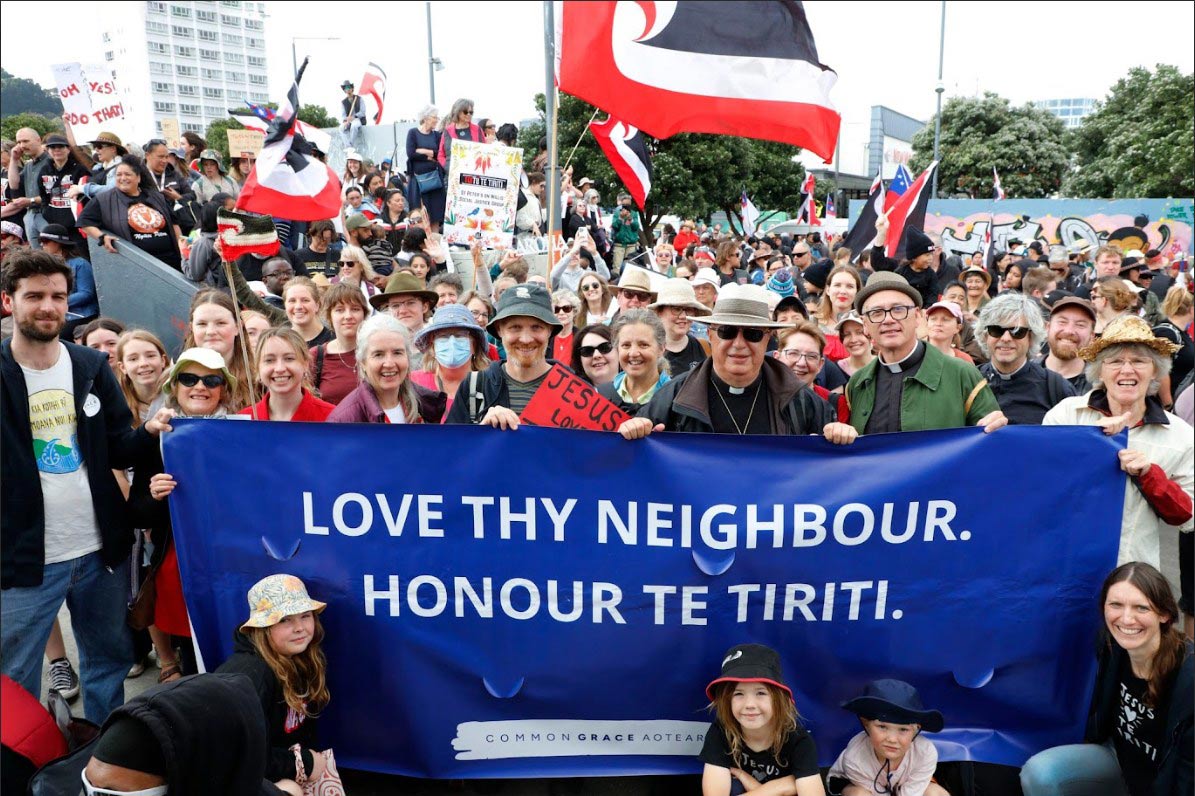
Over 600 church leaders signed our open letter on the Treaty Principles Bill, attracting major coverage across all national news outlets, dominating headlines, and helping shift the narrative of what it was morally acceptable for the New Zealand government to support.5
Similarly, this Easter, in response to legislation that would effectively criminalise rough sleeping and begging in New Zealand city centres, we worked with eight church denominations to hold a Palm Sunday overnight vigil opposite Parliament. Hundreds gathered for public worship and liturgy. The vigil was broadcast on breakfast television to the nation, and government ministers were compelled to respond.6
When the church is activated in its prophetic role – to speak truth to power – there is a genuine public space for Christian witness that not only holds decision-makers to account but articulates what God’s kingdom values look like, and invites the wider public in.
Equipping the local church for systemic action
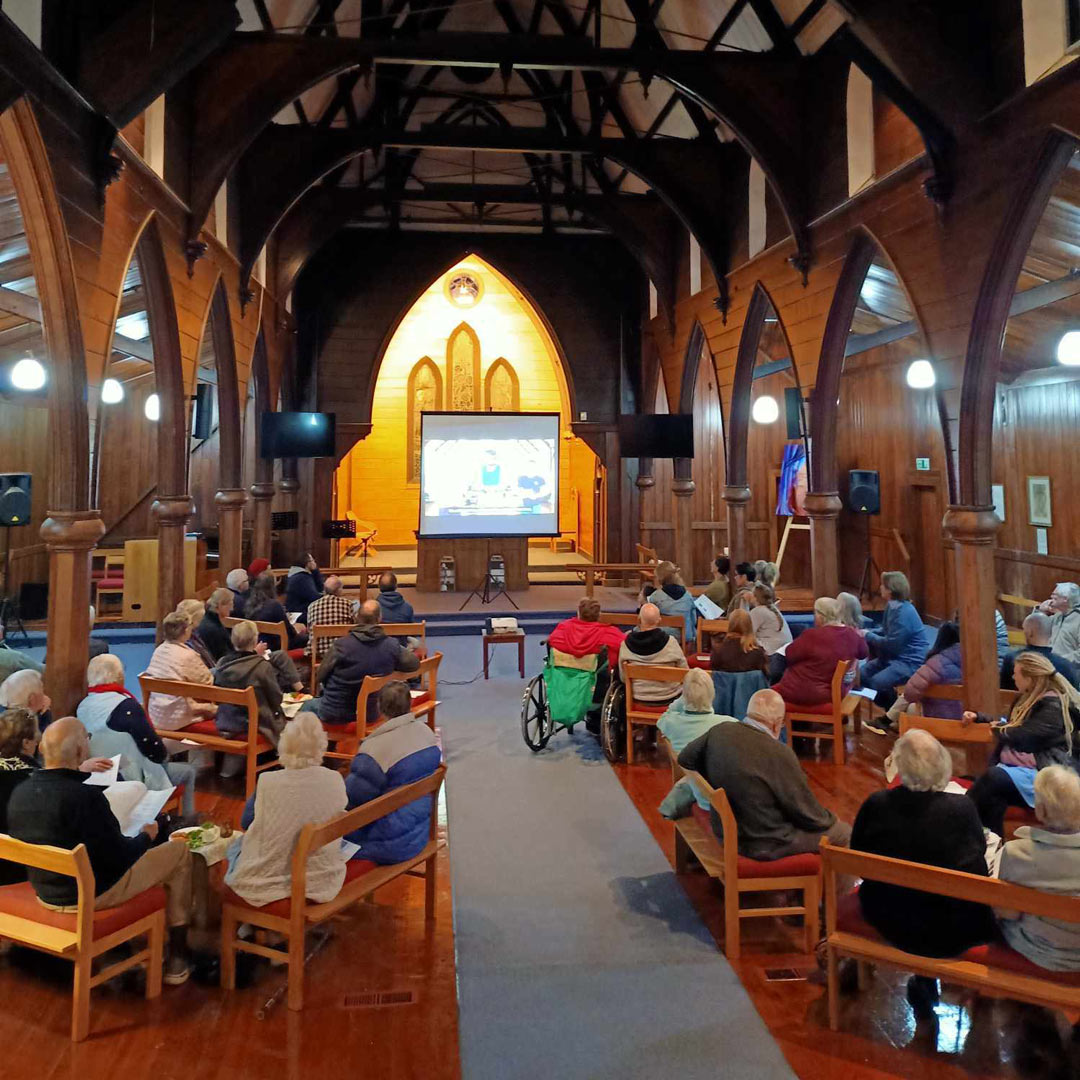
While Common Grace initially sought to mobilise the ‘activist edge’ of the church, we have come to see that a significant part of our mission is inviting the mainstream ‘centre church’ into education and action. Where there might be one or two passionate justice advocates in a local church, if we can equip them – or their church leader – to bring the wider congregation through an accessible invitation to learn about an issue and have clear ways to respond, the uptake has been remarkable.
One way we have done so is by producing accessible, scalable resources for churches and small groups to help connect their faith to how the Treaty can be honoured in central and local government. Our ‘Treaty 101’ course has reached thousands of people across more than 350 churches of all denominations, equipping these groups for courageous conversations about honouring indigenous rights in New Zealand and to respond to key political moments.7
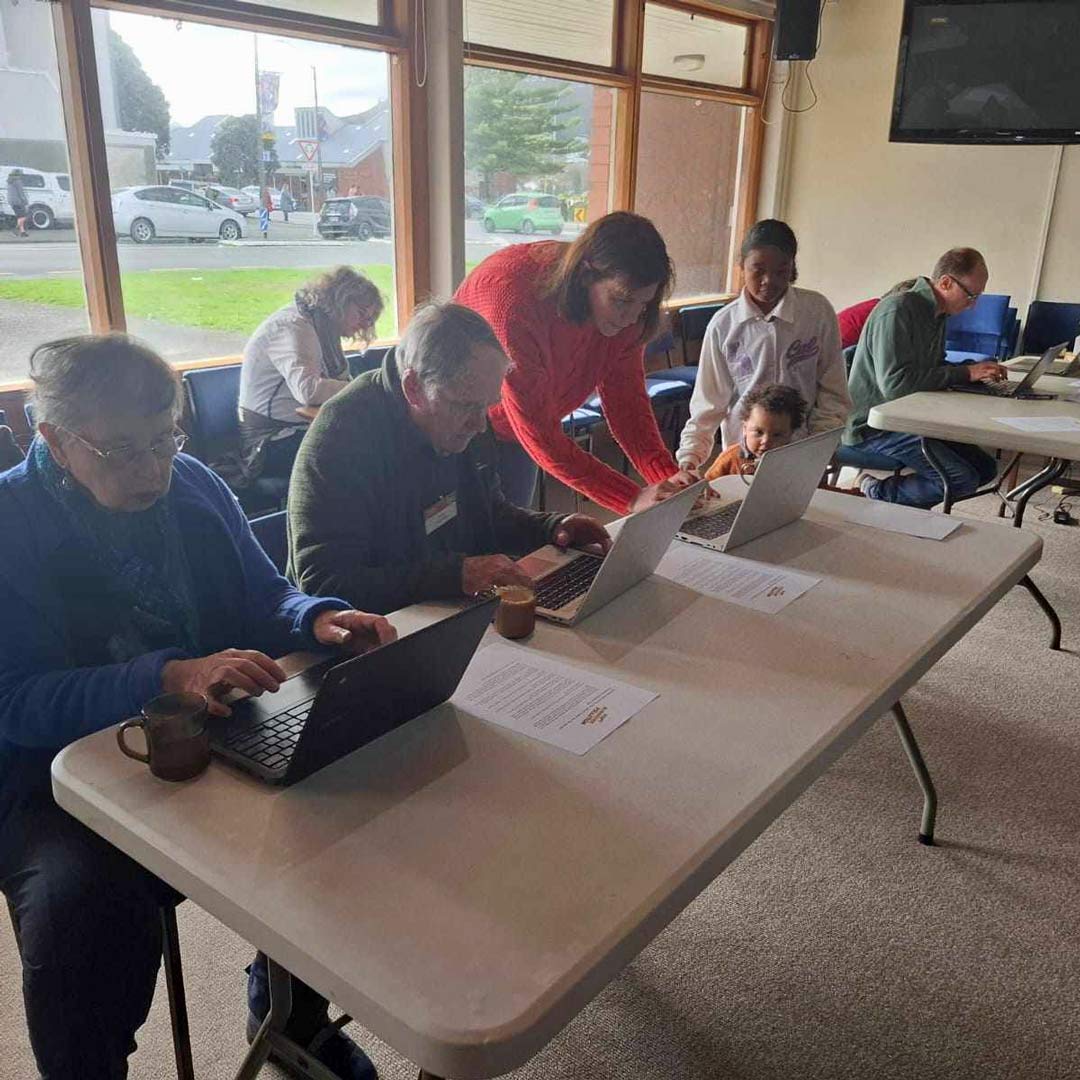
Another has been to mobilise submissions on key policy proposals. We have been able to flood the Electricity Authority – the independent regulator of New Zealand’s electricity sector – with submissions from adults and children after Sunday services, leading the Authority to agree to a full suite of consumer protection reforms rather than the more limited set proposed by power companies.8 We delivered over 1,000 handwritten prayers and submissions on the Treaty Principles Bill and contributed over half the submissions to the government’s draft climate action plan.
The mobilising capacity of the church at these key moments rests on the key social infrastructure of the Sunday service. There are few other spaces in New Zealand society where hundreds of locations across the country gather people of all backgrounds and generations, in person, every week. In a fractured, online-heavy and highly individualised political culture, the church as a social organisation still holds enormous potential.
This is especially true given the somewhat unique demographic of the aging mainline denominations. During countrywide referendums on whether to disestablish Māori representation on local councils, activist groups whose networks oriented around urban, younger populations struggled to reach the people who consistently turn out to vote in New Zealand regions. We were among the few organisations capable of reaching that base – to educate and inform over 100 churches in referendum areas and counter the disinformation flooding their communities.
The church has also served wider social movements directly. During the national Hīkoi mō te Tiriti – the historic march for honouring New Zealand’s founding Treaty – up to 100,000 people converged on Wellington, a city of 210,000. Over 20 churches offered to host and feed groups travelling down for the hīkoi, providing connection points that crossed cultures and social worlds in ways few other organisations could.
Developing and discipling Christian leaders
Through working with small volunteer teams, both online and in person, Common Grace seeks to build community and equip emerging Christian leaders to find their vocation in social justice – developing the skills, character and confidence to lead advocacy campaigns as an expression of their faith.
Our campaign teams are the primary space where emerging activists learn the craft of advocacy by doing it. Teams meet weekly or fortnightly to progress campaigns together, with semi-regular training for volunteers. Leadership formation includes engaging church leaders, convening community gatherings, meeting with politicians, and learning to speak faithfully in the public square.
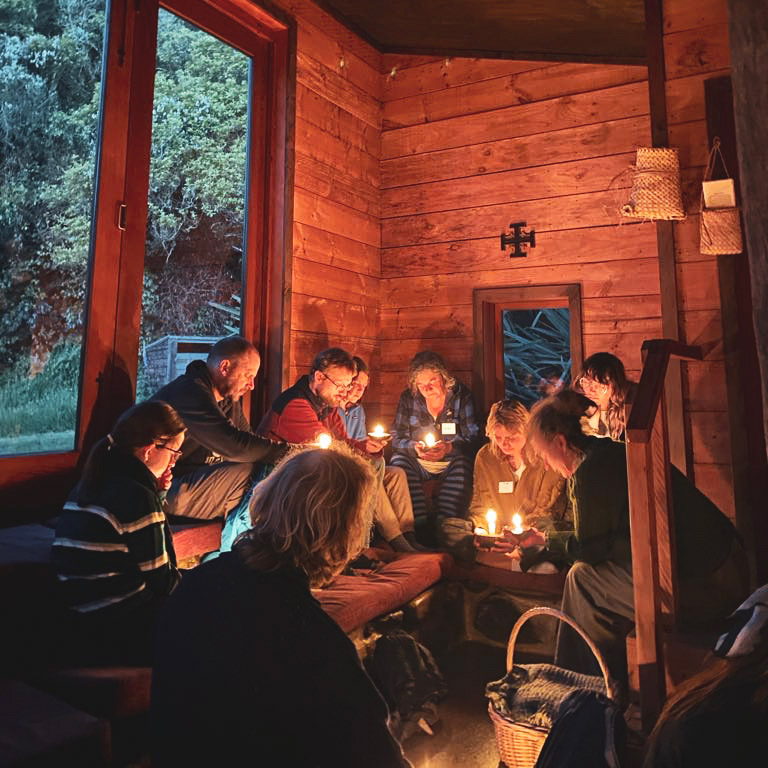
Recognising that some campaign team members lacked an intentional discipleship space beyond Sunday services, we developed a pilot discipleship programme. Alongside the campaign teams, the discipleship group meets online to explore the intersection of Christian faith and social justice – a space we have found is needed for those disillusioned with institutional expressions of church. The formation content helps participants grapple with theologies of justice and activism, supported by reflective practices, spiritual tools and in-person retreats. So far, these have fostered deep personal growth and unexpected community. Participants have demonstrated greater faith, hope and a clearer sense of calling – affirming the value of integrating discipleship with justice advocacy.
The great social movements of the past were not secular projects that Christians occasionally supported. In many cases, they were movements shaped, sustained and often led by people of faith who understood justice as inseparable from the gospel. That same calling has not expired. In a moment of deepening inequality, climate crisis and the unfinished work of honouring the Treaty of Waitangi, the church in Aotearoa New Zealand has a vital role to play – not as a chaplain to the status quo, but as an active participant in movements for lasting, structural change. Common Grace Aotearoa exists to help the church rise to that calling.

About the author
Alex Johnston is a co-director and co-founder of Common Grace Aotearoa. He currently lives in Whanganui, New Zealand, on the lands of Te Āti Haunui-a-Pāpārangi with his wife Genevieve and their two daughters.
More from this issue
Notes
- Parihaka was a 19th-century Māori settlement in New Zealand that became a powerful symbol of peaceful resistance, when its prophet leaders Te Whiti o Rongorangi and Tohu Kākahi led their people in nonviolent civil disobedience against colonial land confiscation only to be met with the invasion of over 1,500 government troops in 1881. Te Whiti and Tohu were deeply shaped by early Christian missionary contact – they drew heavily on biblical stories to frame their philosophy of nonviolent resistance, and their methods of civil disobedience were said to have later influenced Gandhi and Dr King. (See New Zealand History, ‘Te rā o te pāhua – invasion of pacifist settlement at Parihaka’, https://nzhistory.govt.nz/te-ra-o-te-pahua-invasion-pacifist-settlement-parihaka) ↩︎
- The Anglican Five Marks of Mission: https://www.anglicancommunion.org/five-marks-of-mission/ ↩︎
- The Presbyterian Church of Aotearoa New Zealand’s five ‘faces’ of mission: https://www.presbyterian.org.nz/about-us ↩︎
- The Treaty of Waitangi – Te Tiriti o Waitangi – was an international Treaty signed in 1840 between the British Crown and over 500 Māori leaders that affirmed key rights of Māori tribal groupings’ existing sovereignty, while allowing a limited form of government by Queen Victoria over the small settler population. It is a key constitutional document for New Zealand, but was later disregarded in law and policy and a colonial form of Western parliamentary sovereignty was imposed over Māori people and lands. Since the 1970s, civil resistance movements have secured key legal recognition of the Treaty and its principles in law as incremental moves towards Treaty reconciliation were conceded by successive governments. ↩︎
- See, for example: RNZ website, ‘Treaty Principles Bill: 440 Christian leaders sign open letter asking MPs to vote no’, https://www.rnz.co.nz/news/political/527412/treaty-principles-bill-440-christian-leaders-sign-open-letter-asking-mps-to-vote-no. 440 had signed the letter at time of release. Subsequently over 600 leaders signed on. ↩︎
- See a clip of news coverage on the Common Grace Aotearoa Facebook page, https://www.facebook.com/commongraceaotearoa/videos/sunday-nights-vigil-for-compassionate-solutions-to-homelessness-was-a-powerful-c/1129977082583123/ ↩︎
- Belonging in This Land: Treaty Basics from a Christian Perspective, https://www.treatyandbelonging.nz/ ↩︎
- Electricity Authority, “Updating and strengthening the consumer care guidelines” (February 2024) ↩︎
