Anvil journal of theology and mission
Mission, movements and sodal life
Johnny Sertin in conversation with Kris Rocke
J: Street Psalms has been at the forefront of cultivating a sodal network over a number of years. What first compelled you to give your life to this kind of movement rather than a more traditional organisational model?
K: Thanks for the opportunity to journey with Aspen or what I affectionately call a “sister sodality”. There are not that many of us. As you know historically there have been two main forms of church in history – the sodal and the modal form. The modal form is what we think of when we think of a local congregation – a community that does life together from cradle to grave in a specific parish community. The other form is the sodal form. This is a community that gathers around a shared mission and has a shared “charism” that it nurtures for the sake of the larger body of Christ. Typically, these were called “orders”. Well, “orders” fell out of favour at the Reformation but the need for the sodal form of the church has never stopped. I grew up Catholic so orders always made sense to me. In fact, I was drawn to the missional focus of the orders. I knew I didn’t want to pastor a local congregation (which is a good thing, because it was a mutual feeling… as it turns out, no local church wanted me as a pastor). So, it was always sodality or bust for me. Street Psalms’ mission is to free leaders to love and serve in Jesus’ name. Our charism is the way we “see and celebrate Good News in hard places”. Our role is to steward this gift on behalf of the modal form of the church – to walk alongside leaders and congregations who are living out the gospel in their context.
So, we are an order with a seminary and a design studio that serves a global network. We have 41 ordained members scattered throughout the world (that is, they are ordained into Street Psalms). Our seminary is the reflection side of our work. It provides formation for those seeking ordination, our fellows and all those who want to be formed with us. Our design studio is the action side of our work. We co-create models of social innovation that lead to human flourishing. So, we are a religious order with a seminary and design studio that serves a global network that represents more than 100 cities around the world.
So, that’s my best spiritual answer as to why we chose the sodal form of the church. And it’s true: it fits who we are. We’ve been doing this work for nearly 30 years and we have always shown up as a sodality, even when we didn’t know that word. But it wasn’t until about four years ago that we got serious about formally incorporating as a sodality and the truth is it wasn’t exactly a spiritual impulse. To put it bluntly, by incorporating as a sodal community it allowed us to continue to receive large grants from high-impact donors and foundations. I won’t try to explain the complicated philanthropic codes of the United States, but let’s just say that it was greatly to our advantage to incorporate as a religious order – which we were happy to do since that is how we understood ourselves anyway. Sorry if that makes us a little less spiritually grounded, but hey, it’s the truth.
J: Looking back over the early years of Street Psalms, what have been some of the most significant learnings, particularly where reality didn’t meet expectation?
K: In retrospect, Street Psalms got lucky about something that took us years to understand. Nearly 30 years ago, a diverse group of leaders came together around our shared love for the city, the most vulnerable and Jesus. What we didn’t anticipate is that we would become such great friends who liked each other. I have a hunch that it was our delight in each other that became our most attractive quality. We were having fun and others wanted to join the party. Maybe there is something more powerful than friendship, but I’m not sure what it is. Even Jesus seemed to think that friendship is what agape-love looks like when it is fully mature. He says to his disciples, “I call you friends.” I don’t want to undersell the high ideals around which we gathered – they too have served us well – but it’s the gift of friendship that has sustained our movement, from early-stage friendship where affection was easy and mostly just fun, to late-stage friendship that can bear one another’s wounds and failures and hold life’s complexities. We are now testing the next frontier of friendship – one that includes our enemies. We’re a dispersed and diverse, cross-denominational community of Protestant and Catholic and this includes right of centre and left of centre and all that entails. The gift of friendship looks different now, but I have a hunch that if there is a future for our community, it will come down to something as simple as our mutual affection for one another.
J: In your experience, what is it about place and community that makes mission come alive? And why do you think this is especially important in this cultural moment?
K: I live in the Pacific Northwest region of the United States, in the city of Tacoma, near the Puget Sound. I have a well used fishing boat that allows me to get out on the water. It’s a happy place for me. Every boat needs a name, so I named the boat “Now.Here.This”. It’s from the title of an old Off-Broadway play. The name reminds me that the only moment we have is the present moment. That’s all we ever get. It’s in this moment that Word made flesh comes to us. That is how God is enfleshed… moment by moment. I bring this up because most of us are conditioned to live in a constant state of FOMO. There is always somewhere else we want to be. I am the chief of sinners in this regard. The key, I am told, is to be where we are… living in the now (not then) and being here (not there), and welcoming this (not that). “Now.Here.This.” It’s in this light that our community is encouraged to take something like a vow of stability – to dig where we stand – to root where we are planted – to love, not only the people in our lives but also the places to which we belong. And to do so moment by moment, in community, which is the only way this works. At Street Psalms we are not dogmatic about our quasi vow of stability (life is too complex), but given that it takes most of us a lifetime to become fully human and build communities of human flourishing, generally speaking it’s a good idea to stay put and work it out. If there is nowhere God is not, and all ground is holy ground, then I suppose wherever we are is plenty good enough. God is fond of the particular. Now.Here.This.
J: For those of us nurturing emerging sodalities like Aspen, what practices or postures have you found most essential in forming people for this kind of shared life and mission?
K: It is tempting to list off practices that have meant a lot to our community, but I don’t think that’s how it works. What’s more important is that you have some practices and it’s even more important that you have rhythms by which you engage those practices. Finding what Paul describes as “the unforced rhythms of grace” is worth all the effort. As for “posture”, well, I’m a big fan of whatever posture allows you to take your work and call seriously without taking yourself too seriously. I guess you’d call that humility, and a good indicator of humility is having a sense of humour – which is something that I’ve experienced first-hand in your community.
J: There’s often a tension between movement and structure, freedom and form. How have you navigated that within Street Psalms, and what wisdom would you offer to others trying to hold that balance?
K: The creative tension you speak of is where the mojo is. Living in that creative tension is the role of leadership, I think… and leadership is one long creative act. In my experience, creation is not a thing that happened a long time ago… it is a present reality to which we are invited. When Jesus in-spires the disciples in the resurrection – literally “breathes into” them – he is not only animating them with life, but calling them to participate in the ongoing act of creation. And for my money, creation happens in the creative tensions you describe. Too much “structure” and not enough “movement” restricts, clamps down, holds back. Maybe that’s something like constipation. Too much movement and not enough structure, well, I’ll let you guess what that is like. Anyway, given the various temperaments within a community, the creative tension will probably make the whole community slightly frustrated and I sort of think that might be healthy.
J: If you were to name one or two signs of genuine transformation in people or communities, what would you point to as evidence that this way of life is bearing fruit?
K: One of the surest signs of genuine transformation in a community that is undergoing the gospel of Jesus is the increased capacity to receive and give mercy. And this opens the way to an unusual kind of community. The kind of community that can create belonging without othering… the kind that can occupy its wounds and the wounds of the world in a way that becomes the womb of new creation. This is the sort of sign that I think Jesus had in mind… And then again, all this can sound so serious and can leave us feeling a bit too self-important. So, perhaps the chief sign of genuine transformation is something that one of your very own jolly prophets noticed. It was G.K. Chesterton who said, “Joy is the gigantic secret of the faith.” Yes, joy may very well be THE sign of transformation.
About the authors
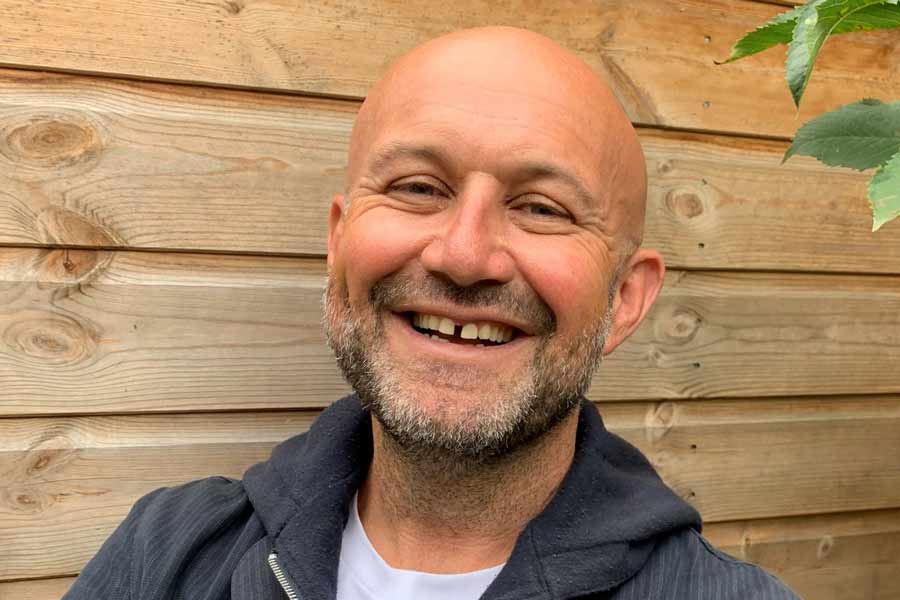
Jonny Sertin, Britain hub movement lead at CMS, is a well-known practitioner in the field of local and global missions. He is an entrepreneur, community developer, and ordained minister. He has lived or served in over 40 nations exploring the edge between contextual mission, spirituality and community practice.
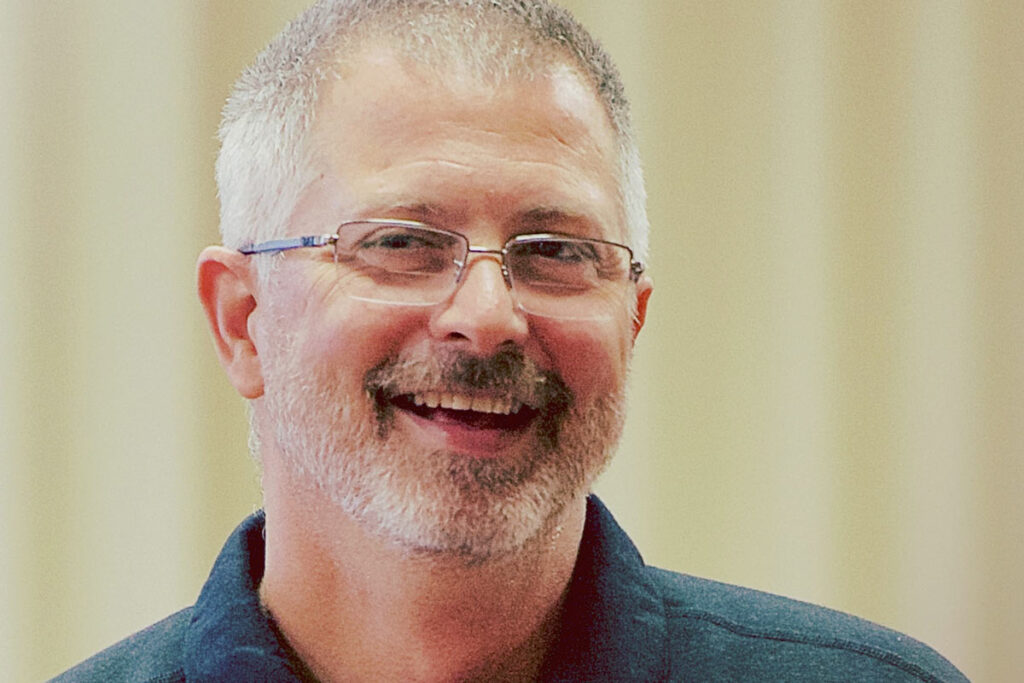
Kris Rocke is the executive director of Street Psalms, a global organisation focused on developing incarnational leaders in urban communities.
