Anvil journal of theology and mission
The Lord gave me brothers: a Franciscan story of life in community
by Brother Ade Green OFM Cap
St Francis and his brothers and sisters
In his final testament, dictated not long before he died, St Francis of Assisi spoke with a more reflective tone than you find in his earlier writings. Here, rather than exhortation we find encouragement, acceptance rather than frustration. Here, the sons and daughters of St Francis finally hear a Francis who has become the founder of a community, a role he had so struggled to accept. His testament was a last word to those who had also ‘left the world’ inspired by this remarkable man of Assisi.1
In this testament we hear St Francis telling his own story and acknowledging with profound gratitude the action of God in the decisions he made. After remembering the lepers who so inspired him, the priests whose human frailties he understood and whose vocation he deeply revered, the Scriptures for which he had such great care, and the Church for which he had worked tirelessly, Francis turns to the brothers, and he utters a phrase that has the power to continually knock us back on our heels when we get a little too sure of ourselves. He says, “Il Signore mi diede dei frati,” that is, “The Lord gave me brothers.”2
Francesco Bernadone, a fun-loving and somewhat raucous young man, enthroned as the ‘King of the Party’ in Assisi, dreamed of fame and fortune: his desire was to become a knight and be immortalised in song. A failure to reach this dream plunged the young Francis into a deep and despairing depression: we are told that he spent the best part of a year recovering, mostly under his blanket.3 He had become isolated, his health was fragile, and hope was a far-off thing.
After a while he began to do something that would become a pattern in his life, whenever troubled or depressed: he spent time in the beautiful Italian countryside. Time spent with nature began to revive his drooping spirit. It was during these moments that he encountered a leper and was moved by their plight.4 He began to explore the margins, to leave behind the lure of fame and fortune that is so often the empty promise of the city, and he began to spend time in churches praying, as he puts it in “Testament”, with ‘great simplicity’.5
It was at one of these churches, San Damiano, which at the time was much more secluded than it is today, where Francis had his first deeply mystical experience, setting him on the path where he would later receive the gift of brothers. Knelt in front of the Byzantine cross of San Damiano, Francis heard Christ speak, giving him a mission, saying, “Go and rebuild My Church which you see is falling into ruin.”6 Francis, who was often impetuous, and at times quite literal, took this to mean the church in which he knelt, so he did just that: he rebuilt San Damiano. As he lay towards the end of his life, dictating his last testament, he would have been able to see that this was not quite what the Lord had meant, but in any case, this venture was the humble start to something that would have much deeper and broader influence – the Franciscan Community.
It is a principle of Franciscan spirituality that St Francis, and St Clare of Assisi, as founders of the Franciscan Community, are exemplars. The form of the Franciscan life that we aspire to is as much the lives of these two extraordinary people as it is the words written in our Rule.7 It is generally true that those who become Franciscans, in whatever state of life, are inspired to do so by the lives of St Francis and St Clare and other Franciscans. It is not really an idea that attracts us, but the possibility of the wholeness and holiness made visible in their lives. My own attraction to life as a Franciscan friar was no different.
In the footsteps of St Francis
I hope it is not too bold a claim to make that I discovered in my own life resonances of the life of Francesco Bernadone. My most significant early encounter with him was through the biography written by G.K. Chesterton. It will always be the case that a biography written about such a historical figure as St Francis will say as much about the author as the subject, and there are numerous versions of St Francis on offer in the multitude of books. However, the person I met in Chesterton’s St Francis of Assisi,8 was one I could identify with on many levels. I too had become somewhat depressed in my youth, I dreamed of finding fame, I enjoyed a party (sometimes a little too much), and although faith was present, I had not reached a point where it guided my actions. We seemed to have a good deal in common.
I too had always felt a deeper sense of reality, truth, and love in the beautiful countryside of Devon and on the shores of Cornwall where I grew up. My experiences of supporting people with severe and enduring mental health difficulties had led me to start to recognise the injustices of many of our world’s systems, which create desperate suffering for so many. I had discovered meditation in my early 20s and found myself spending time in holy places in simple prayer. At 28 years old, I did something I would have thought unthinkable just a few years earlier: I went to church.
I had grown up in a Christian household: my mother an Anglican from a long line of Methodists, and my father a reluctant Catholic. When my dad became a little less reluctant, we committed ourselves as a family to the Catholic tradition. This is where my faith formation happened. In my teens I drifted away from church life because the community I experienced amongst my friends seemed more authentic than the community I experienced in my parish. I had not renounced anything, nor had I lost faith: I just felt more accepted and understood.
I had been exploring spiritualities for a number of years, spending time in various holy places before plodding my way nervously towards the Church of the Holy Cross parish in Bedminster, Bristol, where I experienced at that mass something I had been unknowingly searching for, and in that hour or so realised it was not something, but someone. I experienced the presence of Jesus, I remembered him, I had come home. It was not too long after this that I began to consider this thing I was hearing about – vocation.
I had heard a bit about vocation as I grew up. In fact, my parents were keen that I find a path in life that had more to do with my heart than my head. Unfortunately, at school we had career advice rather than vocational discernment. What we wanted to do with our lives, we were told, was much more to do with what we would like to be rather than who we were discovering we are. Vocation is all about who we are. Coming from the Latin vocare – to be called – it signifies a call that, to the Christian, is from God, and is discerned through the whole of our being, the things that attract us, the desires we sense growing in ourselves, and most of all the person we are becoming in relationship to Christ Jesus.
As I became more aware that who I am is in some mysterious way entangled with the path of life that God hopes for me, a freedom began to move in my life. I did not need to be shackled to the expectations of the human society in which I lived and moved: capital, savings, success, were not the measure of a fulfilled life, but that I endeavour to work, live, move on the earth in the way that God has intended from the very beginning. Discovering one’s vocation is to take another step into the culture and community of Christ.
It was on one of my explorations, visiting a Capuchin Franciscan friary that I came across Chesterton’s St Francis of Assisi, began to see and hear in myself attractions and desires to learn to live a Franciscan life and, looking back, it was a fairly easy decision to “join up”. In the end it felt a quite natural thing to do, and I was significantly encouraged by the fact that when I told my family and friends my intentions, no one seemed particularly surprised.
So, after a year or so of visiting, and discerning, and after assessments of mental, social and physical health, I was accepted into the first stages of life in a religious order. I had followed the footsteps of St Francis, treading out a path in literature, community life, and the brothers I met along the way, and found myself knocking on the door of the friary with a few bags ready to “join up”.
A less common question
Often when people find out that I am a member of a religious order, have promised to live my life according to the Rule of the Friars Minor (the official name of the Franciscans) in obedience, chastity and without anything of my own, the questions that come next are mostly around why I would join, what happened to lead me to make that choice, and how it all unfolded. We all, that is those who have discovered their vocation – and this includes married and single life as well as religious life and priesthood – have a story to tell and this story is important and frequently full of colour and energy. However, there is another story to tell and one I dare say is more valuable and enriching. It is that one that tells the story of why we stay.
There is a well trodden path towards integration into a community, and those who have walked it have left signposts and way-markers. There is a great deal of wisdom to be found in the formation processes of religious orders. These formation processes have developed over a long period of time to provide clear guidance on discernment and incorporation. They tell one side of that narrative, it is a formal description of the story of those people who have discovered a way of life and a form of community in which they hope to be accepted.
In general, the formation process begins with an aspirancy, a period of expressing an interest, and when the candidate is then deemed ready, they enter a year-long postulancy. This year is about asking the question, “Is this a life and community I want to get to know better?” If this question is answered positively by both sides, the postulant and the order, the postulant then becomes a novice. The novitiate is again a year long. This time the novice is received into the order proper, and for us Capuchin Franciscans it is the first time we wear the habit of the Order and are known as Brother. This year is spent living a more intense version of the life of the congregation or order, prayerfully taking small steps in beginning to live the charismatic life as expressed in the day-to-day activities.
Following on from the novitiate year, the individual is presented with the opportunity to take the Evangelical Vows of Poverty, Chastity and Obedience for a temporary period. This post-novitiate period can last from three to nine years, by which time the Temporarily Professed Brother or Sister is expected to decide as to whether they will take Perpetual or Solemn Vows, a promise made to God and the community to live in this community for the rest of one’s life. Now, this might sound fairly straightforward, but the story within the story is one that is often winding, confusing, surprising and painful.
Again, we might look at the life of Br Francis, as it offers us insights into the experience of becoming a member of a community. It is true to say that Francis did not set out with the intention to begin a small community of brothers, let alone found one of the most significant religious orders. His intention was personal and was to fulfil the mission that Jesus had given him in San Damiano. It does not seem to be the case that he had any notable feelings against bringing together a band of brothers either: it just did not occur to him. His conversion of life was something that had happened to him, and the idea that others might want to share in it did not enter his mind, but it did happen.
Following the experience at San Damiano, Francis was changed to such a degree that many in Assisi, including his own family, assumed he had gone mad. He was often overwhelmed by joy, he sang the praises of God wherever he went, the selfish boy had become a man of service, and this had taken his friends and neighbours by surprise. The enthusiasm for his new life seemed to send sparks out from him, setting fire to some latent kindling in others, and it was not too long before local men, both cleric and lay, began to seek his company and eventually stay with him. Through these first years of new life, friends and neighbours began to see a divine cause and took him more seriously.
In the space of 10 years, the fledgling Franciscan community was approved by Papal seal, gifted dwellings, sought after for preaching and blessing, and had expanded into the thousands. It is in this time we begin to see Francis struggle with both the pressure of leadership and the vicissitudes of life lived with others.9 We can also see how the brothers struggled to form themselves into a community and looked more and more to Francis to accept the mantle of leadership. On both sides this struggle would manifest in disappointment, confusion, anger and depression. The realities of a committed community life emerged and required something different of the members.
My experience of becoming a member of the Franciscan community follows much the same pattern. A great enthusiasm created the necessary wave on which I rode the first moments of aspirancy, questioning and formation. I, in a certain sense, fell in love. I fell in love with the possibilities offered by this conversion to a new way of life. It was exciting, thrilling, filled with hope and joy. However, as one matures it becomes more apparent that falling in love is not enough – we can’t fall forever. What comes next, as anyone married for a good number of years can verify, is a learning to love in the midst of the everyday, when things are not exciting or thrilling, when the future is more uncertain, even quite bleak. How did this happen in my life? Much the same way that it did in Francis’s life.
There seems to be a moment in the lives of all of us that commit ourselves to a community, whether that be the partnership of married life, a fraternity, a church, that enables us to make that next step into a loving relationship. For Francis it came in a vision of a Seraph on Mount La Verna where he asked Christ Jesus to allow him to experience the love that had led Jesus to the cross. Why did he ask for this? Because his community, the community that held him as a founder and leader, were driving him crazy. There was a great deal of tension in the order around its true character. Some believed that it was necessary to own buildings and to create structures of governance akin to the older religious orders: others wanted to keep to a strict poverty and itinerancy. There were brothers who just did not like each other. There was intrigue and politics. In short, it was a human community with human problems, and Francis was frustrated because he had shown them how to overcome these. But the Lord had given him brothers and then given him the experience of the love necessary to be their brother.
Once I had settled into life as a brother of the order, the wave of enthusiasm that had enabled me to navigate my way to that point began to subside. I too began to experience the everyday life of community with its politics, tensions, disagreements. So, I was faced with a choice, the same choice as Francis, the same choice as everyone who has found themselves in that moment of commitment. I had to ask myself, in the words of The Clash, “Should I stay or should I go”. In the end I discovered, with the help of the story of St Francis and his Testament, the only reason to stay with the brothers I found myself among, that the Lord had given them to me, and me to them.
The greatest gifts
Community life is at different times exciting, bleak, frustrating, full of joy, deeply enriching. It is also true that, as Thomas Merton puts it, “We do not find the meaning of life by ourselves alone—we find it with another.”10 We are made for relationship, and this is manifest in our tendency towards community life. Wherever we find our enthusiasm leading us, it is vital to remember that we will also find disappointment and be often disillusioned and disheartened. However, there is a remedy for this, and it is Christ Jesus himself and the love by which he loved.
The life, death and resurrection of Jesus is the ultimate act of giving and the greatest of all gifts. God was not satisfied with this though and continues to give at all times and in all places. The gift of God’s self happens, amongst other ways, in the relationships we have with the diversity of created beings every day of our lives. So, the only good reason to stay, to remain in the midst of all that can seem unsatisfying and at times painful, is that the Lord gives us to each other and in doing so gives us himself.
About the author
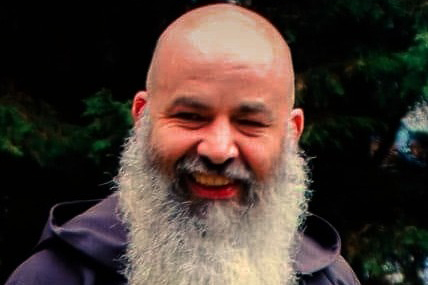
Brother Ade Green OFM Cap is a Capuchin Franciscan friar living and working in Ard Mhuire, County Donegal, Ireland. Currently he is the guardian and director of the Ards Friary Centre for the Care of Creation, and a student on the CMS MA programme in Theology, Mission and Ministry (Pioneer Route).
More from this issue
Notes
- Francis of Assisi, “Testament”, in Francis of Assisi: The Saint Volume 1 of: Francis of Assisi: Early Documents, edited by Regis J Armstrong, JA Wayne Hellmann and William J Short, (New York: New City Press, 1999), 124–127. ↩︎
- Ibid. ↩︎
- Thomas of Celano, “The First Life of Saint Francis”, in Regis J. Armstrong, J. A. Wayne Hellmann and William J. Short (eds) Francis of Assisi: Early Documents, Volume 1: The Saint (New York: New City Press, 1999). ↩︎
- Ibid. ↩︎
- Francis of Assisi, Testament. ↩︎
- Celano, Life of Saint Francis. ↩︎
- The Constitutions of the Friars Minor Capuchin (Rome: General Curia of the Order of Friars Minor Capuchin, 1982). ↩︎
- G.K. Chesterton, St Francis of Assisi (London: Hodder and Stoughton, 1923). ↩︎
- For more on this subject see David Flood, Francis of Assisi and the Franciscan Movement (St. Bonaventure, NY: Franciscan Institute Publications, 2017). ↩︎
- Thomas Merton, No Man Is an Island (New York: Harcourt, Brace and Company, 1955). ↩︎
