From the archive
He died alone on a beach in Muscat, with only minimal converts to his name.
However, his pioneer work in India and Persia laid the foundations for much of the mission work to the Middle East that would follow in the next century, writes James Donaldson
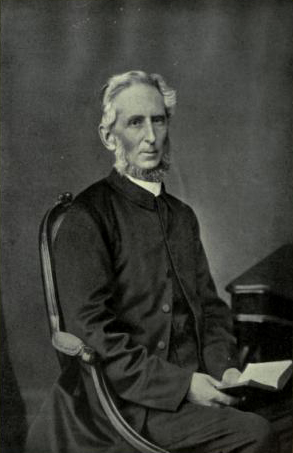
Missionary lives: Thomas Valpy French
| This post is from the archive, so it may not look perfect!
In a world where relations between the faiths is such a hot issue, it is worth looking back at the lives of missionaries like French, whose respected contributions to education in India combined with bold evangelism.
As a contemporary said, humility, self denial and love were his best sermons.
But how did French come to die alone in Oman and what lessons can be taken from his life of faithful service?
From fundraiser to missionary
French was born on New Year’s Day 1825, into a clergy family in Staffordshire, England. As a teenager he attended Rugby School before winning a scholarship to University College, Oxford and obtaining a first class degree in ‘greats’ (classics).
French timeline
- 1825 Born in Staffordshire, England
- 1853 St John’s College, Agra, officially opens 1853-56 Crimean War
- 1869 Mahatma Ghandi is born
- 1877 Appointed Bishop of Lahore at Westminster Abbey
- 1891 Died in Muscat, Oman
It was at Oxford that his association with CMS began and he became a fundraiser for the Society, or ‘collector of donations’ as it was called.
At Oxford French also first recognised his call to the mission-field following an inspiring speech by Bishop Samuel Wilberforce, third son of William Wilberforce.
He successfully applied for service with CMS and on 11 September 1850, he set sail for Calcutta, India, aboard the East Indian Queen.
The seven-tongued evangelist
French’s first phase of missionary work fused two of his own personal passions: education and evangelism.
In 1853 he founded St John’s College in Agra, offering education to Hindu and Muslim children. He took the first classes at the college and devoted himself to learning local languages in order to best run the school. These efforts earned him the nickname of the ‘seven-tongued evangelist’.
By 1861 French’s efforts had turned to the Derajat Mission in what is now central Pakistan. He co-founded the mission having been inspired by the donations and support of Christian government officers. This overtly evangelistic mission focused on reaching local villages and French’s linguistic skills allowed him to preach and recite poetry at local bazaars.
Sir R Montgomery wrote to French on the mission saying:
“It is uphill work at first, but you have all Central Asia before you, if your voices can reach the people there.”
The voices couldn’t carry quite far enough though. The efforts of the mission were met with mixed and often hostile responses and French eventually returned to England in 1862 after his health deteriorated significantly.
Indigenous worship
French’s second phase of mission work began in 1869 when he founded the Lahore Divinity School. The school provided an education and training for Indian lay people and ordained Indian pastors.
By 1877 French had been appointed the first Anglican bishop of Lahore. This position of recognised authority enabled him to wield greater influence in the area and he set about shaping the emerging Indian church.
Perhaps his greatest achievement was to help the Indian church find its own identity. He encouraged the church to set its roots in Indian culture and tradition while staying close to biblical and theological truths.
French experimented with indigenous forms of worship, preached widely, built a cathedral and supervised the translation of the scriptures into Hindustani and Pashto.
‘His humility and gentleness and self-denial and love,’ wrote one local editor commonly disposed to criticising French, ‘have been sermons to all who beheld him, just as his words have been to all who heard him.’
French passed away on 14 May 1891 in Muscat, Oman, having volunteered to be the first missionary to visit the area despite his age and failing health.
Archbishop’s hero
The Archbishop of Canterbury, Dr Rowan Williams, has recently named French as a personal hero of his and lauded his demonstration of “the utter worthwhileness of discipleship”.
Dr Williams suggested that much can be learnt from French’s example of discipleship, but much must also be taken from his pioneer work in encouraging and nurturing the emerging Indian church.
French recognised the importance of cultural identity and succeeded in bringing the gospel to a land dominated by other faiths, while showing respect for the cultural background of Muslims and Hindus.
Through faith, love and humility French was able to lay the foundations for the missionaries that followed him and continue to work in the Middle East today.
Further Reading
- Herbert Alfred Birks, The Life and Correspondence of Thomas Valpy French, first bishop of Lahore, 2 vols. (London, 1895)
- Eugene Stock, An Heroic Bishop: the life-story of French of Lahore (London, New York and Toronto, 1913)