Deep minds enter the AI chat at CMS
Deep minds enter the AI chat at CMS
“We need more of these conversations to be happening.” This is what I was hearing at the end of our Conversations Day reflecting on AI and mission.
by James Butler,
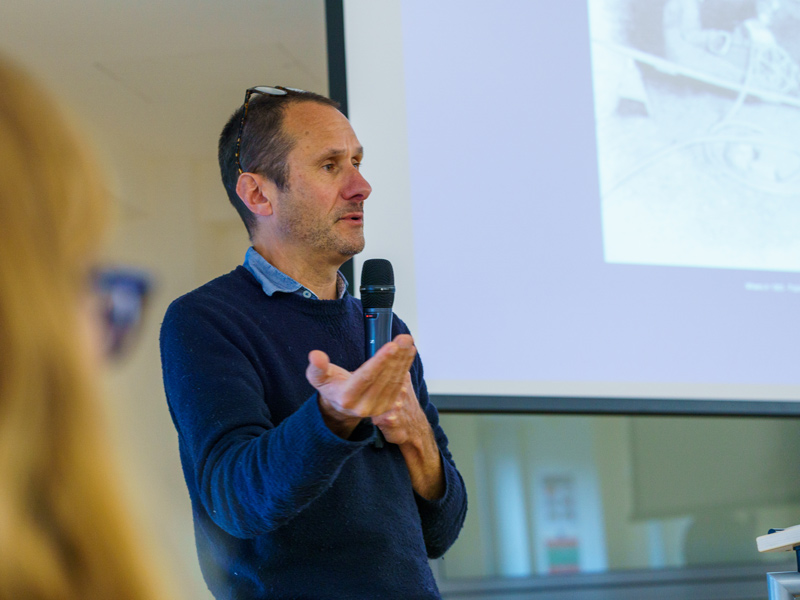
After a rich day of hearing from Fr Gabriel Hanganu and Kester Brewin and their reflections on church and AI in the morning and then engaging in conversations around AI in relation to the Christian life, mission, church and young people in the afternoon, we knew there was a lot more to reflect on.
When thinking about AI perhaps the issues which we most readily identify are around cheating, around jobs disappearing, about the environmental impact and the issues of big data centres. These are all important themes and featured in different ways throughout the day, but the challenge from both our speakers was to dig a bit deeper.
Fr Gabriel drew on his own Orthodox tradition and the Romanian Orthodox church to help us think about big questions around what it means to be human and the ways in which AI is not just a thing within the landscape of mission, but itself is changing the landscape. He encouraged us to not just focus on the immediate questions about how to stop cheating, how to care for our children, what we should or shouldn’t use AI for, but to allow those questions to find deeper resonances with theological, moral and philosophical questions about life, about God, about being human and about temptation.
Building on some of these themes Kester Brewin drew us into a bigger story of adapting to new technologies and the ways we have thought about that over time. He pointed out that any tool amplifies our ability to act, but also brings a question of what we will do with that power. A hammer is a tool which made pushing in nails easier and more efficient. But it is also a potential weapon. We can use the tool for good and for evil, and that tool itself can tempt us and form us in ways which are good and evil.
For talks on AI it was intriguing how much temptation and evil featured in the conversation. Not because AI is inherently evil, but because we are human. In fact, Fr Gabriel explicitly identified AI as a good gift, but as one which can be corrupted through temptation to use it in ways which don’t seek the good.
Watch the keynotes
Recordings of the talks by Fr Gabriel Hanganu and Kester Brewin, along with the panel discussion, are available to watch.
There are a lot of warnings to be heeded around AI, but as Kester and Fr Gabriel both reminded us, church and society have navigated big changes in technology before. Much thinking has been done already, practices and guardrails have been developed and there is deep theological thinking to build on. Wise people have come before us who have thought deeply about how to use new technology in ways that are good.
In the afternoon we turned to reflect together on what we had heard to identify some of the challenges, think about the resources from within the different Christian traditions that might help us and discern some possible ways forward. I was interested that we were focusing on things which reminded us that we are bodies – not just minds – like conversation, playing games and sports, engaging in creative activities, and our routines and spiritual practices. A number of people attending the day talked about ways in which they were going to start conversations in their own churches and community; how they were going to seek to learn from and with young people about their experiences of AI, and to pursue ways to keep our humanness at the centre of what we do.
It was a rich day, with many conversational threads started. There’s definitely more to explore here, so perhaps we will need to pick up some of these themes in a future conversation. While we’re talking about future conversations day, do keep an eye out for our next Conversations Day in May 2027, looking at the theme of play. Hope to see you there.