Fringe Dweller: how did this happen?
Fringe Dweller: how did this happen?
A year ago, Jonny Baker asked me if I would contribute to a “little” idea he’d had: to write some reflections and liturgies on Jesus’ encounters from the fringes…
by David Cotterill,
That “little” idea turned into more reflections and liturgies, then 20, and before we knew it (it turns out there are lots of edges to explore within the Gospels) it became 40 chapters. Throw in another 40 spiritual practices and we found ourselves with a chunky book, over 200 pages, with some beautiful artwork thrown in. The book you now know as Fringe Dweller was born.
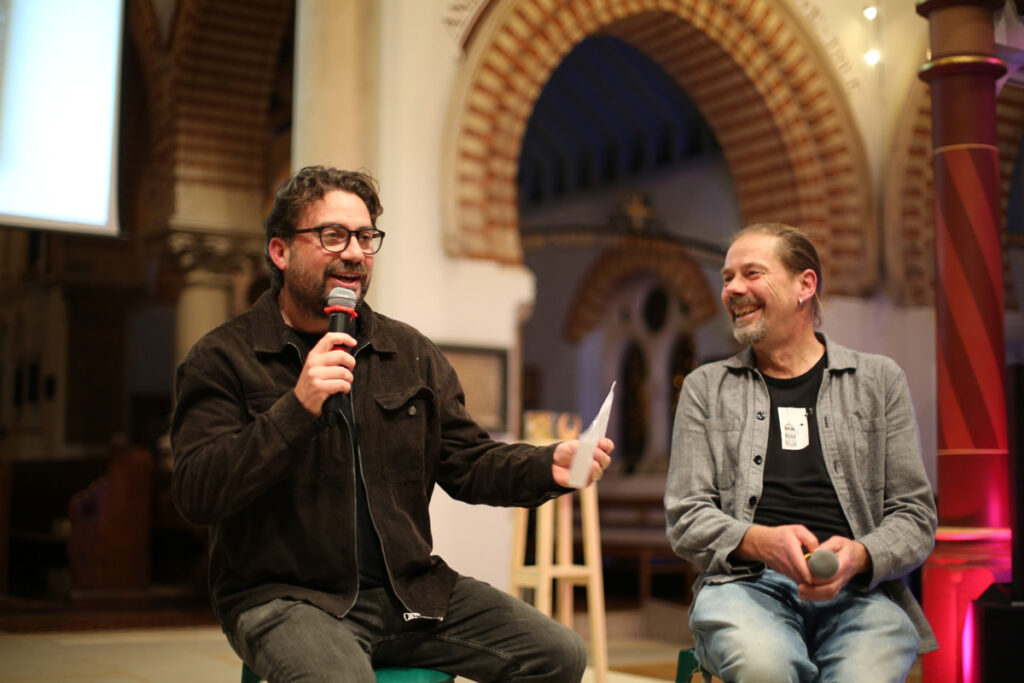
How did this happen?
I remember thinking at the Fringe Dweller book launch (which I’ll talk about later), “How did this happen?” I had only recently finished studying at CMS, which I found both life-giving (the lectures and conversations) and particularly challenging (the essays).
I recall my tutor running up to me on the day we received our first marked essays and asking, “Why didn’t you tell us you were dyslexic?” She then proceeded to go through my essay (which, by the way, was okay), chuckling as she noted the glaring giveaways that my brain was wired slightly differently. If I’m honest, it didn’t get easier, but the regular feedback given to my work was that my ideas were interesting, creative even, and that my voice in it all was strong.
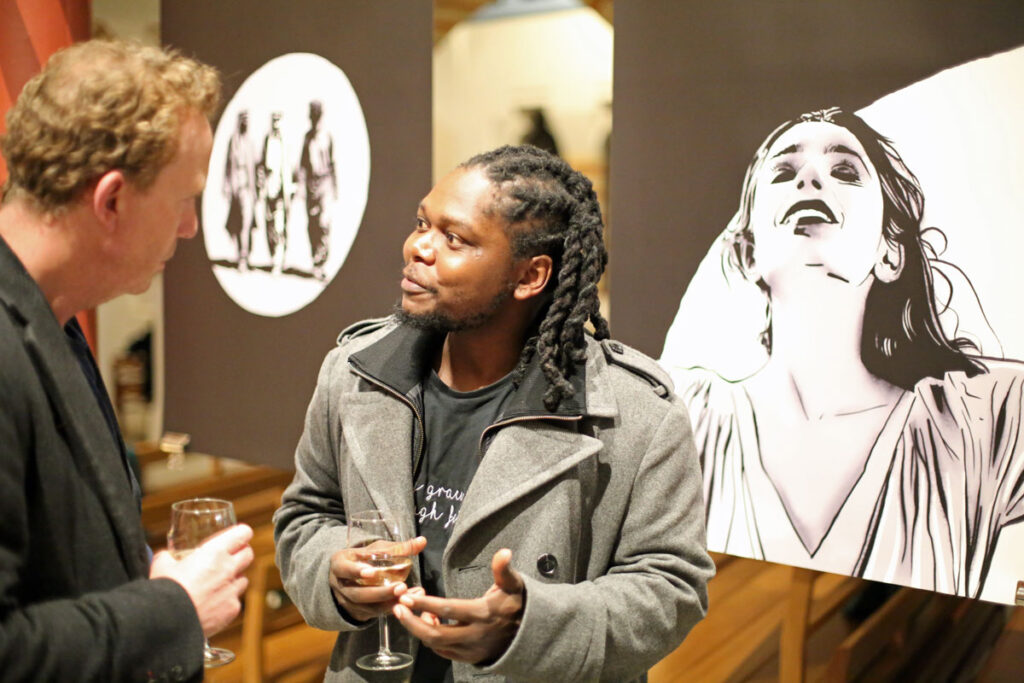
As I settled into study, I knew I’d found a home of sorts at CMS – an incubator for creative thinking, to listen, communicate ideas, and cultivate the voices and hunches I’d had about faith and life that perhaps weren’t always safe to verbalise in other spaces. I say this because, without those spaces of freedom to speak out, to agree and disagree with friends, my participation in Fringe Dweller would certainly be absent. It’s likely Jonny would have gone ahead anyway, but my voice would not be there. Homes are important, and the best ones are where it is safe to share your voice.
Riding the wave
Fast forward a few years, and I find myself in a beautiful Anglican church in Ealing for the book launch of Fringe Dweller. I still don’t know how we got here but I’m riding the wave. Jonny and I wanted to make the book launch more than a celebration of our work and certainly more than us talking about it; we wanted to create an experience for people, regardless of what tradition or place they’d come from.
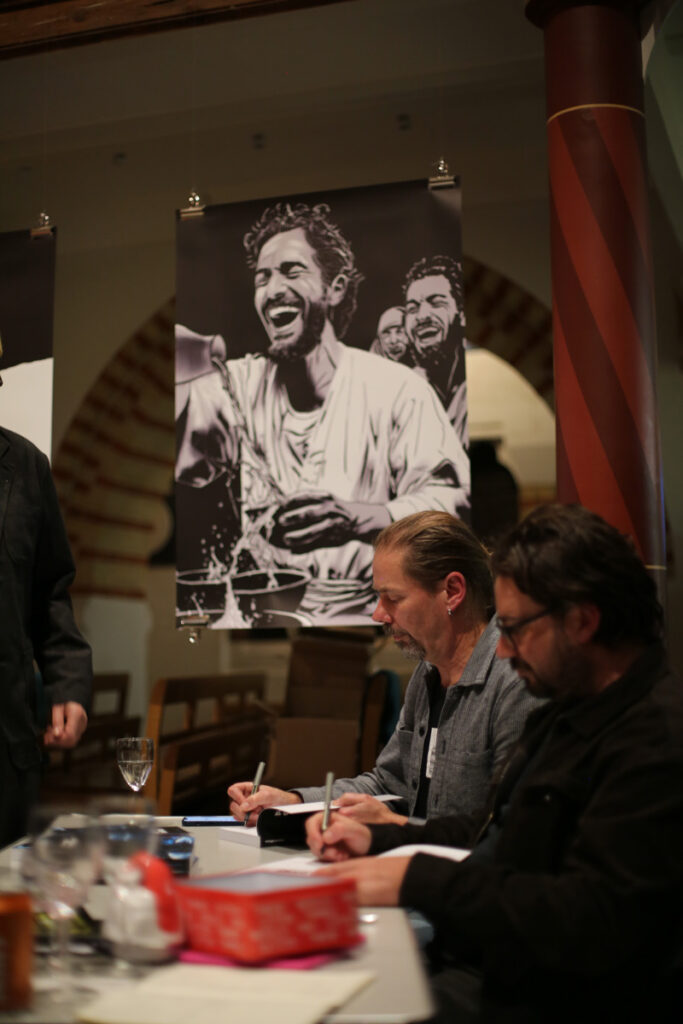
If you haven’t seen any of the Fringe Dweller artwork designed by Jon Birch yet, they really bring the book to life. Jonny and I decided we’d get them blown up into large prints and hang them from the balcony of the church to create an exhibition.
As it did with the book, it brought an already beautiful space to life. It was wonderful to see people arrive into the church, and as soon as they saw the prints, I saw smiles, gasps, and in one case, people were visibly moved by what they were seeing and experiencing.
In one of the chapters, we query why so often street preachers go in with a hard sell, often bypassing most of Jesus’ life and starting with what happens at the end. Some, but not all, of the illustrations are of Jesus. Some are of him walking with people, one is of him laughing with friends as he pours drinks (my mum’s favourite), and one is of Jesus in deep grief. It was interesting to watch where people were drawn. We need to know that Jesus laughs, walks with us, and knows grief, and people were free to spend time with the artwork.
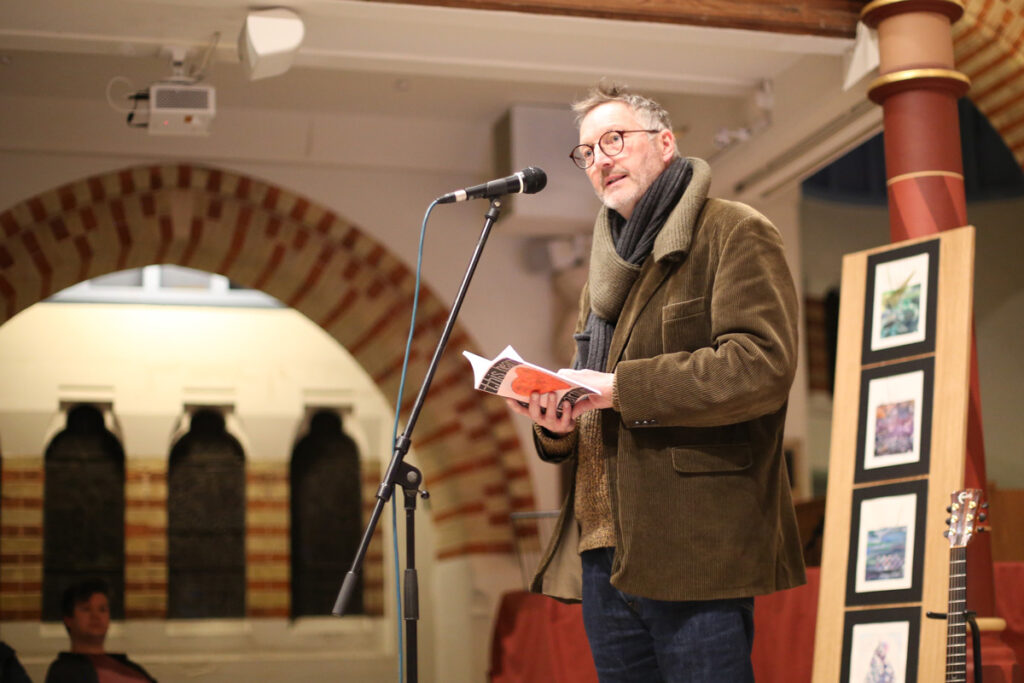
Jonny and I were interviewed about the book, its origin story, and how we made decisions on choosing the stories. Truthfully, there was little to no strategy in choosing the passages other than where Jesus was being with or advocating for people who had been sidelined for whatever reason.
Creative responses
One of our real hopes for the book is that by putting the stories and reflections in people’s hands, we’d get some interesting and creative responses back. We figured between us both we could pull enough favours from creative friends and family to make the evening a little less Dave and Jonny-focused, and we were overwhelmed with people agreeing to take part.
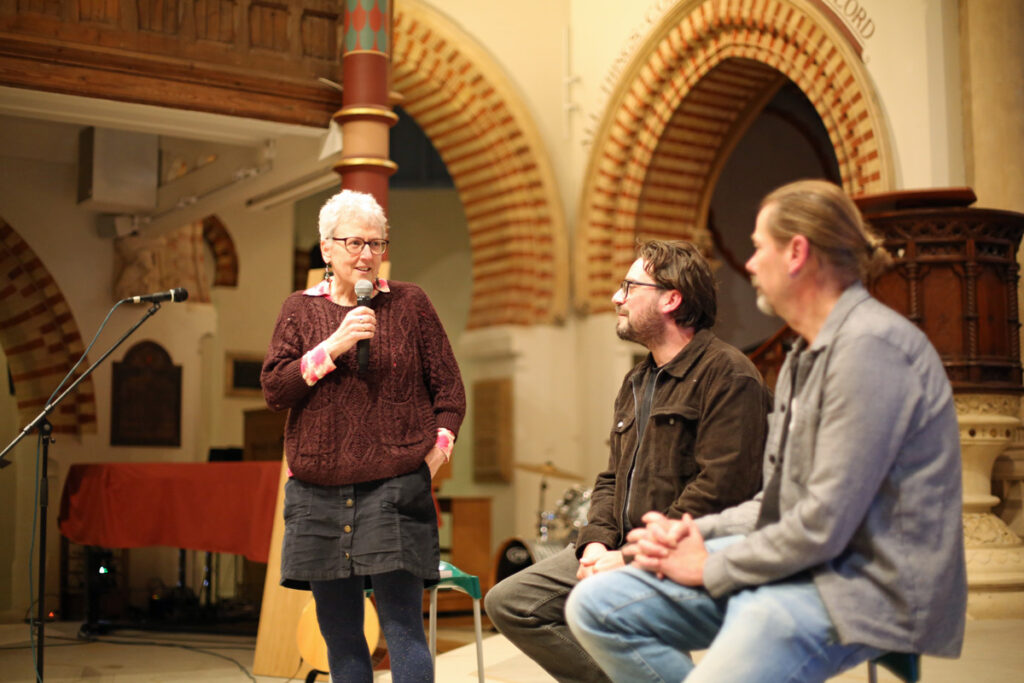
We kicked off the artists’ reflections with an original liturgy from Tina Hodgett called ‘Lock Picker of Closed Doors’, which we used in the book. It was a wonderfully traditional yet fresh way to start our artists’ reflections. Liturgy was not something I was brought up with in my tradition, but there was something stirring to hear young and old read the words “We come to you, seeking the gifts we need from the No One of Nazareth”.
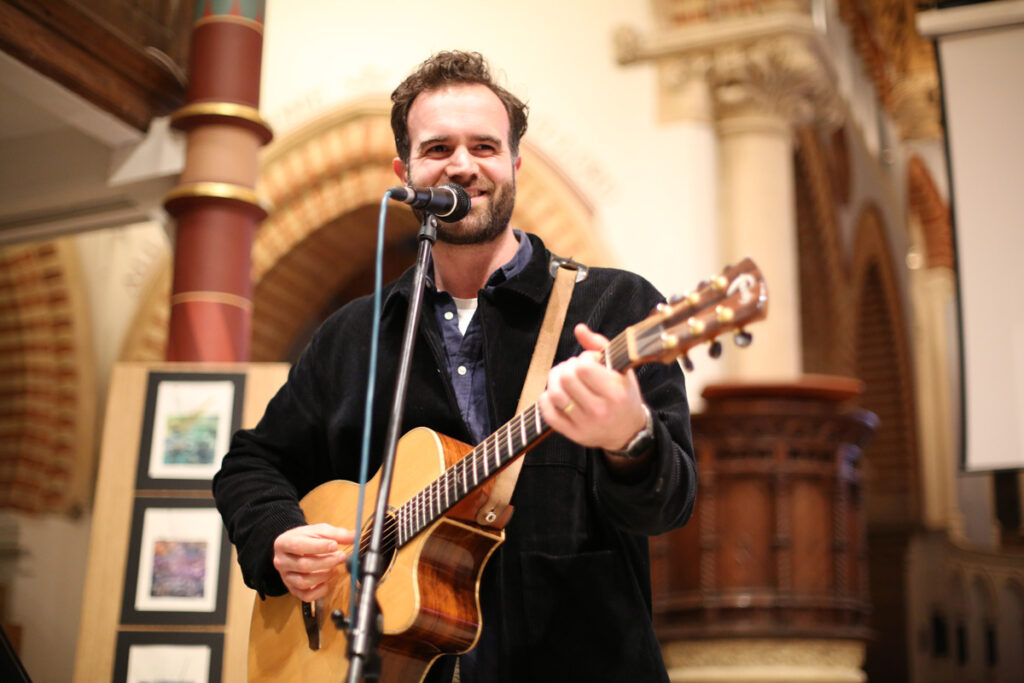
Other highlights included songwriter Chris Read’s reflection of the chapter ‘Eating with Scum’, taken from Matthew 9 – you could have heard a pin drop as he concluded his composition with the same name.
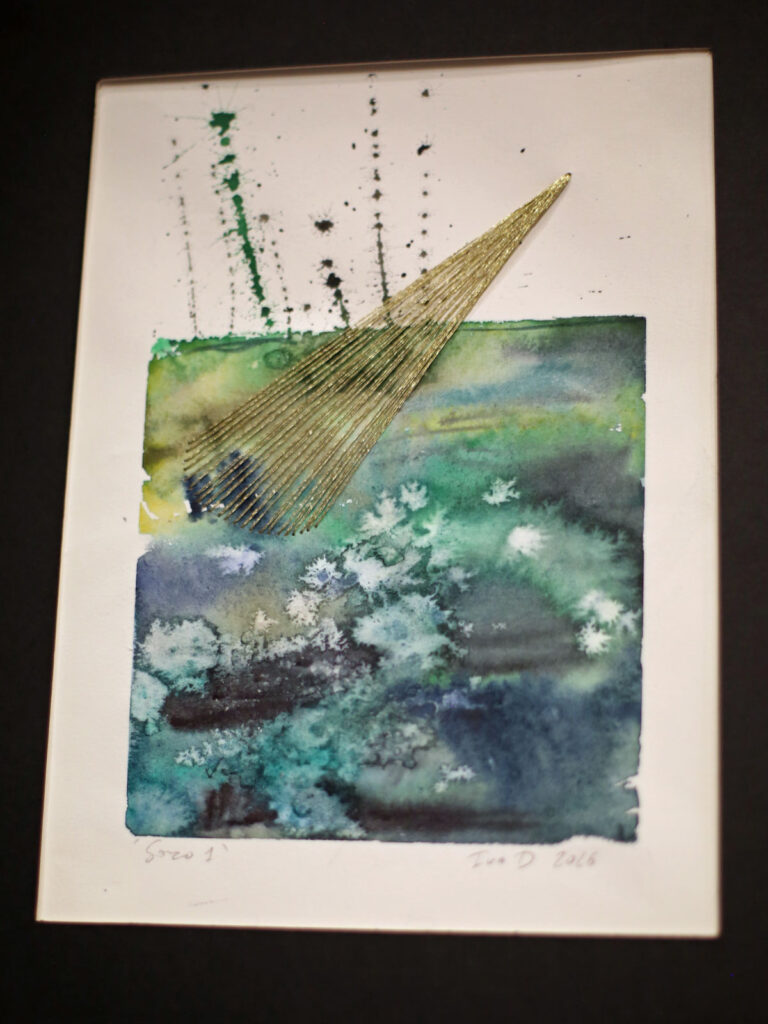
We also had a reflection from Iva Decheva, a South-East London artist who, using incredible colours of blue, silver and green, weaved and embroidered the rippling waters of healing at the pool of Bethesda (John 5) as she imagined the view to be from the sick man.
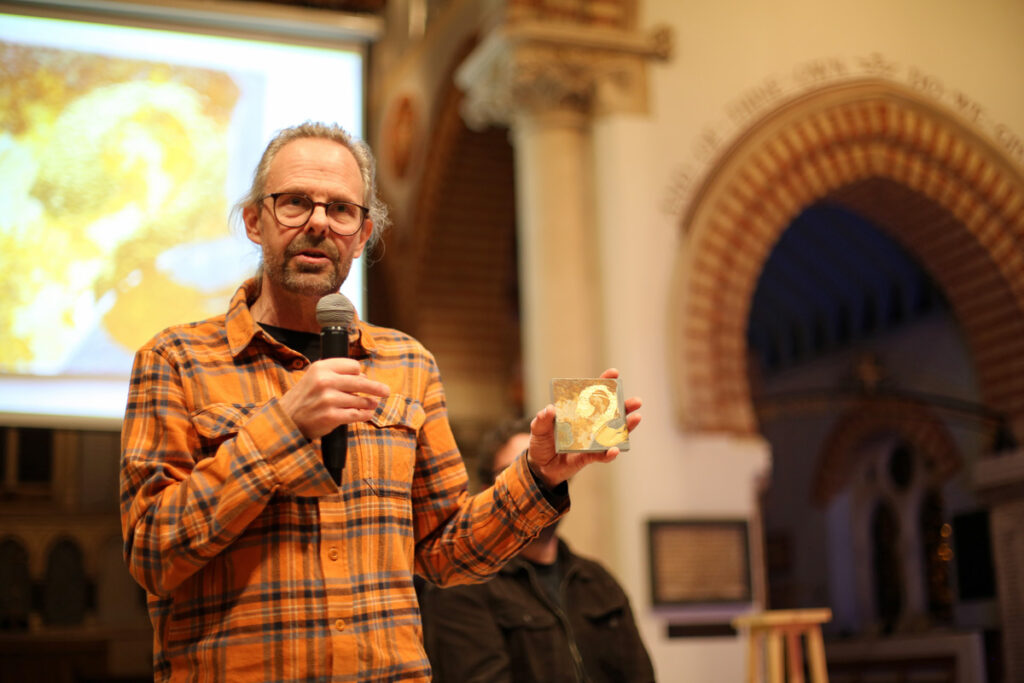
Iain Cotton (who creates tiles for CMS graduates) took us somewhere deeper still, as he explained his craft and approach to creating his tiles while reflecting on Jesus, the Fringe Dweller.
The artists’ reflections finished with Jonny’s son, Harry, who had written a stunning reverse poem that had many of us feeling all sorts of emotions. His reverse poem ‘Flip the Script’, which riffed off a chapter from the book with the same name, had us all in the palm of his hand.
Strange times
The challenge in the chapter is to flip the scripts or stories we all have and hear, whether they be internal, in our communities, churches, or elsewhere. Harry’s poem was like breathing fresh air, as he challenged narratives that have unfortunately found themselves saddled up to the story of Jesus, the Fringe Dweller. “We have to flip the script,” the repeated refrain from Harry, and in every artist presentation, it felt that was exactly what took place. Our hope is that it would encourage and give permission for others to do the same. It was a wonderful ending to a beautiful evening.
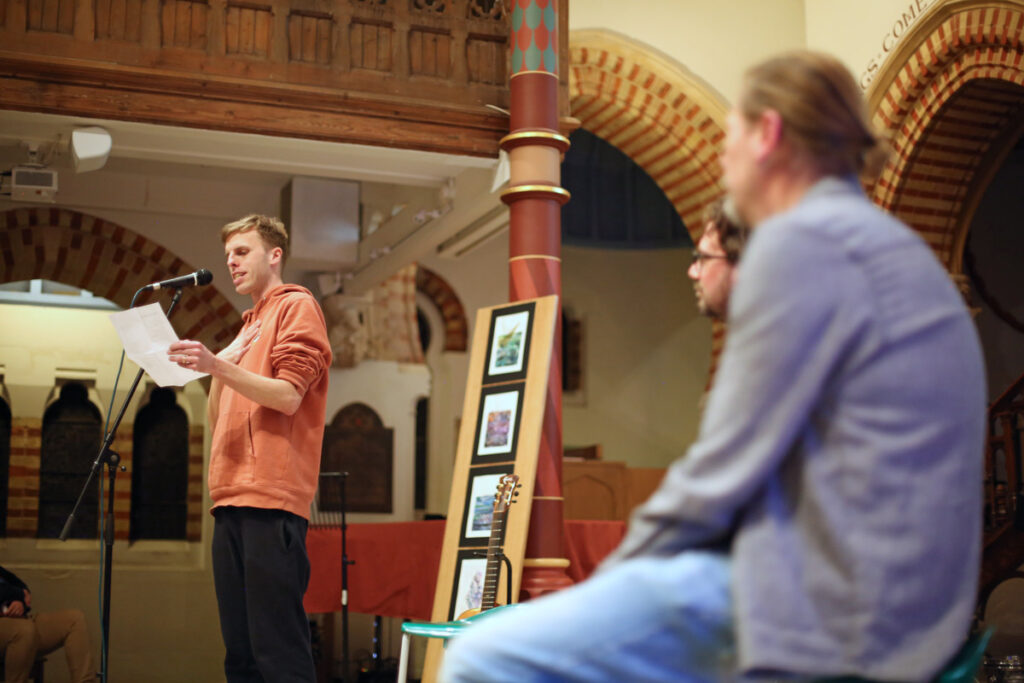
Both Jonny and I noted that the book has come out at an interesting time. It is a strange time to be human, and certainly a strange time to share our faith with other Christians that seem to be living life reading from a completely different script to us. We hope that Fringe Dweller will offer a helpful narrative, particularly to those leading and dwelling in the fringes. We are grateful to all the artists for being generous with their art; it made the evening quite special and, to be honest, reaffirmed our hope for the book: that if we can offer these stories to and with people, wonderful and diverse reflections will come back to us.
If you haven’t got hold of your copies of Fringe Dweller yet, you can get it from getsidetracked.co. We’d love to hear your own reflections and thoughts on the book, as well as those you are connecting with on your context.
More from the blog
First CMS student awarded a doctorate
Paul Bradbury has become the first CMS student to be awarded a DTh in partnership with the University of Roehampton.
Decolonisation of our minds: unearthing the truth
Pam Daniel is an assistant director of ordinands in Oxford Diocese and studying for an MA with a focus on African Christianity.