DR Congo: new hope rising
Church is a beacon of light for broken hearts, says mission partner Martin Gordon
Photo: The people of Kibumba gather during an evangelism campaign in front of their brand new church building
Try to imagine being a child in eastern DR Congo. Your whole life you’ve lived in the shadow of violence.
Think of the horrors you might have witnessed – armed robbery, murder, sexual assault.
And what if your parents had also never known an extended time of peace, so they had no words of comfort for you?
Who could you talk to? Who could your parents go to, to get help coping with their anxiety, grief or anger? Or would they just have to bottle it up inside?
A beacon of light for broken hearts
In 2013 The Guardian reported that DR Congo was undergoing a “mental health catastrophe” due to millions of people living with the stress of near-constant conflict for decades. Today, there are still only a few dozen trained neuro-psychiatrists in a population of over 65 million people.
In places like Goma, where CMS mission partner Martin Gordon serves as bishop, there are only a handful of mental health professionals for millions of people.
Suicide, addiction and domestic abuse are rampant in a population which has known only violence for so long.
Enter the church.
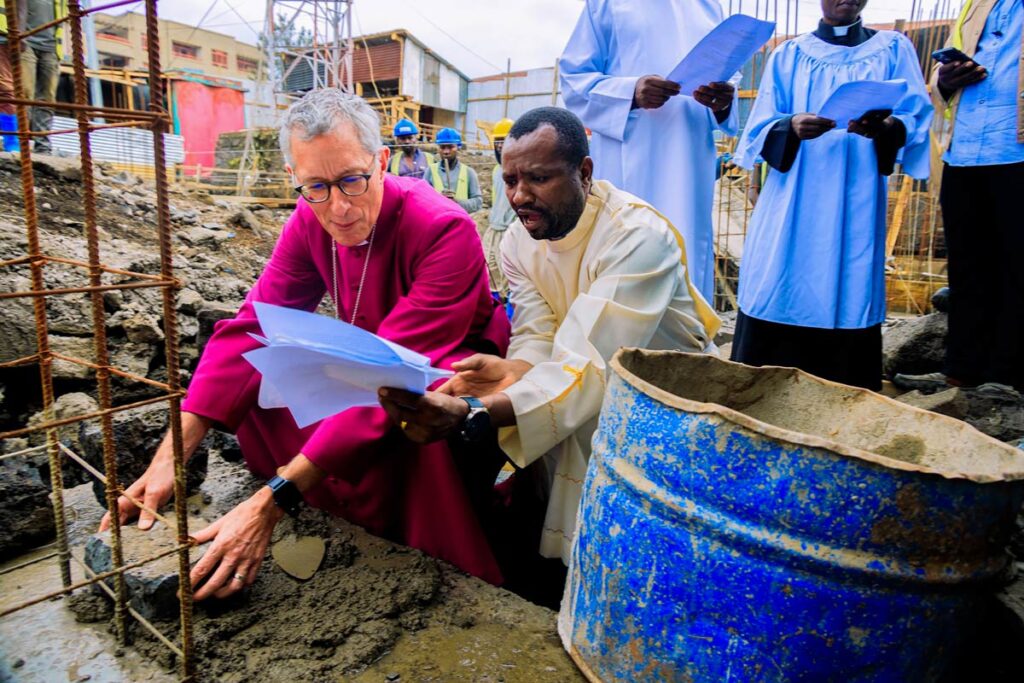
Bishop Martin shares that local Christians are at the forefront of recognising the need for psychological and spiritual care if the cycle of violence is ever going to be broken in DRC. He also shares some glimmers of hope gleaned in the past year since the latest outbreak of violence.
On the ground in Goma
An update from Bishop Martin Gordon
The east of Congo has known conflict for nearly 35 years, and we’re still under occupation since the Rwanda-backed M23 rebel group seized the city in January 2025. They had been taking over ever greater swathes of land around Goma for almost three years prior to the invasion.
“The Church is still seen as the one remaining institution that can be trusted”
The immediate aftermath of the occupation saw 8,500 deaths, a peak in sexual violence, arbitrary arrests, public beatings and executions, kidnappings and raids on hospitals. We count the number of internally displaced people and the number of children out of school in the hundreds of thousands.
Today, although the banks, the airport, the prison and the courts remain closed, there is now more of a sense of calm. But it is an uneasy calm. Violence can flare up at any moment.
Seeking solace in church
But for us as a diocese there has been some encouragement. The Church is still seen as the one remaining institution that can be trusted and in DRC there’s always a church at the heart of every village and community.
After Goma fell to the rebels, we saw an increased attendance in several of our parishes. Those who don’t usually come to church came asking for prayer, and those on the fringes started coming more regularly. There is a spiritual hunger.
In the weeks following the fall of the city, through the generosity of Anglicans across the world, we were able to distribute emergency cash to 60 of our clergy, 50 diocesan staff and over 200 school teachers whose salaries were not able to be paid by the central government. And we were able to rebuild or repair eight out of our 109 schools ahead of the start of the academic year. So almost 3,000 pupils can study in better conditions than before.
Thousands turning to Jesus
And in the sadness, in the pain, in the suffering, there are some real signs of hope. Because most of the diocese is under M23 control, it means getting around is easier. We’ve been able to visit parishes that have been inaccessible for the last three years to see how they’re doing and to encourage them. Land purchase and construction are less heavily policed and in the last year we’ve been able to build 16 churches and have bought 22 plots of land for church planting.
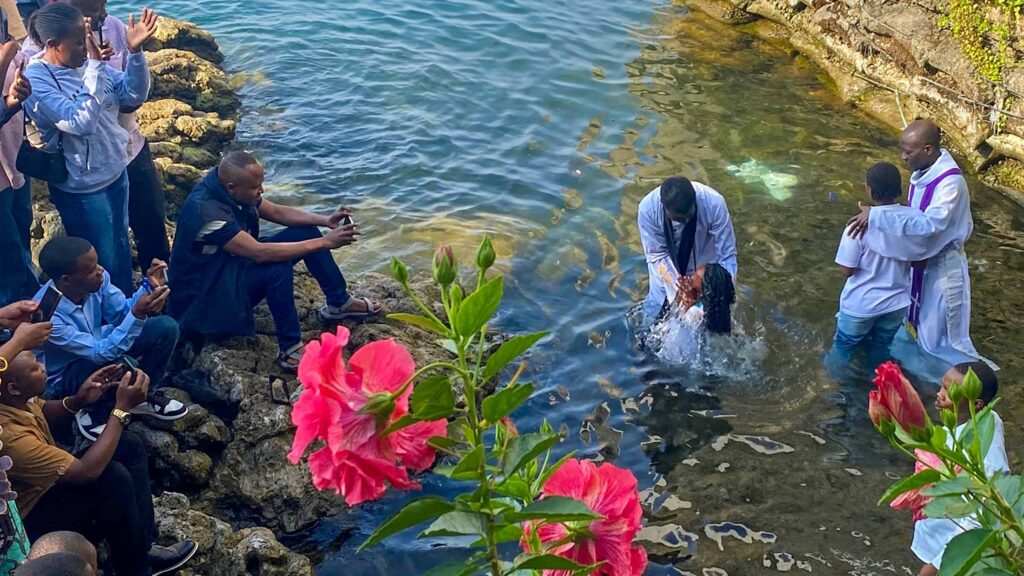
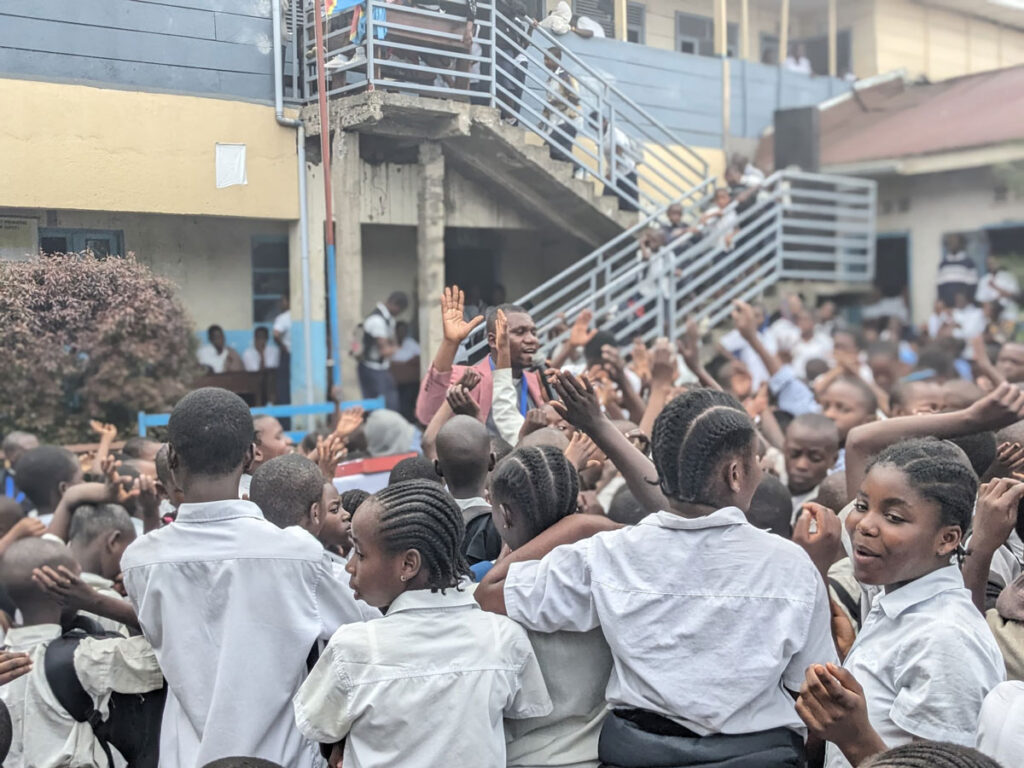
In summer 2025, we were able to hold large scale evangelism campaigns in four of our secondary schools in the city, where over 6,000 children heard the gospel and a thousand came to faith and our school chaplains are now busy following them up.
We’re seeing particular fruit in Walikale which is our archdeaconry in the forest, two days away from Goma by motorbike. Here, God has given us an open door for the gospel. We’ve been busy training church leaders, buying land, building schools and a guest house, and planting churches.
Since 2024, the church in Walikale has gone from a handful of struggling groups of believers to 17 churches, each with their own land and church building. Nineteen leaders have already finished two or three years of theological training or are in the process of being trained.
We’ve heard some exciting stories of the power of God breaking into people’s lives through monthly evangelism campaigns in Walikale.
“I trembled. Jesus was calling me.”
This is one testimony of a young brother saved during an open air evangelism campaign in Karumya. He said:
“My heart was touched. I trembled. I lost balance when the preacher preached the good news. I felt as if he was talking about me. When those who were going to receive Jesus Christ were called, Jesus was calling me. And I was listening to his way telling me, ‘Come to me. Come to me.’
“I quickly came to meet Jesus. I was a witch doctor in the service of Satan. I’d sacrificed my life and the health of my family to our ancestral deities. But glory to God through Jesus Christ, I’m a Christian, saved and ready to serve him.”
Photo: Excitement during a school visit by a church team sharing the gospel
From hate to hope
The bigger picture for us as a diocese and part of our day-to-day calling as a church is to pursue peace and reconciliation in the midst of conflict. For four years, we’ve been working with all faith leaders across the city, issuing joint media statements to change the narrative of hate and suspicion, doing weekly radio broadcasts to millions of people, and organising inter-community cultural and sporting events.
At the heart of our peace work is training religious and community leaders in self transformation. Teaching them to find peace with God and with themselves and then being sent as peacemakers to bring peace and reconciliation to their families, churches, and communities.
Joining hands for peace
After one such peace training focusing on youth, leaders from four different ethnic groups, usually at each other’s throats, took to the stage, joined hands, and gave a public commitment that from now on they would work together to bring healing to the community.
Photo: schoolchildren form an enthusiastic crowd at an evangelism campaign
Mental health mission
Increasingly within this area of self-transformation, we’re focusing on trauma healing for pastors and for leaders. This latest conflict is just another layer on top of previous trauma. We believe that the pastors are much better able to help their own congregations if they themselves have experienced de-traumatisation or found some measure of healing from past trauma.
To date we have trained around 300 young people, women, pastors and evangelists to be able to offer support for others who are traumatised.
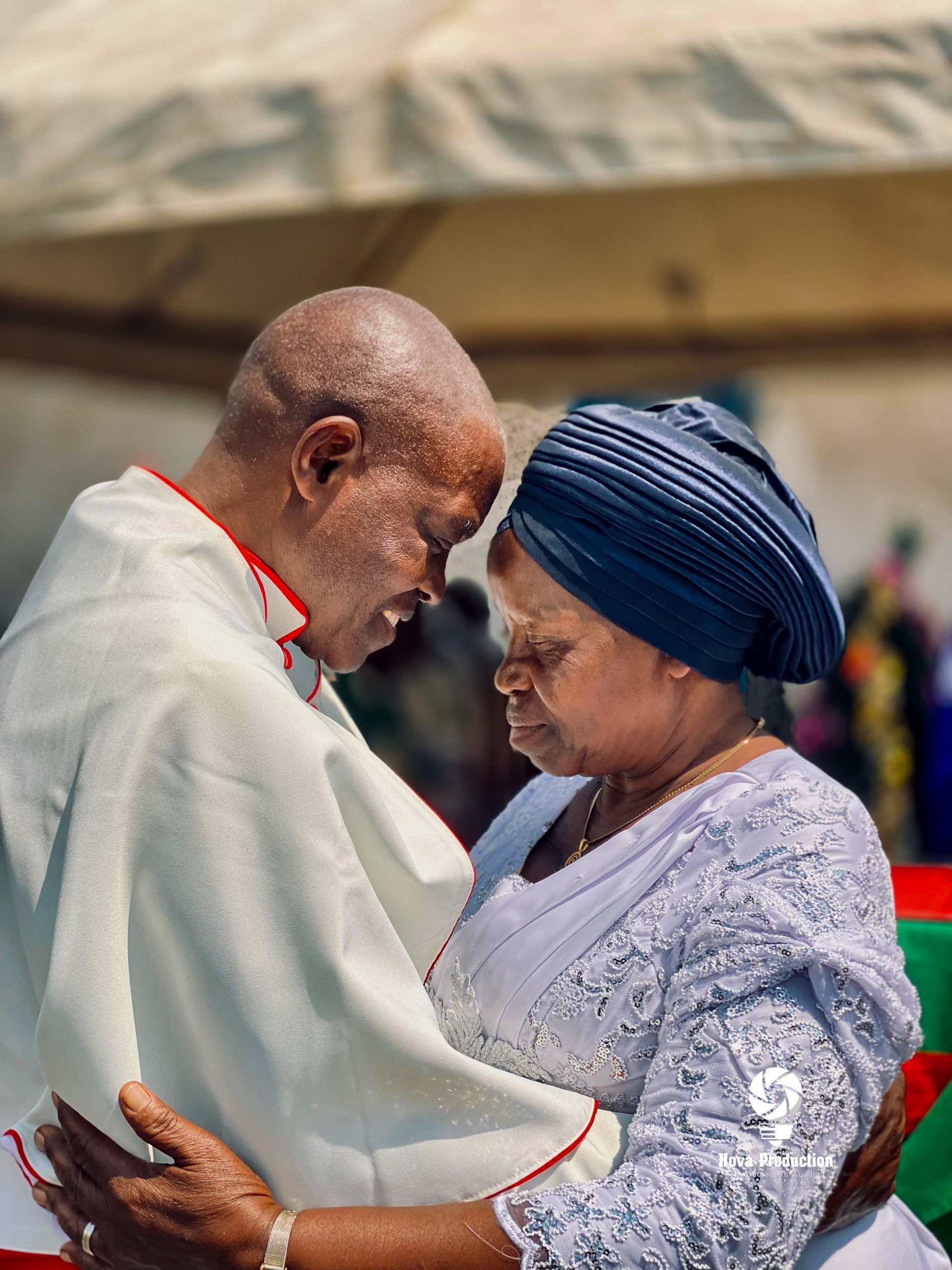
Adopted into the family!
I’ll end with a story of healing and reconciliation that has profoundly moved many of us.
Canon John, the Archdeacon of Goma, retired in 2025 after 49 years of ministry and 50 years of marriage.
The first 10 years of marriage were hard as his wife Providence fell ill and they couldn’t have children. Eventually, they did have two children, although they’d always wanted more.
Earlier this year, Canon John was with Mama Providence in a trauma healing seminar. There was another participant called Ansh who gave her testimony around the trauma of never knowing her father.
She was now in her 30s. She had six children, but she spoke of how she missed the father she’d never known. She also told of how her husband had abandoned her. Her tailoring business had been looted in the fighting.
Everyone sympathised with her situation. But Canon John did something different. Touched by her story, he had a whispered conversation with his wife. They approached Ansh to say that they’d always longed for more children and would love to adopt her as their own adult daughter. Ansh readily agreed and immediately took their family name and started calling them mom and dad. Their only son Samuel who was at seminar came forward publicly to embrace and welcome Ansh into the family.
You can imagine the reaction of the other participants. Canon John came to my office the following week to tell me that everyone in the community knew that they now had a new daughter and earlier this year she brought two of her children to the cathedral to be baptised.
Holding on to hope
I want to end simply by thanking you all for your prayers, your interest and your support. Times are still incredibly hard in Goma.
The recent invasion adds one more layer of trauma to more than 30 years of conflict.
And many still struggle to make ends meet.
But amid the suffering, we can testify daily to the faithfulness of God, and we continue to put our trust in him, knowing that he sees our suffering and is always at work.